

Ohio: The Buckeye State!
Images

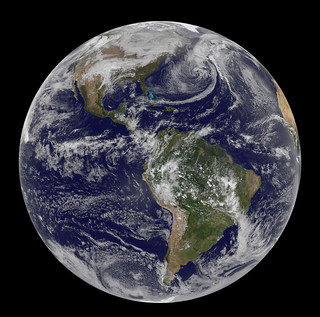
GOES-13 Gets a 'Full-Disk' Look at Weather in the Americas




Geographical Foundations and Strategic Importance
Ohio's geographical position in the Midwestern United States is fundamental to its historical and economic development. Bordered by Lake Erie to the north, it possesses a significant freshwater coastline that has historically facilitated trade and transportation. Its eastern boundary with Pennsylvania, southeastern with West Virginia, and southwestern with Kentucky are largely defined by the Appalachian Mountains and the Ohio River, respectively.
The Ohio River, derived from the Seneca word 'ohiyo' meaning 'good river,' has been a crucial artery for commerce and settlement since pre-colonial times. To the west lies Indiana, and to the northwest, Michigan. As the 34th largest state by area, Ohio's relatively compact size belies its substantial population of nearly 11.9 million, making it the seventh most populous and tenth most densely populated state.
This concentration of people in its capital, Columbus, and major metropolitan areas like Cleveland and Cincinnati, has fostered a dynamic urban landscape and a significant economic engine. The state's varied topography, from the lake plains to the Allegheny Plateau, influences its climate and natural resources, shaping its agricultural and industrial potential.
From Ancient Peoples to Statehood
Ohio's human history is exceptionally deep, dating back to at least 10,000 BC with the presence of indigenous peoples. These early inhabitants developed complex societies and left behind archaeological evidence of their lives. Following periods of significant Native American presence and tribal migrations, the lands west of the Appalachian Mountains became a focal point of colonial expansion.
From the 17th century through the late 18th century, this region was a site of intense competition and conflict between various indigenous tribes and European powers, culminating in the Northwest Indian Wars. Ohio emerged as a critical territory for the nascent United States, being partitioned from the Northwest Territory. Its admission to the Union on March 1, 1803, as the 17th state, was a landmark event.
It was the first state established under the Northwest Ordinance and notably, the first post-colonial free state admitted, setting a crucial precedent for the admission of future states and the expansion of the nation's territory while adhering to principles of freedom from slavery in its foundational lands.
The 'Buckeye State'
The moniker 'Buckeye State,' derived from the native Ohio buckeye tree, is a powerful symbol of Ohio's distinct identity. Ohioans, also known as 'Buckeyes,' share a collective pride rooted in their state's heritage. This pride is amplified by Ohio's remarkable status as the 'Mother of Presidents,' having produced seven U.S.
Presidents: William Henry Harrison, Ulysses S. Grant, Rutherford B. Hayes, Benjamin Harrison, William McKinley, William Howard Taft, and Warren G.
Harding. This concentration of presidential leadership underscores Ohio's significant role in national politics and its influence on American leadership. The state's major metropolitan areas-Columbus (the capital and most populous city), Cleveland, and Cincinnati-are vibrant centers of culture, commerce, and innovation.
These cities, along with others like Dayton, Akron, and Toledo, represent diverse economic bases and cultural landscapes, contributing to Ohio's rich social fabric and its reputation as a microcosm of American life.
Economic Evolution
Ohio's economic trajectory is a compelling narrative of industrial prowess and adaptation. Historically, it was an epicenter of American manufacturing, particularly in the steel, automotive, and rubber industries. Its strategic location, abundant natural resources, and skilled workforce propelled it to become an industrial powerhouse throughout the 20th century.
Even as the global economy has shifted towards information and service-based sectors in the 21st century, Ohio has maintained a robust industrial presence. As of 2019, it ranked seventh in Gross Domestic Product (GDP) nationally, supported by the third-largest manufacturing sector and second-largest automobile production. This enduring industrial strength is complemented by growth in sectors such as healthcare, technology, and logistics.
The state's ability to leverage its industrial heritage while embracing new economic opportunities demonstrates its resilience and continued importance in the national economy.
Governance and Educational Landscape
Ohio operates under a representative democracy, with a government structure typical of U.S. states. The executive branch is headed by the Governor, who serves as the chief executive. The legislative branch is the bicameral Ohio General Assembly, composed of the Senate and the House of Representatives, responsible for creating laws.
The judicial branch is led by the Ohio Supreme Court. This system ensures a balance of power and citizen representation. Educationally, Ohio is committed to fostering learning and innovation.
The state boasts a wide array of public and private educational institutions, from K-12 schools to renowned universities and research centers. These institutions play a vital role in preparing its citizens for the evolving job market and contributing to the state's intellectual capital. The emphasis on both strong governance and a comprehensive educational system is key to Ohio's continued development and its citizens' well-being.
Go deeper
Frequently Asked Questions
What does the name "Buckeye State" mean?+
Why is Ohio called the "Mother of Presidents"?+
Where is Ohio located?+
When did Ohio become a state?+
What shape does Ohio look like?+
Based on content from Wikipedia · Licensed under CC BY-SA 4.0