

Nile Valley Civilizations
Images

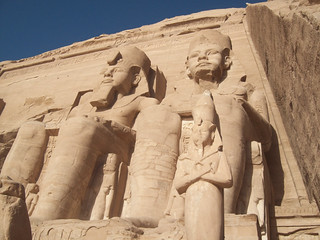
The Temple to Nefertari at Abu Simbel (III)




Geographical Determinants and Cultural Convergence
The concept of 'Nile Valley Civilizations' is rooted in the geography of Africa's longest river system. Stretching from its headwaters in Ethiopia and Sudan to its delta on the Mediterranean Sea, the Nile provided a consistent source of water and fertile land in an otherwise arid region. This geographical imperative fostered the development of sedentary agricultural societies.
The annual inundation of the Nile deposited rich alluvial soil, enabling surplus food production, which in turn supported population growth, specialization of labor, and the emergence of complex social and political structures. The river also served as a natural highway, facilitating communication, trade, and cultural exchange between distinct regions along its course. This shared environmental context and the river's unifying influence are foundational to understanding the interrelationships between the various cultures that arose within the Nile Valley.
Historiographical Roots and Afrocentric Frameworks
The term 'Nile Valley Civilizations' gained prominence as part of Afrocentric and Pan-Africanist scholarship, particularly from the late 20th century onwards. Introduced around 1970 and popularized by scholars like Ivan Van Sertima in the 1980s, this conceptualization aimed to highlight the interconnectedness and shared heritage of cultures that developed along the Nile. It challenged Eurocentric narratives that often marginalized or disconnected African achievements from global history.
By grouping these distinct but related cultures, scholars sought to emphasize a unified African historical experience and intellectual tradition. This perspective underscores the agency and innovation of African peoples in shaping their own destinies and contributing significantly to global civilization, moving beyond isolated studies of specific kingdoms or empires.
Cultural Synthesis and Regional Diversity
While the term 'Nile Valley Civilizations' emphasizes connections, it is crucial to acknowledge the distinct regional identities and cultural expressions that flourished. From the ancient Egyptian civilization in the north to the Nubian kingdoms in the south (modern Sudan), each society developed unique languages, religious practices, artistic styles, and political systems. However, these differences were often interwoven with influences from neighboring regions.
Trade routes, migration, and conquest led to a constant flow of ideas, technologies, and people. For instance, the Kingdom of Kush in Nubia was heavily influenced by Egypt, yet it also developed its own distinct Meroitic script and powerful queens. Understanding these civilizations as 'interrelated and interlocking' means recognizing both their shared foundations and their unique trajectories.
Economic Foundations and Inter-Regional Dynamics
The economies of Nile Valley civilizations were primarily agrarian, built upon the predictable cycles of the Nile's floods. This agricultural surplus was the engine for economic development, allowing for the support of non-agricultural specialists such as artisans, priests, and administrators. Beyond subsistence farming, these societies engaged in sophisticated craft production, including pottery, metalworking, and textile manufacturing.
Trade was a vital component, extending both locally along the river and internationally. Egypt, for example, traded for timber, precious metals, and exotic goods from regions like Punt and the Levant. Nubia, strategically located, controlled key trade routes and was a source of gold, ivory, and enslaved people.
The economic interdependence fostered by the Nile facilitated the spread of innovations and the growth of wealth across the region.
Governance, Education, and the Transmission of Knowledge
The governance structures within Nile Valley civilizations varied, ranging from the centralized pharaonic rule of Egypt to the more decentralized kingdoms of Nubia. However, a common thread was the development of complex administrative systems to manage resources, collect taxes, and organize large-scale projects like irrigation systems and monumental architecture. Education played a critical role in maintaining these societies. Scribes were highly valued, trained in hieroglyphic or Meroitic scripts to record religious texts, historical events, administrative decrees, and scientific observations.
Formal and informal education systems ensured the transmission of knowledge in areas such as mathematics, astronomy, medicine, and engineering. This continuous process of learning and knowledge transfer was essential for the sustained development and cultural achievements of these ancient societies, forming a crucial aspect of their interconnected legacy.
See also
Frequently Asked Questions
What is a Nile Valley Civilization?+
Why did people settle along the Nile River?+
How did the Nile River help the civilizations grow?+
Are the cultures along the Nile all the same?+
Who were some of the people that lived in the Nile Valley?+
Based on content from Wikipedia · Licensed under CC BY-SA 4.0