

Niagara Falls
Images
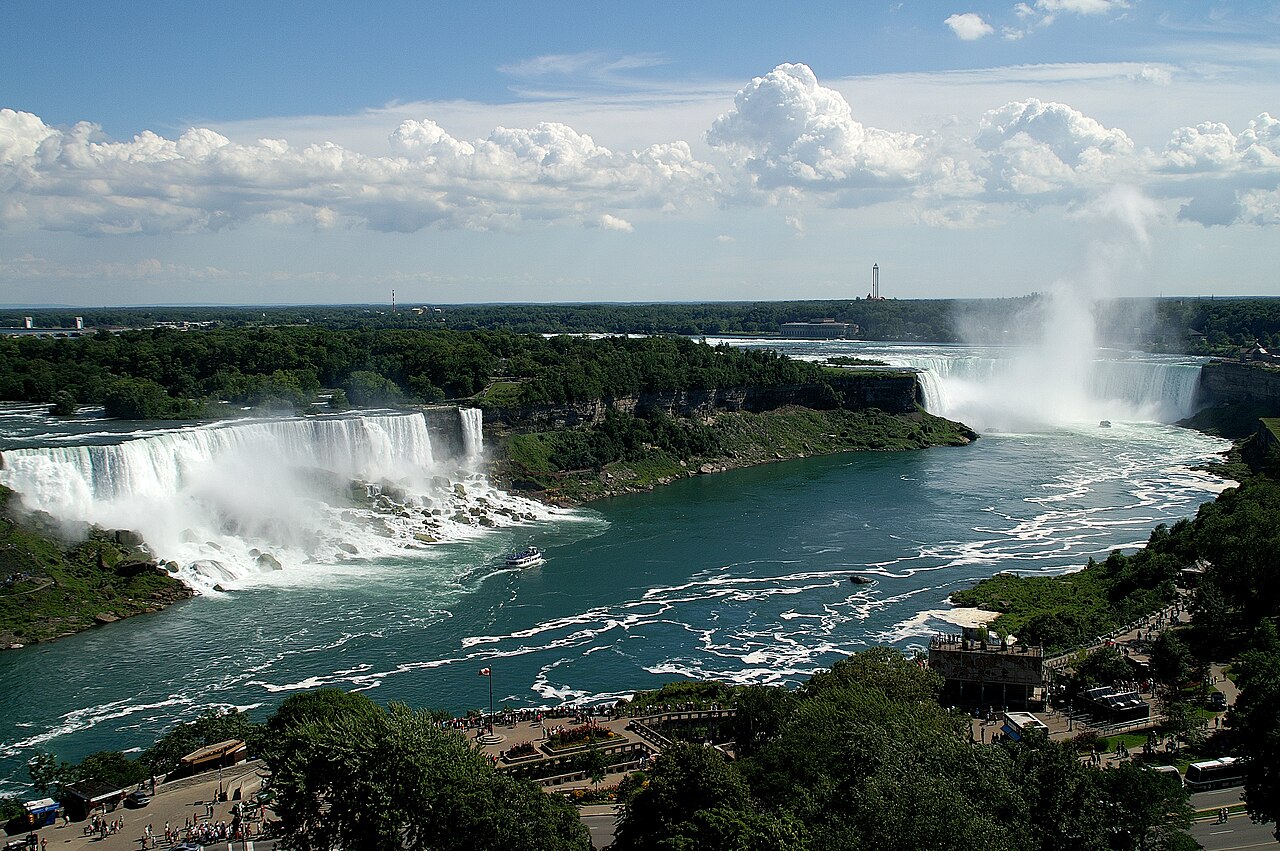
Niagara Falls
The Geological Genesis of a Natural Spectacle
Niagara Falls is a testament to the immense geological forces that shaped North America. Its formation dates back to the end of the Wisconsin glaciation, approximately 12,000 years ago. As colossal ice sheets retreated, they carved out the Great Lakes system and the Niagara River.
This river, acting as an outlet for Lake Erie to drain into Lake Ontario, encountered the Niagara Escarpment, a steep ridge of rock. The relentless erosive power of the water began to wear away the rock layers, causing the falls to retreat upstream over millennia. This ongoing process of erosion, though now significantly managed, has shaped the falls' current position and continues to be a subject of scientific study and engineering marvel.
The distinct separation into three falls-Horseshoe, American, and Bridal Veil-is a result of the river's path and the presence of islands like Goat Island and Luna Island, which divide the flow.
Unleashing Nature's Fury
The sheer volume and velocity of water cascading over Niagara Falls are what define its power. With a combined flow rate that dwarfs most other waterfalls globally, Niagara Falls is the undisputed leader in North America for water volume passing over a vertical drop. During peak tourist seasons, the rate can exceed 168,000 cubic meters per minute.
This immense flow, primarily from the Niagara River, generates a deafening roar and a perpetual mist that can be seen for miles. The most powerful section, Horseshoe Falls, is particularly known for its force. This natural energy has been recognized and harnessed since the 19th century, transforming the falls into a critical source of hydroelectric power, supplying electricity to millions in both Canada and the United States.
Managing this dual role-as a natural wonder and an energy provider-is a complex feat.
A Crossroads of Nations
Niagara Falls occupies a unique geopolitical position, forming a natural border between the province of Ontario, Canada, and the state of New York, United States. This shared boundary has fostered a symbiotic relationship between the twin cities of Niagara Falls, Ontario, and Niagara Falls, New York. For centuries, the falls have been a powerful magnet for tourism, drawing millions of visitors annually who come to witness their grandeur.
This influx of tourism has profoundly shaped the economies of the surrounding regions, supporting numerous hotels, attractions, and businesses. Beyond tourism, the falls' role in generating hydroelectric power underscores their economic importance, providing a vital and sustainable energy source that powers industries and homes.
Conservation, Commerce, and Controversy
The history of Niagara Falls is also a story of human intervention and the ongoing challenge of balancing competing interests. Since the 19th century, efforts have been made to control the erosion of the falls and to manage the diversion of water for hydroelectric power. This has involved significant engineering feats, such as the construction of dams and diversion tunnels, which have altered the natural flow but also preserved the falls' iconic appearance.
The management of Niagara Falls involves a delicate equilibrium between preserving its natural beauty, meeting the demands of tourism, and utilizing its power for industrial and commercial purposes. Debates over water diversion, environmental impact, and sustainable development continue to shape the future of this remarkable natural resource.
Go deeper
Frequently Asked Questions
What are the three parts of Niagara Falls?+
Why does Niagara Falls make a loud roar?+
How does Niagara Falls help power homes and businesses?+
Where is Niagara Falls located?+
How old is Niagara Falls?+
Based on content from Wikipedia · Licensed under CC BY-SA 4.0