

Neil Armstrong: The First Person on the Moon!
Images
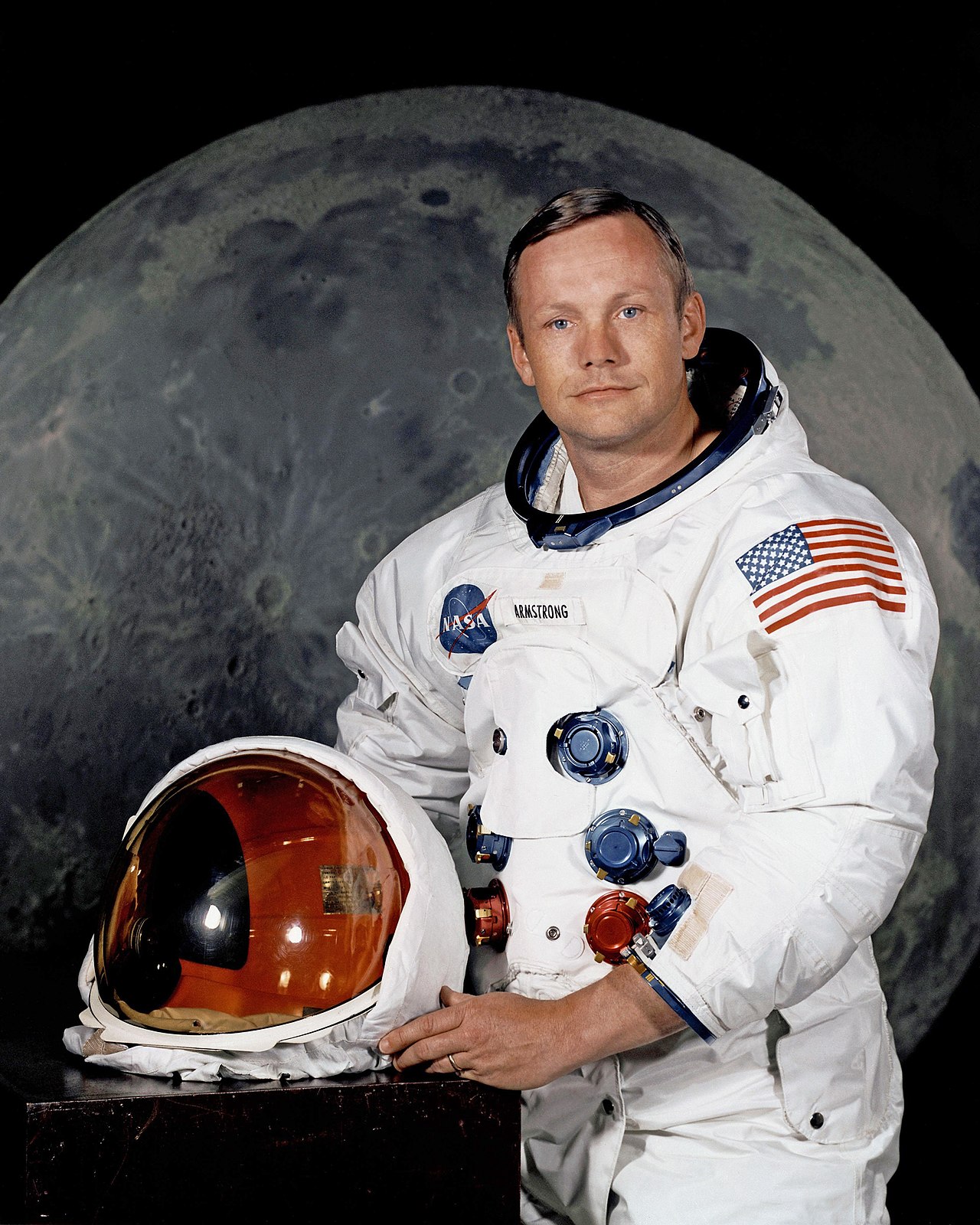
Neil Armstrong
Foundations in Flight
Neil Alden Armstrong's journey into the cosmos began with a deep-rooted passion for aviation, nurtured from his childhood in Ohio. His academic path led him to Purdue University, where he pursued aeronautical engineering, supported by the U.S. Navy's Holloway Plan.
Commissioned as a midshipman in 1949 and qualifying as a naval aviator the following year, Armstrong's early career was marked by combat experience. He flew the Grumman F9F Panther from the aircraft carrier USS Essex during the Korean War, demonstrating courage and skill under fire. Post-war, he completed his degree at Purdue and transitioned to civilian aviation, becoming a pivotal test pilot at the National Advisory Committee for Aeronautics (NACA) High-Speed Flight Station.
Here, he honed his expertise on cutting-edge aircraft, including the Century Series fighters and the experimental North American X-15, flying it seven times and contributing invaluable data on high-speed flight and atmospheric re-entry.
Navigating the Void
Armstrong's entry into the NASA Astronaut Corps in 1962 placed him among the elite pioneers of space exploration. His first spaceflight as command pilot of Gemini 8 in March 1966 was a testament to his piloting prowess and his ability to manage extreme emergencies. Alongside pilot David Scott, Armstrong executed the first-ever docking of two spacecraft in orbit, a critical maneuver for future missions.
However, the mission nearly ended in disaster when a stuck thruster caused the spacecraft to enter a violent, uncontrolled roll. With remarkable composure and technical acumen, Armstrong utilized his re-entry control fuel to stabilize the tumbling craft, preventing a catastrophic loss. This mission, though aborted, solidified his reputation as a highly capable and level-headed astronaut, essential for the demanding Apollo program.
Apollo 11
As commander of Apollo 11, Neil Armstrong was entrusted with humanity's most ambitious journey to date: landing on the Moon. On July 20, 1969, alongside Lunar Module Pilot Buzz Aldrin, Armstrong piloted the 'Eagle' to a successful lunar touchdown. His iconic first words upon stepping onto the surface, 'That's one small step for [a] man, one giant leap for mankind,' resonated globally, broadcast live to an estimated 530 million viewers.
This monumental achievement fulfilled President John F. Kennedy's 1961 challenge and marked a decisive U.S. victory in the Space Race. While Armstrong and Aldrin explored the lunar landscape for over two hours, Command Module Pilot Michael Collins orbited above, ensuring their safe return.
The mission's success was a profound demonstration of human ingenuity and determination.
A Legacy Beyond the Stars
Following his return from the Moon, Armstrong received numerous accolades, including the Presidential Medal of Freedom. He chose to step away from NASA in 1971, dedicating himself to academia. He became a professor in the Department of Aerospace Engineering at the University of Cincinnati, imparting his vast knowledge and experience to a new generation of engineers.
His commitment to space exploration extended beyond teaching; he served on critical accident investigation boards, including the one for Apollo 13 and the Rogers Commission, which examined the Space Shuttle Challenger disaster. These roles underscored his dedication to learning from past events to ensure future safety. Neil Armstrong passed away in 2012, leaving an indelible mark not only as the first man on the Moon but also as a symbol of scientific rigor, quiet leadership, and unwavering dedication to the advancement of human knowledge.
Go deeper
Based on content from Wikipedia · Licensed under CC BY-SA 4.0