

Muhammad IV of Granada
Images
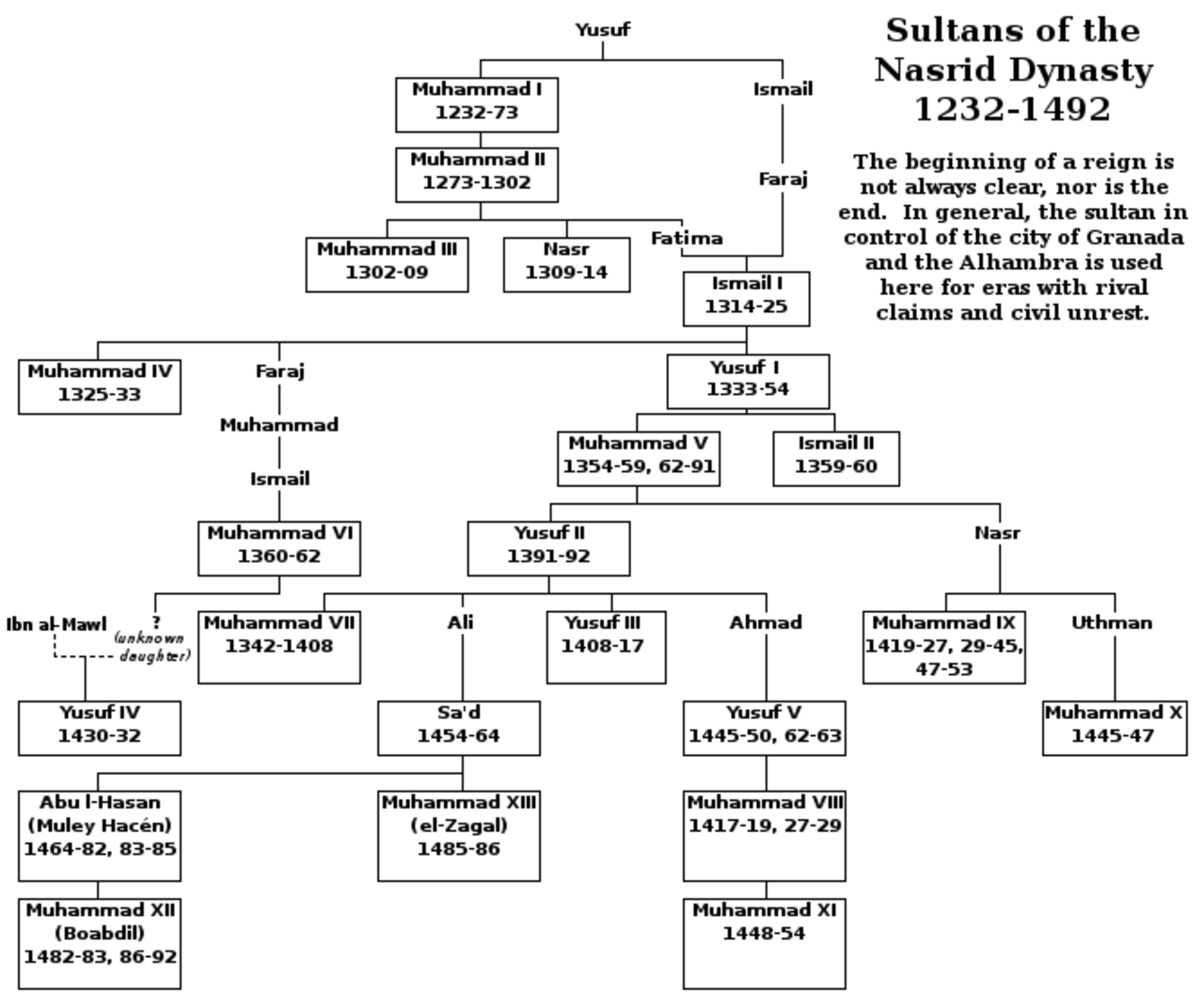
NasridDynasty


The Burden of the Crown
The ascension of Abu Abdullah Muhammad ibn Ismail, later known as Muhammad IV, to the throne of the Emirate of Granada in 1325 was an event fraught with peril. Succeeding his father, Ismail I, who was assassinated, Muhammad IV inherited a kingdom already teetering on the edge of instability. At just ten years old, he was too young to effectively govern, leaving a power vacuum that was immediately filled by ambitious ministers vying for control.
This period was characterized by intense factionalism, most notably between the vizier Muhammad ibn al-Mahruq and the influential commander of the Volunteers of the Faith, Uthman ibn Abi al-Ula. The conflict escalated into a full-blown civil war when Uthman declared Muhammad's uncle, Muhammad ibn Faraj, a rival claimant to the throne and, crucially, secured the support of Alfonso XI of Castile, Granada's formidable Christian neighbor to the north.
This early experience of political treachery and the necessity of external intervention would define the early years of his rule, forcing him to mature rapidly in the cutthroat world of medieval politics.
Strategic Diplomacy and the Marinid Alliance
To counter the internal strife and the external threat posed by Castile, Muhammad IV sought a critical alliance with the Marinid Sultanate of Morocco. He appealed to Abu Said Uthman II, offering significant territorial concessions in the Iberian Peninsula, including the strategically important cities of Ronda, Marbella, and Algeciras, likely in exchange for much-needed Marinid military support.
This alliance was a testament to his nascent diplomatic skills, demonstrating a willingness to make difficult sacrifices for the sake of his kingdom's survival. The civil war finally abated in 1328. Muhammad, now thirteen, began to assert more direct control, reconciling with Uthman ibn Abi al-Ula and orchestrating the assassination of Ibn al-Mahruq.
The rival claimant, Muhammad ibn Faraj, was exiled to North Africa. A significant administrative innovation during this period was the appointment of his childhood tutor, Abu Nuaym Ridwan, as hajib (chamberlain), a position that outranked other ministers. This marked the first instance of the hajib title in Granada, signaling Muhammad's preference for trusted advisors and a more centralized, albeit still fragile, administration.
The Shifting Sands of Iberian Politics
The fragile peace was shattered by renewed aggression from the Christian kingdoms. In 1328 and 1329, Alfonso XI of Castile forged an anti-Granada pact with Alfonso IV of Aragon. This formidable coalition launched a coordinated invasion in 1330, with Alfonso XI leading his forces to capture Teba and lay waste to the Granadan countryside.
Faced with overwhelming odds, Muhammad IV was compelled to negotiate. He secured a treaty with Castile on February 19, 1331, which included provisions for trade, such as the export of food to Granada. However, Alfonso XI's commitment proved ephemeral; he soon reneged on the agreement by halting food exports, a move that severely impacted the besieged kingdom.
Aragon, not bound by the treaty, also faced Granadan counter-offensives. This period highlighted the volatile nature of inter-kingdom relations in the Iberian Peninsula, where alliances were fluid and often dictated by immediate military advantage rather than long-term commitment.
A Desperate Plea and a Violent End
In a bold move to secure further assistance, Muhammad IV sailed to Fez in September 1332 to petition the new Marinid Sultan, Abu al-Hasan Ali. His plea was answered with a contingent of 5,000 troops led by the Sultan's son, Abu Malik Abd al-Wahid. Arriving in early 1333, these forces were deployed to Algeciras, where they successfully besieged the Castilians at Gibraltar.
However, the victory was short-lived as Alfonso XI then besieged Algeciras itself. Muhammad IV attempted a diversionary raid into Castile to relieve the pressure on Algeciras, a maneuver that led to a stalemate. A truce was finally brokered on August 24, 1333, lifting the siege of Gibraltar and reinstating the 1331 treaty.
Yet, this hard-won respite was tragically brief. The very next day, on August 25, 1333, Muhammad IV was assassinated at the age of eighteen. The perpetrators were the sons of the now-deceased Uthman ibn Abi al-Ula, motivated by resentment over either the Sultan's reliance on the Marinids or his perceived friendliness with Castile.
His untimely death at such a young age, after navigating such a tumultuous period, left his brother Yusuf I to inherit the complex challenges of the Emirate of Granada.
See also
Frequently Asked Questions
Who was Muhammad IV of Granada?+
Why did Muhammad IV make an alliance with the Marinid Sultanate?+
How did Muhammad IV end the civil war in Granada?+
What happened when Castile broke the treaty with Granada?+
Why was the city of Teba important during Muhammad IV’s reign?+
Based on content from Wikipedia · Licensed under CC BY-SA 4.0