

Mount Rushmore: Faces on a Mountain!
Images
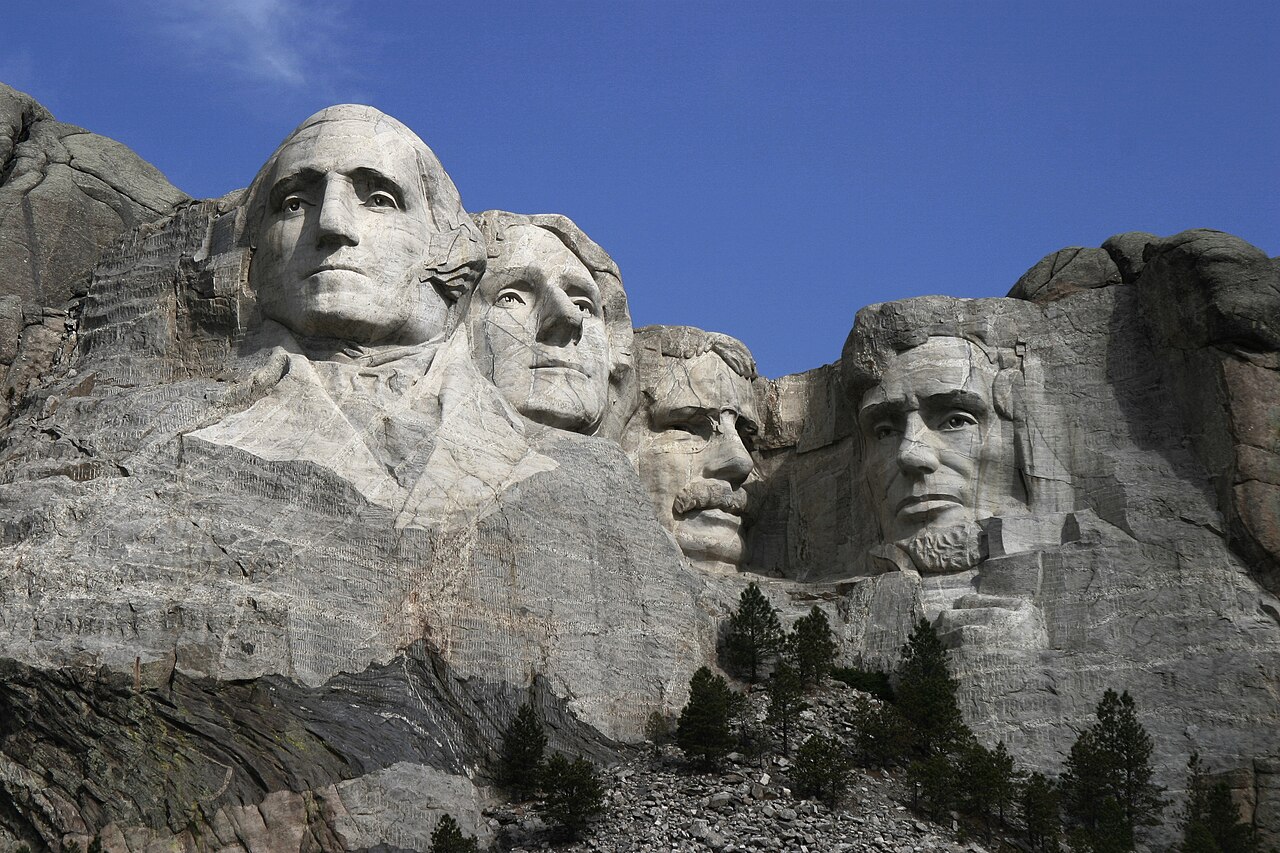
File:Dean Franklin - 06.04.03 Mount Rushmore Monument (by-sa)-3 new.jpg


Geological Canvas and Artistic Genesis
Mount Rushmore, a colossal granite monolith in the Black Hills of South Dakota, serves as the dramatic stage for one of the world's most recognizable sculptures. The mountain's elevation of 5,725 feet and its southeast-facing aspect, optimized for sunlight exposure, were critical factors in its selection by sculptor Gutzon Borglum. Borglum, a proponent of monumental art, envisioned the mountain as a 'Shrine of Democracy,' a powerful symbol for the nation.
The initial concept, proposed by South Dakota historian Doane Robinson, was to feature Western heroes, but Borglum's vision shifted to four presidents, each representing a distinct era and principle of American governance: Washington (founding), Jefferson (expansion), T. Roosevelt (development), and Lincoln (preservation). This selection aimed to encapsulate the nation's narrative from its inception to its consolidation.
Engineering an Icon
The creation of Mount Rushmore was an extraordinary feat of engineering and artistic execution, spanning from 1927 to 1941. Gutzon Borglum, alongside his son Lincoln Borglum, directed a team of over 400 workers who utilized dynamite, jackhammers, and chisels to meticulously carve the 60-foot-tall presidential visages. The process involved intricate planning, including the use of a 'swing stage' system for workers to access the high faces and a 'honeycombing' technique to remove excess rock.
The original ambitious plan to depict the presidents from head to waist was ultimately curtailed due to insufficient funding, leaving the sculptures as heads only, with Washington's being the most detailed below the chin. This pragmatic adjustment highlights the logistical and financial hurdles inherent in such a massive public works project.
Symbolism and the 'Shrine of Democracy' Narrative
The choice of George Washington, Thomas Jefferson, Theodore Roosevelt, and Abraham Lincoln was deliberate, intended to embody the core tenets of American democracy and progress. Washington represents the nation's birth and foundational principles. Jefferson signifies westward expansion and the Louisiana Purchase, a period of significant territorial growth.
Theodore Roosevelt embodies the era of industrialization and conservation, representing the nation's development and its growing global role. Abraham Lincoln, the president during the Civil War, symbolizes the preservation of the Union and the struggle for equality. Together, these figures were meant to project an image of national unity, strength, and enduring democratic ideals, solidifying Mount Rushmore's status as a 'Shrine of Democracy'.
Contested Land and Enduring Indigenous Claims
The historical context of Mount Rushmore's creation is deeply intertwined with the contentious history of land acquisition in the American West. The Black Hills, where the monument is situated, are considered sacred by the Lakota people and were part of their ancestral territory. The U.S. government forcibly acquired this land in the 1870s, a violation of treaties.
This dispossession remains a profound grievance for the Sioux Nation, who continue to advocate for the return of the Black Hills. The 1980 Supreme Court ruling in United States v. Sioux Nation of Indians acknowledged the unjust taking of the land and awarded compensation, which the Sioux have refused, prioritizing land repatriation.
This ongoing conflict casts a critical light on the monument, prompting discussions about historical narratives, land rights, and the complex legacy of westward expansion, leading some to critique it as a 'Shrine of Hypocrisy'.
Economic and Educational Impact
Mount Rushmore National Memorial is a significant economic driver for the region, attracting over two million visitors annually. This influx of tourism supports local businesses in Keystone and surrounding areas, creating jobs in hospitality, retail, and services. The memorial park itself encompasses 1,278 acres, offering not only the iconic sculpture but also visitor centers, museums, and interpretive trails that educate the public about the monument's history, geology, and the cultural heritage of the Black Hills.
Educational programs and exhibits are designed to engage visitors of all ages, fostering an understanding of American history, presidential legacies, and the complex issues surrounding the monument's creation and its relationship with indigenous peoples. The site serves as a vital educational resource, encouraging critical thinking about national identity and historical memory.
Go deeper
Frequently Asked Questions
What is Mount Rushmore?+
Why were those four presidents chosen?+
How were the faces carved?+
Where is Mount Rushmore located?+
When was Mount Rushmore built?+
Based on content from Wikipedia · Licensed under CC BY-SA 4.0