

Manhattan Bridge
Images

Manhattan Bridge and the Brooklyn Bridge




Genesis and Structural Innovation
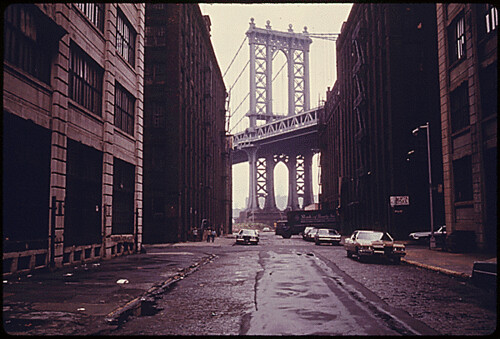
The Manhattan Bridge, conceived in the late 19th century and opened on December 31, 1909, represents a pivotal moment in suspension bridge engineering. Designed by Leon Moisseiff, it was the first suspension bridge to incorporate a Warren truss system into its deck structure. This was a significant departure from earlier designs, as the truss provided lateral stiffness, reducing the need for heavy, solid roadways.
The truss system, composed of interconnected triangles, created a lighter yet incredibly strong structure, allowing for a longer main span of 1,480 feet between its two 350-foot towers. This innovative approach not only influenced the design of subsequent long-span bridges but also demonstrated a sophisticated understanding of structural mechanics, paving the way for more ambitious engineering projects worldwide. The bridge's construction involved intricate foundation work, the erection of massive masonry towers, and the careful placement of four main suspension cables and 1,400 vertical suspender cables.
A Multi-Modal Arterial Network
The Manhattan Bridge is a remarkable example of integrated urban transportation infrastructure. Its deck is ingeniously designed to accommodate a diverse range of traffic, serving as a critical link between Manhattan and Brooklyn. The upper deck features four vehicular lanes, while the lower deck offers three more vehicular lanes alongside four subway tracks.
This dual-level configuration maximizes capacity, allowing for the simultaneous movement of cars, buses, and New York City Subway trains. The inclusion of subway lines was particularly ambitious for its time, highlighting the bridge's role in supporting the city's burgeoning public transit system. The bridge's ability to carry such a high volume and variety of traffic underscores its indispensable function in the daily lives of millions of New Yorkers and the city's economic vitality.
Evolution and Resilience
The history of the Manhattan Bridge is marked by adaptation and resilience. Initially carrying streetcars, it later integrated subway service, a development that, while expanding its utility, introduced structural challenges. The significant and uneven weight distribution from the subway trains caused the bridge to tilt, necessitating a comprehensive and lengthy reconstruction project between 1982 and 2004.
This extensive rehabilitation involved reinforcing the structure, upgrading its components, and ensuring its long-term stability and safety. The bridge's journey from its initial construction through periods of modification and major repair reflects the dynamic nature of urban infrastructure and the continuous effort required to maintain these vital links in a constantly evolving city.
Architectural Flourish and Enduring Legacy
Beyond its engineering prowess, the Manhattan Bridge is also celebrated for its aesthetic contributions to the urban landscape. The architectural firm Carrère and Hastings was commissioned to design ornamental plazas at both ends of the bridge, enhancing its visual appeal and civic presence. The Manhattan side features a grand arch and colonnade, a New York City designated landmark, which serves as an impressive gateway.
The bridge's innovative use of light trusses not only contributed to its structural efficiency but also set a new aesthetic standard for suspension bridges of the era. Its enduring presence and distinctive design have made it an iconic symbol of New York City, a testament to the harmonious integration of function and form in monumental architecture.
Go deeper
Frequently Asked Questions
What is the Manhattan Bridge?+
Why does the Manhattan Bridge have two decks?+
How did engineers make the bridge strong but light?+
Why did the bridge need a big repair between 1982 and 2004?+
What special design is at the ends of the bridge?+
Based on content from Wikipedia · Licensed under CC BY-SA 4.0