

Manganese: The Amazing Metal!
Images
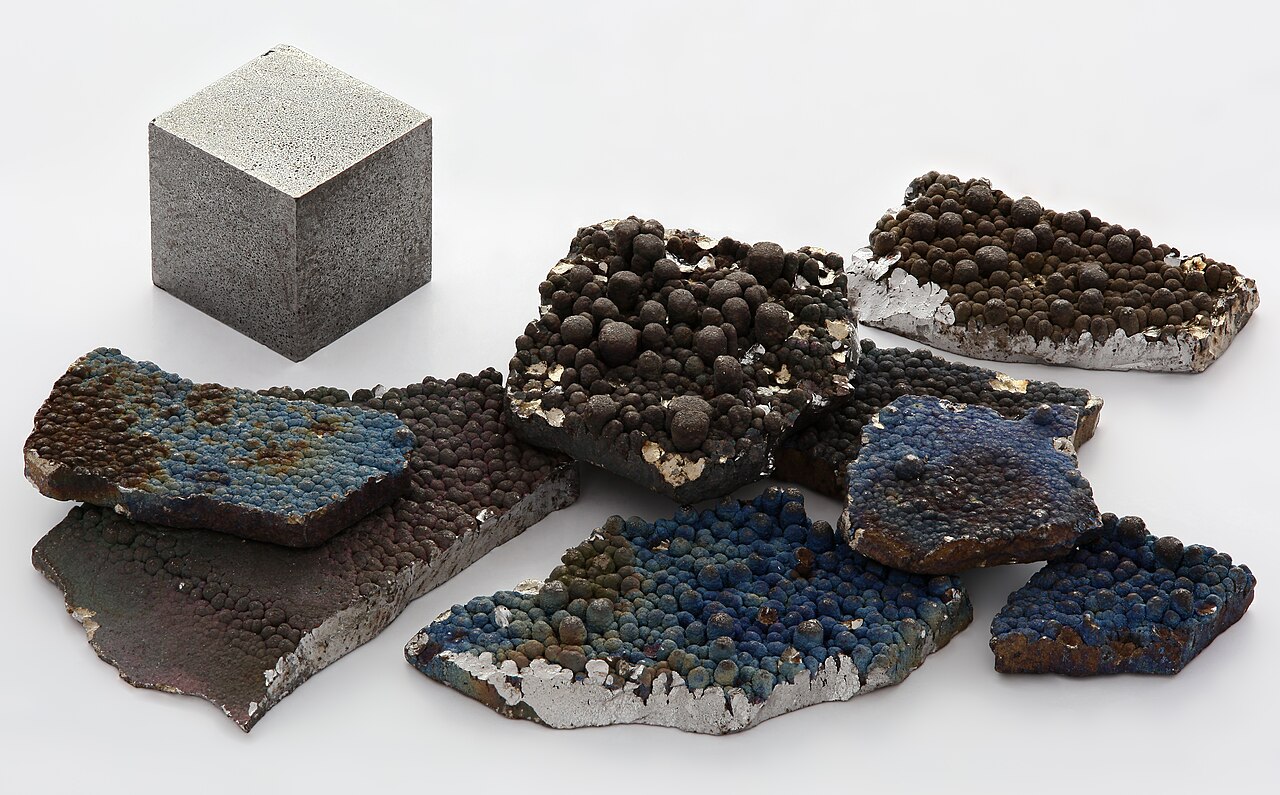
Manganese
The Metallurgical Cornerstone
Manganese (Mn), atomic number 25, is a hard, brittle, silvery-white transition metal that has been instrumental in the development of modern materials science. First isolated in the 1770s by Johan Gottlieb Gahn, its discovery marked a significant advancement in chemistry. While not typically found in its elemental form, it is abundant in various minerals, most notably pyrolusite (MnO2) and rhodochrosite (MnCO3), often in association with iron ores.
Its primary industrial application lies in its role as a crucial alloying element in steel production. Even small additions of manganese dramatically enhance steel's strength, toughness, workability, and resistance to abrasion and wear. This makes it indispensable for manufacturing high-strength low-alloy (HSLA) steels used in automotive bodies, pipelines, and construction.
Furthermore, manganese is vital for desulfurization and deoxidation during steelmaking, removing impurities that would otherwise compromise the metal's integrity. Its applications extend to other alloys, such as aluminum-manganese alloys used in beverage cans, which offer improved formability and corrosion resistance.
Chemical Versatility
Beyond its metallurgical prowess, manganese exhibits remarkable chemical versatility, particularly through its oxides and permanganates. Manganese dioxide (MnO2) is a potent oxidizing agent, widely employed in the production of dry-cell batteries, where it acts as the cathode material, facilitating the electrochemical reaction. It's also used as a catalyst in various chemical syntheses and as a decolorizing agent in glass manufacturing, counteracting the green tint caused by iron impurities. Potassium permanganate (KMnO4), a striking deep violet salt, is another powerful oxidizing agent frequently encountered in laboratories and industrial settings.
Its strong biocidal properties make it effective for water treatment, disinfecting drinking water and treating wastewater by oxidizing organic contaminants and killing harmful microorganisms. Manganese compounds also find their way into agriculture as essential micronutrients in fertilizers, promoting healthy plant growth, and in the ceramics industry for coloring glazes and bodies.
The Biological Imperative
Manganese is not merely an industrial workhorse; it is also an essential trace element for all living organisms. In humans, it plays a critical role in macronutrient metabolism, including carbohydrate, amino acid, and cholesterol metabolism. It is a vital component in the formation and maintenance of healthy bones, acting as a cofactor for enzymes involved in bone mineralization.
Furthermore, manganese is integral to the body's antioxidant defense systems, protecting cells from damage caused by free radicals. It is found in highest concentrations in the bones, but also in the liver, kidneys, and brain, where it is bound to metalloproteins, notably glutamine synthetase in astrocytes, which is crucial for neurotransmitter regulation. For plant life, manganese is indispensable.
The oxygen-evolving complex (OEC) within photosystem II, a key component in photosynthesis, contains a manganese-calcium cluster. This cluster is responsible for splitting water molecules, releasing electrons and protons, and, most importantly, generating the oxygen that sustains aerobic life on Earth. Without manganese, plants could not perform this fundamental process.
From Earth's Crust to Everyday Objects
The journey of manganese from its geological origins to its ubiquitous presence in our daily lives is a testament to human ingenuity. Mined from deposits found across the globe, primarily in South Africa, Australia, China, and Gabon, manganese ores undergo complex extraction and refining processes. These processes transform raw minerals into usable forms for industrial applications.
Consider the stainless steel in your kitchen utensils or the batteries powering your electronic devices; manganese is an unseen but vital contributor to their functionality and durability. Even the vibrant colors in some glass objects or the health benefits derived from fortified foods can be traced back to this remarkable element. Its dual role as a material enhancer and a biological necessity underscores its profound and far-reaching impact on both the built environment and the living world.
Go deeper
Frequently Asked Questions
What is manganese?+
Why is manganese important for making steel?+
How does manganese help plants grow?+
Where can we find manganese in everyday items?+
Is manganese safe for people and animals?+
Based on content from Wikipedia · Licensed under CC BY-SA 4.0