

Macedonia (Greece)
Images

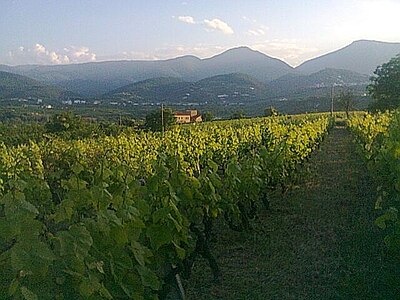
Vergina, Imathia prefecture, Macedonia, Greece





Geographical and Strategic Importance
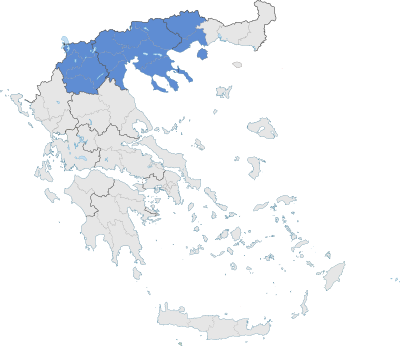
Macedonia, the largest geographical region of Greece, occupies a significant portion of the country's northern territory. Its landscape is predominantly mountainous, interspersed with fertile plains and a substantial coastline along the Aegean Sea. This varied topography influences its climate and biodiversity. Thessaloniki, the region's capital and Greece's second-largest city, is a major urban center situated on the Thermaic Gulf, serving as a critical port and economic engine.
Macedonia's strategic location is undeniable, forming Greece's borders with Albania, North Macedonia, and Bulgaria. This position has historically made it a crossroads for trade, migration, and cultural exchange, shaping its identity and its role within both Greece and the broader Balkan region. The region's vastness and diverse geography contribute significantly to its agricultural output and tourism potential.
From Ancient Kingdom to Modern Nation
The historical narrative of Macedonia is inextricably linked to the ancient Kingdom of Macedon, ruled by the Argead dynasty. Figures like Philip II, who unified and expanded the kingdom in the 4th century BC, and his son, Alexander the Great, who forged one of history's largest empires, hailed from this land. Prior to Philip's reign, the Macedonian kingdom occupied a smaller territory, roughly corresponding to modern-day Western and Central Macedonia.
The name 'Macedonia' was later applied to various administrative areas within the Roman and Byzantine Empires. Following the Ottoman conquest in the late 14th century, the administrative designation of Macedonia largely disappeared for centuries, only to be revived in the 19th century as a geographical and nationalistic concept. The Greek Revolution saw significant Macedonian participation, with figures like Emmanouel Pappas leading the struggle.
The region officially became part of the Greek state after the Balkan Wars and the Treaty of Bucharest in 1913, marking a pivotal moment in its modern history.
Economic Powerhouse and Cultural Tapestry
Macedonia remains a cornerstone of the Greek economy. It leads the nation in agricultural production, benefiting from its fertile plains and favorable climate, yielding significant amounts of fruits, vegetables, and olives. Beyond agriculture, the region is a major contributor to Greece's industrial output and a burgeoning tourism sector.
Thessaloniki, as the region's primary metropolis, functions as a vital economic, industrial, cultural, and commercial hub for all of Greece. Central Macedonia, in particular, is a highly sought-after tourist destination, second only to the Greek islands, attracting visitors with its blend of natural beauty and profound historical sites. The region boasts four UNESCO World Heritage sites, including Aigai (Vergina), the first capital, and Pella, the birthplace of Alexander the Great, as well as Stagira, the birthplace of the philosopher Aristotle, underscoring its immense cultural heritage.
Administrative Divisions and Unique Autonomy
The administrative landscape of Macedonia has evolved significantly. Following a reform in 1987, the region was divided into the second-level administrative divisions of Western Macedonia and Central Macedonia. The eastern part was managed under different prefectural structures until 2010.
Further subdivisions exist at the third level, managed by Decentralized Administrations. A particularly unique entity within Macedonia is the autonomous monastic community of Mount Athos. Situated on the Athos peninsula, it is a spiritual center with a long history of Orthodox monasticism.
While its religious affairs fall under the Ecumenical Patriarch of Constantinople, its political administration is overseen by the Greek Ministry of Foreign Affairs through a civil administrator. This distinct status highlights the region's complex governance and its preservation of ancient traditions alongside modern state structures.
Education and Intellectual Legacy
Macedonia has a rich educational heritage, deeply rooted in its history. The region was home to Aristotle, one of the most influential philosophers and scientists in Western thought. His birthplace, Stagira, is located here, symbolizing the intellectual foundations laid in ancient times.
In modern times, Thessaloniki serves as a major educational center. It hosts several prominent universities, including the Aristotle University of Thessaloniki, one of the largest universities in Greece and Southeast Europe. This university plays a crucial role in research, innovation, and educating future generations across a wide spectrum of disciplines.
The presence of such institutions ensures that Macedonia continues to be a center for learning and intellectual development, building upon its ancient legacy.
See also
Based on content from Wikipedia · Licensed under CC BY-SA 4.0