

Lezgian Language
Images

Кеферпатан Къавкъаздин чӀалар лез



The Lezgian Lexicon
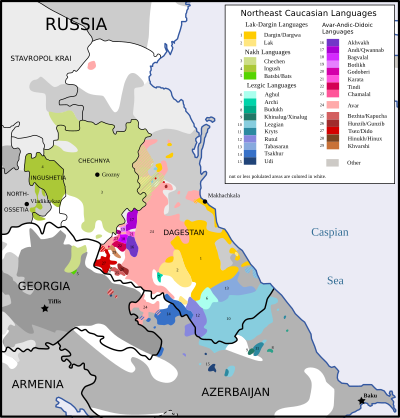
Lezgian, also known as Lezgi or Lezgin, is a prominent member of the Northeast Caucasian language family, a group renowned for its linguistic diversity and ancient origins. Spoken predominantly by the Lezgin people, its primary geographic centers are southern Dagestan within the Russian Federation and northern Azerbaijan. This language is not merely a tool for communication; it is a vital repository of Lezgin culture, history, and identity.
Its status as a 'much-written literary language' signifies a robust tradition of written expression, encompassing literature, poetry, and historical records, which has been crucial for its preservation and transmission across generations. Furthermore, its designation as an official language of Dagestan underscores its importance in regional governance, education, and public life, providing a framework for its continued use and development. The presence of Lezgian speakers in diaspora communities across countries like Turkmenistan, Uzbekistan, Kazakhstan, and Turkey highlights the migratory patterns of the Lezgin people and the enduring connection they maintain with their linguistic heritage.
Chronicles of the Caucasus
The historical journey of the Lezgian language is intrinsically linked to the complex ethnolinguistic landscape of the Caucasus Mountains. As a Northeast Caucasian language, it shares deep ancestral ties with languages like Ubykh, Abkhaz, and Chechen, pointing to a common linguistic ancestor that predates recorded history. The rugged terrain of the Caucasus has historically fostered linguistic isolation, leading to the development of distinct language families.
Lezgian's evolution has been shaped by centuries of interaction with neighboring languages and cultures, including Turkic and Slavic influences, particularly evident in its vocabulary and, to some extent, its phonology. The establishment of written Lezgian, often utilizing Cyrillic or Latin scripts adapted for its specific sounds, represents a conscious effort to codify and promote the language. This literary tradition has been instrumental in fostering a sense of shared identity among Lezgins, regardless of their geographic location, and has served as a bulwark against linguistic assimilation in the face of dominant regional languages.
Endangered Echoes
Despite its literary tradition and official status in Dagestan, Lezgian is classified as 'vulnerable' by UNESCO's Atlas of the World's Languages in Danger. This classification is a critical indicator of the challenges facing the language in the contemporary world. Factors contributing to this vulnerability often include the dominance of larger national languages (Russian in Dagestan, Azerbaijani in Azerbaijan), economic pressures that encourage migration and assimilation, and shifts in educational policies.
The 'vulnerable' status is not merely an academic label; it signifies a real risk of language attrition, where younger generations may not achieve full fluency, potentially leading to a decline in native speakers. Preserving Lezgian is therefore not just about maintaining a linguistic system; it is about safeguarding a unique worldview, a rich cultural heritage, and the collective memory of the Lezgin people. Efforts to revitalize the language through education, media, and cultural initiatives are paramount to ensuring its survival and continued relevance.
Phonetic Frontiers and Grammatical Grids
Lezgian is linguistically fascinating, particularly for its complex phonological system and intricate grammatical structure, characteristic of Northeast Caucasian languages. It possesses a rich inventory of consonants, often featuring ejective consonants and a variety of sibilants and uvular sounds that can be challenging for non-native speakers. The vowel system, while generally simpler than the consonant system, also contributes to the language's distinct soundscape.
Grammatically, Lezgian is an agglutinative language, meaning that grammatical functions are primarily expressed by adding multiple suffixes to a root word. It features an extensive system of noun cases, which are crucial for indicating the grammatical role of nouns within a sentence. These cases mark relationships such as subject, object, possession, location, and direction, often with nuanced distinctions.
The verb system is also complex, incorporating various aspects, moods, and tenses. Understanding these structural elements provides insight into the cognitive frameworks and expressive capabilities unique to the Lezgian language, reflecting a distinct way of conceptualizing and describing the world.
Lezgian in the Digital Age and Beyond
In the 21st century, the survival of languages like Lezgian is increasingly intertwined with their presence in the digital realm. Efforts are underway to create Lezgian-language digital content, including websites, social media platforms, and educational applications. This digital engagement is vital for reaching younger generations who are immersed in technology and for fostering a sense of community among dispersed speakers.
Furthermore, Lezgian plays a role in academic linguistics, serving as a key subject for the study of Caucasian languages and contributing to broader theories of language evolution and typology. Its unique features offer valuable data for researchers exploring linguistic universals and variations. The continued vitality of Lezgian depends on a multi-faceted approach: strong community support, educational initiatives that promote bilingualism, governmental recognition, and the innovative use of modern technologies to keep the language vibrant and accessible for future generations.
See also
Frequently Asked Questions
What is the Lezgian language?+
Where do people who speak Lezgian live?+
Why is Lezgian considered a vulnerable language?+
How is Lezgian written?+
What can people do to help keep Lezgian alive?+
Based on content from Wikipedia · Licensed under CC BY-SA 4.0