

Leipzig
Images

Zeppelinbrücke, Leipzig


From Medieval Marketplace to Publishing Powerhouse
Leipzig's identity is deeply interwoven with its history as a crucial nexus of commerce and intellectual exchange. Situated in the southernmost part of the North German Plain, at the confluence of the White Elster and its tributaries Pleiße and Parthe, the city's geographical advantage has been its bedrock. As early as the Holy Roman Empire, Leipzig was a significant trade city, strategically positioned at the intersection of the Via Regia and Via Imperii, two vital medieval arteries.
This legacy is vividly preserved in the Leipzig Trade Fair, an institution dating back to 1190, making it one of the oldest in the world. Beyond commerce, Leipzig blossomed into a preeminent center for publishing between 1764 and 1945, disseminating knowledge and culture across Europe. While its influence waned during the isolation of the Iron Curtain era following World War II, its historical importance as a cultural and economic hub remained undeniable, setting the stage for its later resurgence.
The Enduring Resonance of Leipzig's Musical Soul
Leipzig's reputation as a global music capital is not merely a modern accolade but a centuries-old tradition. The city has been a fertile ground for musical innovation and performance, nurturing some of the most iconic figures and institutions in classical music. The Thomanerchor, a boys' choir founded in 1212, represents an unbroken tradition of choral excellence spanning over eight centuries.
The Leipzig Gewandhaus Orchestra, established in 1743, stands as one of the world's oldest and most respected symphony orchestras. The city's musical heritage is further enriched by the presence of legendary composers who lived and worked here, including Johann Sebastian Bach (1723-1750), Felix Mendelssohn (1835-1847), and Richard Wagner, who was born in Leipzig. The University of Music and Theatre 'Felix Mendelssohn Bartholdy,' founded in 1843, continues this legacy, educating generations of musicians.
The Oper Leipzig, founded in 1693, is another cornerstone of the city's vibrant performing arts scene, solidifying Leipzig's status as a mecca for classical music enthusiasts.
Architectural Grandeur and Modern Infrastructure
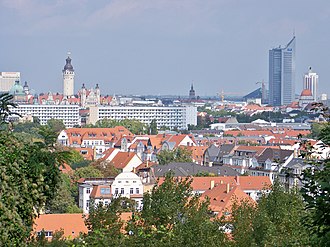
Leipzig presents a striking juxtaposition of historical architectural splendor and cutting-edge modern infrastructure. The city is adorned with approximately 12,500 buildings from the late 19th-century Gründerzeit period, showcasing a rich architectural heritage that evokes a sense of grandeur and historical depth. Dominating the urban landscape is Leipzig Hauptbahnhof, Europe's largest railway station by floor area, a testament to the city's enduring role as a transportation hub.
Since its operational launch in 2013, the Leipzig City Tunnel has become the central element of the S-Bahn Mitteldeutschland, Germany's most extensive S-Bahn network, significantly enhancing public transport efficiency. Furthermore, Leipzig Zoo is recognized as one of Europe's most advanced zoological institutions, reflecting the city's commitment to innovation and quality in public amenities and visitor experiences.
A Crucible of Change
Leipzig's historical significance transcends its economic and cultural contributions; it has been a pivotal site for profound political transformation. The events of 1989 in Leipzig were instrumental in precipitating the fall of communism in Central and Eastern Europe. Peaceful demonstrations, originating from St.
Nicholas Church, grew into massive gatherings that symbolized a powerful demand for freedom and change. This period highlights Leipzig's role as a catalyst for historical shifts. Since the early 2000s, the city has undergone a substantial revitalization, marked by urban renewal projects, economic growth, and the modernization of its infrastructure.
This transformation underscores Leipzig's resilience and its capacity to evolve, building upon its rich past while embracing a dynamic future as a leading European city.
Go deeper
Frequently Asked Questions
What is Leipzig famous for?+
Why is Leipzig called a music capital?+
Where does the Leipzig Trade Fair take place?+
How can you travel around Leipzig?+
What is special about Leipzig Zoo?+
Based on content from Wikipedia · Licensed under CC BY-SA 4.0