

Jordan
Images
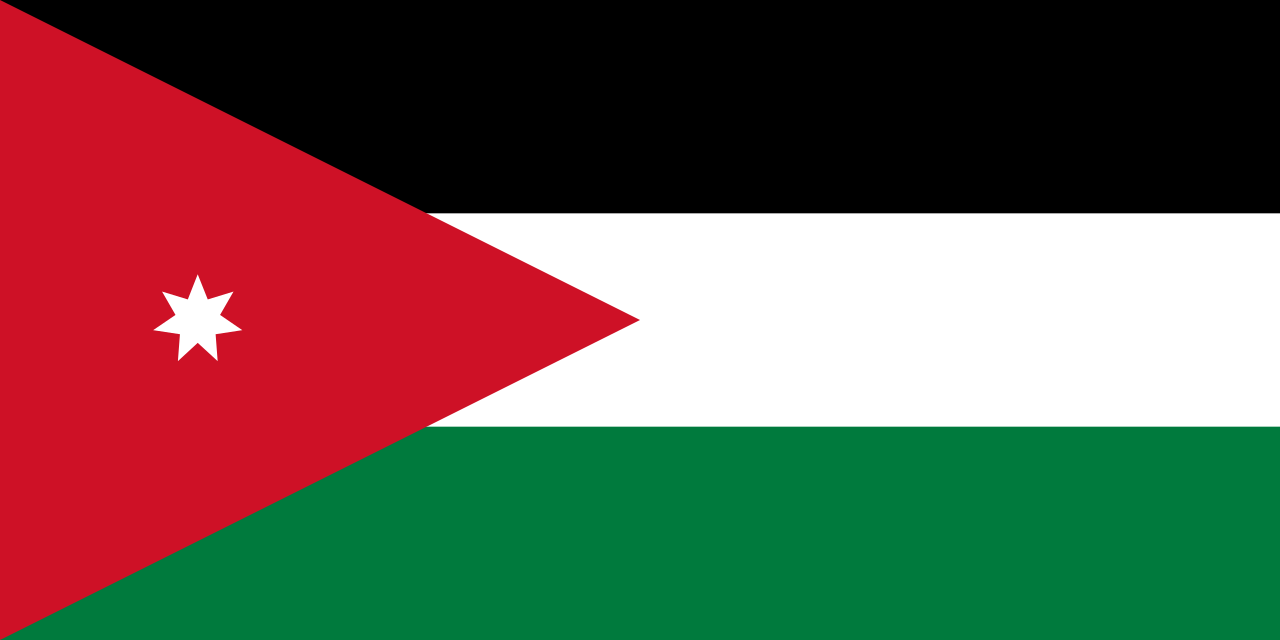
Jordan
Opens Google Maps in new tab
Geostrategic Location and Diverse Topography
The Hashemite Kingdom of Jordan occupies a strategically vital position in the Southern Levant, bordering Syria, Iraq, Saudi Arabia, Israel, and Palestine. This location has historically made it a crossroads for trade and cultural exchange, but also a focal point for regional dynamics. Its topography is remarkably varied, ranging from the fertile Jordan Rift Valley in the west, home to the life-giving Jordan River and the hypersaline Dead Sea, to vast, arid desert plains and mountainous regions in the east and south.
Jordan possesses a small but significant coastline along the Gulf of Aqaba, a narrow outlet to the Red Sea, connecting it to global maritime routes. The climate is predominantly semi-arid, characterized by hot, dry summers and cool winters, with rainfall concentrated in the cooler months, posing challenges for water management and agriculture.
A Palimpsest of Civilizations
Jordan's human history is exceptionally long, with evidence of Paleolithic habitation. The Iron Age saw the rise of indigenous kingdoms such as Ammon, Moab, and Edom. The 3rd century BC marked the ascendancy of the Arab Nabataeans, who established a sophisticated kingdom centered in Petra, a marvel of engineering and artistry carved directly into sandstone cliffs.
The subsequent Greco-Roman period witnessed the development of cities within the Decapolis league, integrating the region into the Hellenistic and Roman worlds. Following the decline of Byzantine rule, Jordan became part of successive Islamic caliphates, including the Rashidun, Umayyad, and Abbasid, leaving a rich Islamic architectural and cultural legacy. The Ottoman Empire's long reign was disrupted by World War I and the Great Arab Revolt, leading to the establishment of the Emirate of Transjordan in 1921 under British protection.
Jordan achieved full independence in 1946, evolving into the Hashemite Kingdom. Its modern history is deeply intertwined with the Israeli-Palestinian conflict, notably its annexation of the West Bank in 1948 and its subsequent renunciation of claims in 1988, alongside a landmark peace treaty with Israel in 1994.
Socio-Demographic Dynamics and Humanitarian Commitment
Jordan's population of approximately 11.5 million is predominantly Sunni Muslim, with a notable Arab Christian minority. A defining characteristic of modern Jordan is its long-standing commitment to hosting refugees. Since 1948, the country has absorbed significant numbers of displaced persons from neighboring conflicts, including a large Palestinian population, many of whom hold Jordanian citizenship, and more recently, substantial numbers of Syrian refugees.
This humanitarian role, while reflecting deep-seated values of hospitality, places considerable strain on national resources, infrastructure, and the economy. The demographic composition is thus complex, reflecting both indigenous Jordanians and a large expatriate and refugee population, contributing to a rich but sometimes challenging social fabric.
Economic Landscape
The Jordanian economy, while considered a lower-middle-income country, exhibits resilience and potential despite significant constraints. Its small size and scarcity of natural resources, particularly oil and gas, necessitate a focus on other sectors. Tourism is a major economic driver, attracting visitors to world-renowned archaeological sites like Petra, the desert landscapes of Wadi Rum, and the therapeutic waters of the Dead Sea. Medical tourism is also a growing sector, supported by a well-developed healthcare system.
The government actively seeks foreign investment, leveraging a skilled and educated workforce. However, the economic growth trajectory is often hampered by regional instability, the substantial costs associated with supporting a large refugee population, and water scarcity. Jordan is a founding member of the Arab League and the Organisation of Islamic Cooperation, participating actively in regional economic forums.
Governance and the Constitutional Monarchy
Jordan operates as a constitutional monarchy, a system that blends monarchical authority with representative governance. The King, as head of state, wields significant executive and legislative powers, playing a crucial role in policy-making and national direction. The government is structured with a bicameral parliament, comprising an elected lower house and an appointed upper house.
While democratic processes are in place, the monarch's influence remains substantial. Jordan's foreign policy is often characterized by a pragmatic approach, seeking stability and security in a volatile region. Its high Human Development Index ranking (100th globally) reflects progress in social welfare and education, underscoring the government's efforts to balance development with its regional responsibilities and internal socio-economic challenges.
Go deeper
Frequently Asked Questions
What is Jordan and where is it located?+
Why is Petra famous?+
How does Jordan manage its water?+
What is Jordan's role with refugees?+
What is the main job of tourism in Jordan?+
Based on content from Wikipedia · Licensed under CC BY-SA 4.0