

James's Flamingo
Images

james's flamingo


Adaptations to Extreme Altitudes
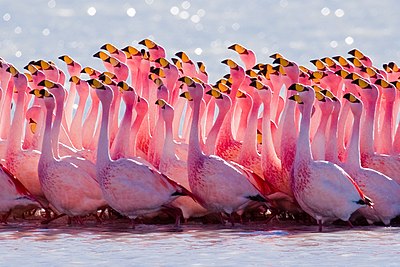
James's flamingo (Phoenicoparrus jamesi) is a remarkable avian species uniquely adapted to the extreme environmental conditions of the high-altitude Andean plateaus, often referred to as the Puna. These regions, situated between 3,500 and 5,000 meters (11,500 to 16,400 feet) above sea level, present formidable challenges including low oxygen levels, intense solar radiation, drastic temperature fluctuations, and high salinity in water bodies. The flamingo's physiology is finely tuned to these conditions; its specialized beak morphology allows for efficient filter-feeding in shallow, mineral-rich lakes, extracting microscopic algae, diatoms, and small invertebrates.
This dietary specialization makes the species highly dependent on the integrity of these unique aquatic ecosystems. Its close phylogenetic relationship with the Andean flamingo (Phoenicoparrus andinus) places them as the sole members of the genus Phoenicoparrus, suggesting a shared evolutionary history in these demanding environments. Their sympatric distribution with other flamingo species, including the Chilean flamingo (Phoenicopterus chilensis), indicates a complex ecological interplay within these shared habitats.
A Ghost Bird's Rediscovery
The history of James's flamingo is punctuated by a dramatic narrative of presumed extinction and subsequent rediscovery. For decades, the species was considered lost to science, its population having dwindled to undetectable levels. This perceived disappearance underscored the vulnerability of specialized species to environmental changes and human impact.
The pivotal rediscovery in a remote Andean location in 1956 was a monumental event in ornithology and conservation biology. It not only brought the species back from the brink of oblivion but also served as a potent reminder of the vastness of unexplored biodiversity and the critical need for continued field research. This event spurred renewed efforts to understand the species' population dynamics, habitat requirements, and the threats it faced, laying the groundwork for subsequent conservation initiatives aimed at preventing a recurrence of its near-extinction.
Ecological Role and Interconnectedness in the Puna
As a high-altitude specialist, James's flamingo plays a significant role in the delicate food web of the Andean Puna. By consuming vast quantities of microscopic organisms, it influences the population dynamics of algae and invertebrates within its habitat. This grazing pressure can affect water clarity and nutrient cycling, contributing to the overall health and balance of these unique aquatic ecosystems.
Furthermore, the flamingo's presence is an indicator species; its well-being reflects the environmental quality of its habitat. Declines in James's flamingo populations can signal broader ecological distress, such as water pollution, habitat degradation, or changes in water availability due to climate change or resource extraction. Its ability to coexist and sometimes nest alongside other flamingo species highlights the intricate social and ecological dynamics that characterize these high-Andean wetlands.
Conservation Imperatives
Despite its remarkable comeback, James's flamingo remains a species of conservation concern, currently listed as Near Threatened. The primary threats it faces are intrinsically linked to its specialized habitat. Mining activities, particularly those extracting borax and other minerals from the saline lakes, pose a significant risk through habitat destruction and water contamination. Climate change is another major concern, potentially altering water levels, salinity, and the availability of its food sources. Overgrazing by livestock in surrounding areas can also degrade nesting grounds and foraging areas.
Effective conservation strategies must address these multifaceted threats through international cooperation among the range states (Peru, Chile, Bolivia, and Argentina), habitat protection, sustainable resource management, and continued monitoring of population trends and environmental conditions. The future of James's flamingo hinges on our collective ability to safeguard these fragile, high-altitude ecosystems.
See also
Frequently Asked Questions
What makes James's flamingo special compared to other birds?+
Where does James's flamingo live?+
How does James's flamingo eat its food?+
Why was James's flamingo thought to be extinct?+
What is the conservation status of James's flamingo?+
Based on content from Wikipedia · Licensed under CC BY-SA 4.0