

Argentina
Images
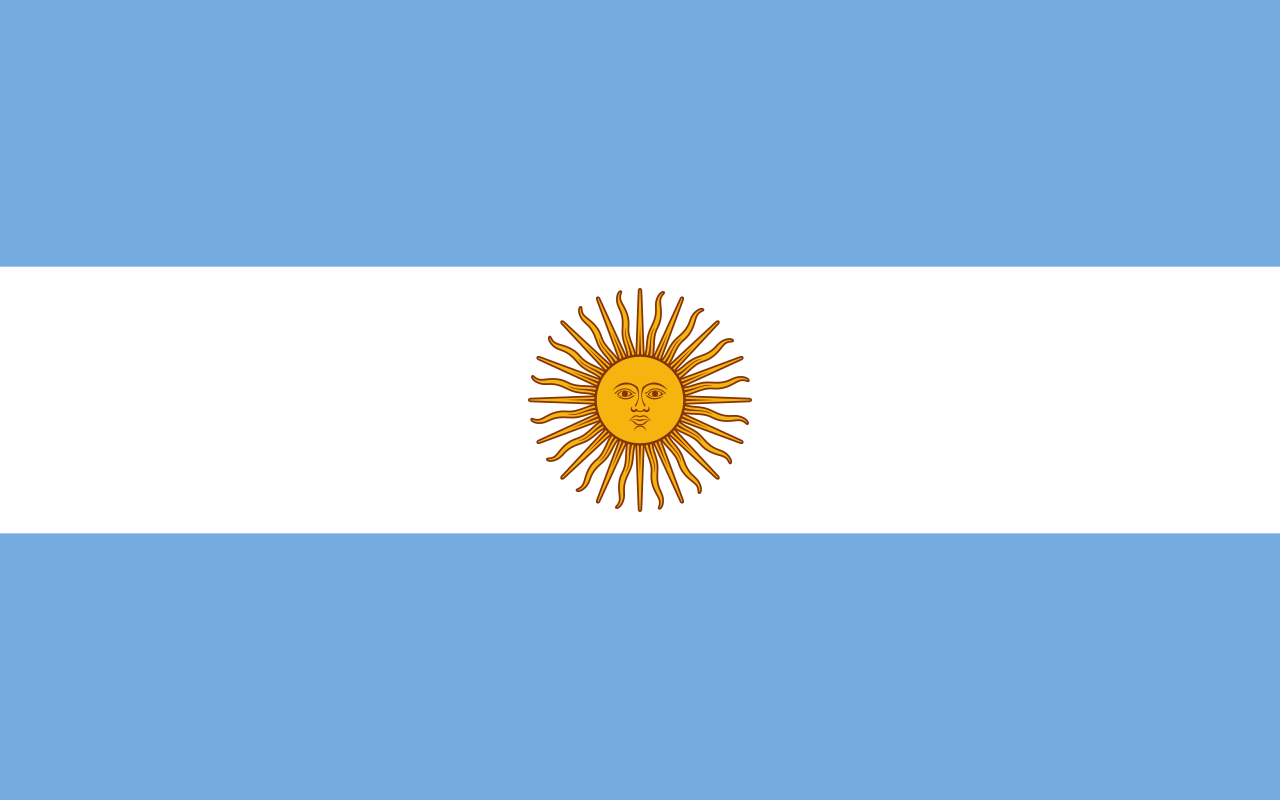
Argentina


Opens Google Maps in new tab
Geographical Tapestry of Argentina
Argentina presents a remarkable geographical diversity, spanning an immense territory in the southern hemisphere. Its sheer size, the second largest in South America and eighth globally, dictates a wide array of climates and ecosystems. The country is bordered by Chile to the west, with the formidable Andes Mountains forming a natural frontier that includes some of the highest peaks outside of Asia.
To the north and northeast lie Bolivia, Paraguay, and Brazil, while Uruguay and the expansive South Atlantic Ocean define its eastern edge. The southern reaches extend to the Drake Passage, a notoriously rough body of water separating South America from Antarctica. This vastness encompasses distinct regions: the fertile Pampas, crucial for agriculture; the arid, windswept plains of Patagonia, home to unique wildlife; the subtropical forests of the north; and the high-altitude deserts of the Andes.
Argentina also claims sovereignty over several islands and Antarctic territories, underscoring its extensive geographical reach and strategic positioning.
Echoes of the Past
Human presence in Argentina dates back to the Paleolithic era, with evidence of early hunter-gatherer societies. Pre-Columbian times saw the expansion of the Inca Empire into the northwestern regions. However, the genesis of modern Argentina lies in the 16th-century Spanish colonization.
It emerged as the successor state to the Viceroyalty of the Río de la Plata, established by Spain in 1776. The struggle for self-determination culminated in the Argentine Declaration of Independence on July 9, 1816, followed by a protracted War of Independence. The subsequent decades were marked by internal strife and civil wars until the nation's reorganisation as a federation in 1880.
This period of relative stability attracted significant European immigration, primarily from Italy and Spain, profoundly influencing Argentina's cultural, linguistic, and demographic landscape, creating a unique hybrid identity.
Socio-Cultural Dynamics and National Identity
Argentine society is characterized by a rich and complex cultural fabric, deeply interwoven with its European heritage and a strong sense of national pride. The tango, originating in the working-class neighborhoods of Buenos Aires, has transcended its origins to become a globally recognized symbol of Argentine passion and artistry. Football (soccer) holds an almost religious significance, fueling intense rivalries and unifying the nation through shared passion for its legendary teams and players.
The culinary scene is dominated by high-quality beef, a staple derived from the country's vast cattle ranches, or estancias, often prepared through traditional asado (barbecue) methods. Buenos Aires, the capital, remains a cultural epicenter, often lauded for its European architectural influences, vibrant literary scene, and bustling nightlife, earning it the moniker 'Paris of South America'. This blend of European sophistication and Latin American spirit defines the Argentine identity.
Economic Landscape and International Engagement
Argentina possesses a significant and diverse economy, historically driven by its abundant agricultural resources. The fertile Pampas region supports large-scale production of grains like soybeans and wheat, as well as extensive cattle ranching, making agricultural exports a cornerstone of its economy. Beyond agriculture, the country has developed industrial sectors including manufacturing, automotive production, and mining.
Argentina is a key player in regional trade, serving as a founding member of Mercosur, a prominent South American economic bloc. On the global stage, it holds the status of a middle power and is recognized as a major non-NATO ally of the United States. Its economic performance, while subject to fluctuations, consistently ranks among the largest in Latin America, contributing to its influence in international forums like the G20.
Governance, Education, and Societal Development
Argentina operates as a federal republic, structured into twenty-three provinces and one autonomous capital city, Buenos Aires. This federal system grants considerable autonomy to the provinces, each with its own constitution, while adhering to a national framework. The country has a long-standing commitment to education, boasting a high literacy rate and a robust public education system that extends from primary to tertiary levels.
Universities like the University of Buenos Aires are highly regarded regionally and internationally. Argentina is classified as a developing country with a high Human Development Index (HDI), reflecting its progress in areas such as healthcare, education, and living standards. Despite historical periods of political instability and economic challenges, Argentina remains a significant regional power with a strong democratic tradition and a forward-looking approach to societal development.
Go deeper
Frequently Asked Questions
What makes Argentina so big?+
Why is Buenos Aires called the 'Paris of South America'?+
How did Argentina become its own country?+
Where do the Andes Mountains run in Argentina?+
What kinds of animals live in Patagonia?+
Based on content from Wikipedia · Licensed under CC BY-SA 4.0