

Henry, Count of Portugal
Images
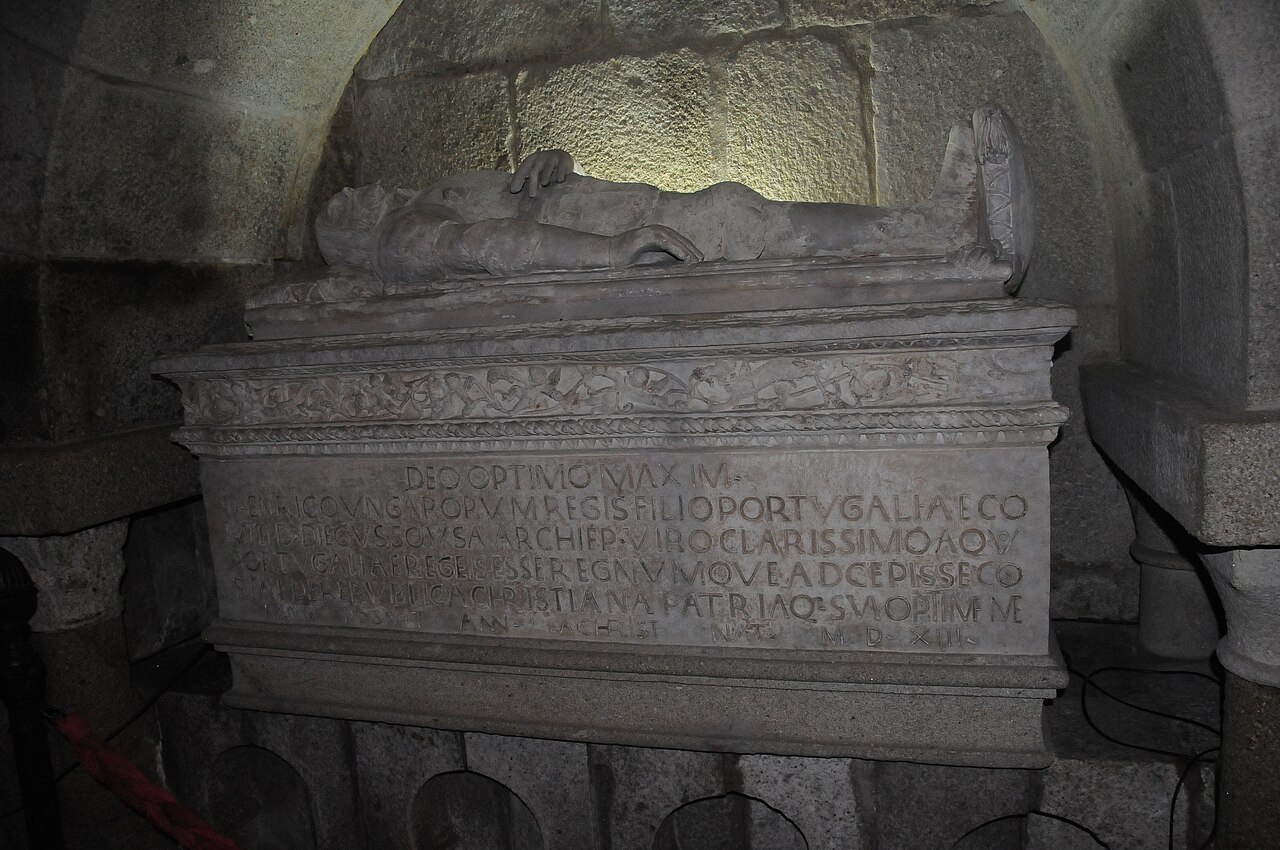
File:Henry, Count of Portugal (1066-1112).JPG


The Burgundian Ascendancy in the Iberian Context
Henry of Burgundy, born circa 1066, was a scion of the powerful Capetian House of Burgundy, a lineage deeply intertwined with the French monarchy. His arrival and subsequent elevation to Count of Portugal marked a significant shift in the region's political dynamics. Portugal, at this time, was a county within the Kingdom of León, and its rulers were often vassals of the Leonese crown.
Henry's marriage to Teresa of León, an illegitimate daughter of King Alfonso VI of León and Castile, provided him with a crucial claim and influence within the Iberian power structures.
His tenure as Count was characterized by a consolidation of power and a subtle, yet determined, assertion of regional autonomy. He was not merely a foreign noble transplanted into a new land; he actively engaged with the local nobility and governance, laying the groundwork for a more unified and distinct Portuguese identity. His leadership was a critical precursor to the eventual declaration of independence, demonstrating a sophisticated understanding of feudal politics and dynastic ambition.
Paternity and Political Succession
The most profound aspect of Henry's historical significance lies in his role as the father of Afonso Henriques, the first King of Portugal. This paternal connection was not merely biological; it was a strategic dynastic inheritance. Henry, as a powerful Count and a member of a respected European dynasty, provided Afonso with the necessary prestige, lineage, and political capital to challenge the suzerainty of León.
Afonso Henriques's eventual success in establishing the Kingdom of Portugal in 1139 was a direct consequence of the foundations laid by his father.
Henry's governorship fostered an environment where the concept of a separate Portuguese kingdom could take root. He cultivated loyalty among the Portuguese nobility and administered the county with a degree of independence that emboldened his son to pursue full sovereignty. The narrative of Afonso Henriques's rise is inextricably linked to the authority and influence that Henry wielded during his lifetime.
Geopolitical Landscape and the County of Portugal
The County of Portugal, where Henry held sway, was a territory situated in the northwestern part of the Iberian Peninsula. Its geography is marked by a diverse topography, ranging from the Atlantic coastline with its natural harbors to the inland regions characterized by rolling hills, fertile river valleys like the Douro, and mountainous areas. This varied landscape influenced settlement patterns, agricultural practices, and strategic military considerations throughout history.
During Henry's time, the Iberian Peninsula was a complex mosaic of Christian kingdoms and Muslim territories, with constant political maneuvering and warfare. Portugal, as a county under León, occupied a strategically important position, acting as a buffer and a frontier region. Its development was shaped by its proximity to both the Atlantic and the larger Iberian kingdoms, making its eventual independence a significant geopolitical event that altered the balance of power in the region.
Governance, Administration, and the Seeds of Sovereignty
As Count of Portugal from approximately 1096 until his death in 1112, Henry was responsible for the administration and defense of his territory. His rule involved managing feudal obligations, dispensing justice, and overseeing economic activities within the county. He was a key figure in the ongoing Reconquista, the Christian reconquest of the Iberian Peninsula from Muslim rule, and his military activities contributed to the expansion and consolidation of Christian territories.
While Henry himself did not declare Portugal an independent kingdom, his governance was instrumental in fostering a distinct political entity. He operated with a degree of autonomy that allowed for the development of unique administrative practices and a growing sense of regional identity. This period of effective self-governance under Henry and his predecessors created the conditions necessary for Afonso Henriques to make the bold move towards full sovereignty, transforming the county into a kingdom.
The Enduring Impact of a Burgundian Count
Henry, Count of Portugal, represents a crucial transitional figure in Portuguese history. Though he ruled as a count, his actions and lineage directly paved the way for the establishment of a sovereign monarchy. His strategic marriage, his administrative capabilities, and his role as the father of Afonso Henriques cemented his place as a foundational figure.
He was a product of the broader European feudal system but became an architect of a new national identity.
His legacy is not just in the titles he held or the lands he governed, but in the future he enabled. The Capetian House of Burgundy's influence in Portugal, initiated by Henry, would shape the country's destiny for centuries, influencing its culture, politics, and its eventual role as a global maritime power. He stands as a testament to how individual leadership and dynastic ambition can forge the destiny of nations.
See also
Frequently Asked Questions
Who was Henry, Count of Portugal?+
How did Henry help start Portugal?+
Why is Henry important for Portugal's independence?+
Where did Henry rule?+
When did Henry live and rule?+
Based on content from Wikipedia · Licensed under CC BY-SA 4.0