

Guyana
Images
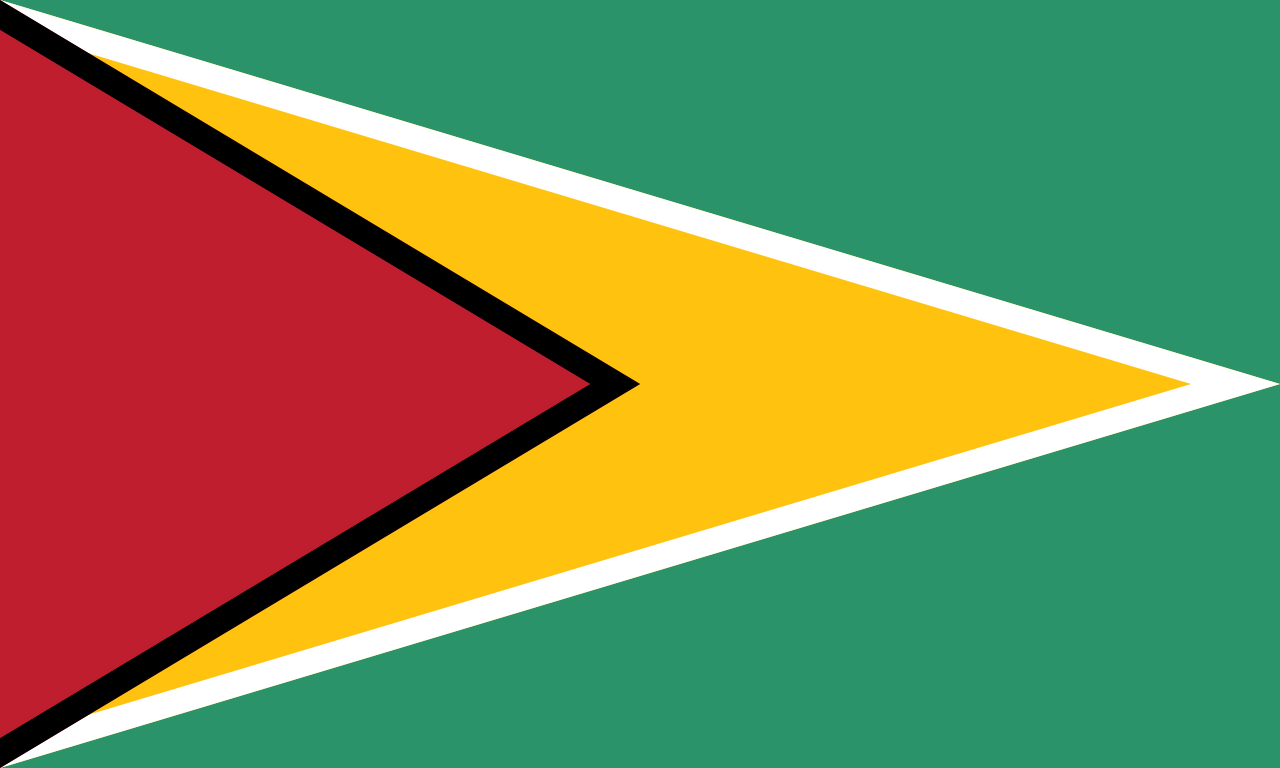
Guyana
Opens Google Maps in new tab
Geographical Identity
Guyana occupies a distinctive geographical niche on the northeastern coast of South America. While physically part of the continent, it strongly identifies with the Caribbean due to historical, cultural, and political ties, having been part of the British West Indies. This dual identity is reflected in its membership in both the Union of South American Nations and the Caribbean Community (CARICOM), for which it serves as the secretariat headquarters.
Bordered by the Atlantic Ocean to the north, Brazil to the south and southwest, Venezuela to the west, and Suriname to the east, Guyana's strategic location is notable. The country's interior is dominated by dense rainforests, part of the vast Amazon basin, and is characterized by numerous rivers, earning it the moniker 'Land of Many Waters.' This environment fosters exceptional biodiversity, making Guyana a critical region for conservation efforts. The landmass is part of the Guiana Shield, an ancient geological formation known for its rich natural resources.
A Crucible of Cultures
Guyana's population is a vibrant mosaic shaped by centuries of history. Originally inhabited by indigenous peoples such as the Lokono and Kalina, the territory was subsequently colonized by the Dutch and later came under British rule, becoming British Guiana. This colonial past profoundly influenced its socio-political landscape, establishing English as the official language and fostering a plantation-based economy.
Following independence in 1966 and the establishment of a republic in 1970, Guyana has seen significant migration, particularly from India and Africa, alongside Chinese, Portuguese, and other European groups. This diverse heritage is celebrated through various traditions, festivals, and cuisines. The presence of nine distinct indigenous tribes, each with its own language and customs, adds another layer to Guyana's rich cultural tapestry, underscoring its status as a unique blend of indigenous, European, and Asian influences within South America.
Economic Metamorphosis
Historically, Guyana has faced economic challenges, with a significant portion of its population living below the poverty line. However, the discovery of vast offshore oil reserves since 2015 has triggered an unprecedented economic transformation. Commercial drilling began in 2019, and the subsequent findings have positioned Guyana as a major player in the global energy market. The nation's economy experienced a remarkable growth of 49% in 2020, making it one of the world's fastest-growing economies.
Projections indicate that Guyana will become one of the largest per capita oil producers globally. This influx of wealth has significantly boosted its GDP per capita, placing it among the wealthiest nations in the Americas. Nevertheless, the country faces the critical challenge of structurally managing this rapid growth to ensure equitable distribution of wealth and sustainable development, mitigating risks associated with resource dependency.
Linguistic Landscape and Educational Aspirations
The linguistic environment of Guyana is remarkably diverse. English serves as the official language, a direct legacy of British colonialism, making Guyana unique among mainland South American nations. Complementing this is Guyanese Creole, an English-based creole language widely spoken by the majority of the population, reflecting a distinct cultural evolution.
Furthermore, the country is home to nine indigenous tribes, each preserving its own ancestral languages, contributing to a rich multilingual heritage. Education in Guyana is structured across primary, secondary, and tertiary levels, with English as the medium of instruction. The government is committed to improving educational access and quality, recognizing its crucial role in national development and in equipping citizens to navigate the opportunities and challenges presented by the country's evolving economy.
The aim is to foster a skilled workforce capable of managing the nation's resources and participating effectively in the global arena.
Governance and International Engagement
Guyana operates as a cooperative republic within the Commonwealth of Nations, a political system that emphasizes collaboration and shared governance. The country's government structure is designed to represent its diverse population and manage its national interests. As the headquarters of the Caribbean Community (CARICOM), Guyana plays a pivotal role in regional integration, fostering cooperation on economic, political, and social matters among Caribbean nations.
Its membership in the Union of South American Nations further solidifies its position as a bridge between the Caribbean and South America. The nation's recent economic boom, driven by oil discoveries, has elevated its international profile and increased its geopolitical significance. Managing this newfound wealth and its implications for foreign policy and regional dynamics is a key focus for the Guyanese government.
Go deeper
Frequently Asked Questions
What is Guyana?+
Where is Guyana located?+
Why does Guyana speak English?+
Why is Guyana called the Land of Many Waters?+
What happened when oil was found in Guyana?+
Based on content from Wikipedia · Licensed under CC BY-SA 4.0