

Union of South American Nations
Images

File:Flags of the Union of South American Nations.gif




Founding Principles and Geopolitical Context
The Union of South American Nations (UNASUR) emerged from a confluence of regional aspirations for greater autonomy and a desire to reshape the geopolitical landscape of South America. Launched with the signing of its Constitutive Treaty on May 23, 2008, in Brasília, Brazil, UNASUR was envisioned as a supranational body capable of fostering deep cooperation across political, economic, and social spheres. A significant underlying motivation, particularly championed by its initial proponents like Hugo Chávez, was to counteract the perceived hegemonic influence of the United States in the Western Hemisphere.
This anti-imperialist undercurrent aimed to create a more balanced international order where South American nations could assert their interests independently. The organization sought to build a unified South American identity, promote regional stability, and facilitate collaborative development projects, such as infrastructure and energy initiatives. The formal establishment of UNASUR as a legal entity on March 11, 2011, following the ratification by the ninth member state (Uruguay on December 1, 2010), marked a critical juncture, solidifying its mandate and operational framework with headquarters designated for Quito, Ecuador.
Mechanisms of Cooperation and Early Momentum
UNASUR's operational framework was designed to facilitate a broad spectrum of intergovernmental collaboration. While the Constitutive Treaty laid the groundwork, the organization's effectiveness depended on the active participation and commitment of its member states. The initial years saw momentum build as countries worked towards common goals, aiming to harmonize policies and address shared challenges.
This included efforts in areas such as defense, education, health, and infrastructure, reflecting a holistic approach to regional development. The headquarters in Quito was intended to serve as the central hub for these coordinated activities, symbolizing a unified South American presence. The process of ratification was crucial; it was the act of multiple sovereign nations formally agreeing to the treaty's terms that imbued UNASUR with its legal authority and legitimacy.
Uruguay's role in reaching the nine-state threshold was pivotal, transforming the aspirational union into a functioning intergovernmental organization.
Challenges, Withdrawals, and the Erosion of Unity
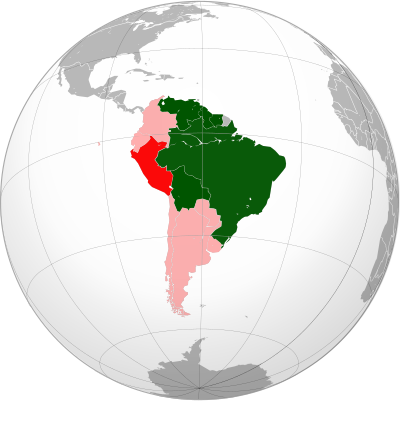
Despite its ambitious goals, UNASUR faced significant internal and external pressures that led to a substantial decline in its membership and effectiveness. By April 2018, a wave of suspensions saw key member states, including Argentina, Brazil, Chile, Colombia, Paraguay, and Peru, pause their participation. This collective withdrawal signaled deep-seated disagreements and a fracturing of the regional consensus that had initially propelled the organization forward.
Colombia formally announced its withdrawal later that year, followed by Brazil and Ecuador in 2019, and Uruguay in 2020. These departures were often attributed to shifting political landscapes within member countries, ideological divergences, and a re-evaluation of the benefits of continued membership. The loss of major economies and influential nations severely hampered UNASUR's capacity to act as a cohesive bloc and pursue its stated objectives, leading to a period of dormancy and questioning its future viability.
The Emergence of PROSUL and Shifting Alliances
The fragmentation of UNASUR coincided with the rise of alternative regional groupings, reflecting the fluid nature of South American diplomacy. In January 2019, amidst heightened concerns regarding the political situation in Venezuela, a new initiative known as PROSUL (or PROSUR) began to gain traction. This proposed bloc was advanced by countries seeking to foster cooperation based on shared democratic principles and market-oriented economic policies, explicitly excluding Venezuela from its nascent framework.
A summit in Chile in March 2019 formalized the organization of PROSUL, inviting nations such as Argentina, Brazil, Chile, Colombia, Ecuador, Paraguay, Peru, and Uruguay. This development underscored a strategic realignment, with many former UNASUR members seeking new platforms for collaboration that better aligned with their current political and economic orientations. The rejoining of Brazil in May 2023, however, suggests that the landscape of regional cooperation remains dynamic and open to renegotiation.
Legacy and Future Implications
The Union of South American Nations represents a significant, albeit complex, chapter in the history of South American regionalism. While its initial promise of deep integration and collective empowerment faced considerable challenges, leading to widespread withdrawals, the underlying impetus for regional cooperation persists. UNASUR's experience highlights the difficulties inherent in forging unity among diverse nations with varying political ideologies, economic interests, and foreign policy priorities.
The organization's legacy is one of both aspiration and fragmentation, serving as a case study in the complexities of supranational governance and the constant negotiation of national sovereignty within a regional context. The emergence of PROSUL and the fluctuating membership of UNASUR demonstrate that regional blocs are not static entities but are continuously reshaped by evolving geopolitical realities and the strategic choices of individual states. The ongoing search for effective mechanisms of regional cooperation in South America continues, adapting to new challenges and opportunities.
See also
Frequently Asked Questions
What is the Union of South American Nations (UNASUR)?+
When was UNASUR started and where was it founded?+
Why did countries want to create UNASUR?+
Where is the UNASUR headquarters located?+
Why did some countries leave UNASUR?+
Based on content from Wikipedia · Licensed under CC BY-SA 4.0