

Glacier National Park (U.S.)
Images

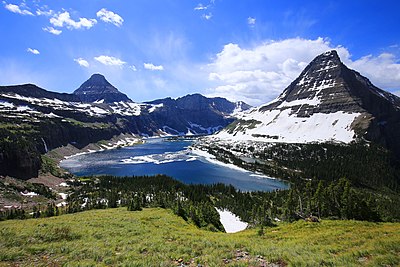
U-Valley, Going-to-the-Sun Road, Glacier National Park, Montana




Geological Genesis
Glacier National Park's breathtaking topography is a direct result of immense geological forces and the relentless power of ice. The park's mountains are primarily composed of ancient sedimentary rocks, famously part of the Lewis Overthrust. This geological phenomenon, occurring approximately 170 million years ago, involved massive slabs of older rock being thrust eastward over much younger strata.
These ancient rocks, some of the finest examples of early life fossils on Earth, now form the dramatic peaks and valleys. Following this uplift, the landscape was profoundly shaped by Pleistocene glaciers. These colossal ice sheets carved deep, U-shaped valleys, sculpted cirques, and deposited vast amounts of sediment, forming moraines that impounded meltwater to create the park's iconic lakes.
The sheer scale of glacial action is evident in the park's dramatic cirques, arêtes, and the characteristic valley profiles. The Lewis and Livingston ranges bear the unmistakable signature of this glacial sculpting, a process that continues to influence the park's hydrology and geomorphology.
Biodiversity Hotspot
The park encompasses an astonishing range of ecosystems, supporting a rich tapestry of life. Its habitats span from montane forests, characterized by western redcedar and hemlock in the southwestern portions, to alpine tundra above the treeline. This ecological diversity provides refuge for an impressive array of flora and fauna.
Large mammals are a defining feature, with populations of grizzly bears, black bears, bighorn sheep, elk, moose, mountain goats, mountain lions, gray wolves, wolverines, and Canadian lynx inhabiting the various zones. The park is committed to maintaining its native species, and remarkably, it still harbors almost all of its original native plant and animal species documented since European arrival. Beyond the charismatic megafauna, Glacier is a haven for hundreds of bird species, over a dozen fish species, and numerous reptiles and amphibians.
The invertebrate diversity is staggering, with thousands of species of insects, including a significant number of butterflies and pollinators, playing crucial roles in the ecosystem's functioning.
Human History
The human history of Glacier National Park is deeply intertwined with its natural landscape. For millennia, the region was inhabited by Native American tribes, including the Blackfeet on the eastern side and the Flathead on the western side, who utilized the land for hunting and sustenance. The establishment of the park in 1910 was partly influenced by the cession of mountainous lands by the Blackfeet in 1895.
Following the park's creation, the Great Northern Railway recognized its tourism potential and constructed a series of iconic hotels and chalets, many of which are now designated National Historic Landmarks. These structures, along with the engineering marvel of the Going-to-the-Sun Road (completed in 1932), represent a significant chapter in the park's development, facilitating access and shaping the visitor experience. The road itself is a testament to human ingenuity in overcoming challenging terrain, earning its own National Historic Civil Engineering Landmark status.
The Vanishing Glaciers
Perhaps the most poignant and urgent aspect of Glacier National Park today is the rapid decline of its namesake glaciers. Once numbering around 150 large glaciers in the mid-19th century, this figure had dwindled to just 25 by 2010. Scientists project that, if current climate patterns persist, all remaining glaciers could disappear by 2030.
This loss has profound implications, not only for the park's iconic identity but also for its hydrology, ecosystems, and the cultural heritage tied to these icy giants. The melting glaciers serve as a stark, visible indicator of global climate change. Their disappearance will alter water availability downstream, impact alpine ecosystems, and diminish the unique geological features that define the park.
The ongoing monitoring and study of these glaciers are critical for understanding the broader impacts of climate change and informing conservation strategies.
International Cooperation and Conservation
Glacier National Park is part of a unique international conservation effort. It directly borders Waterton Lakes National Park in Canada, and together they form the Waterton-Glacier International Peace Park, established in 1932 as the world's first of its kind. This transboundary designation highlights a shared commitment to preserving a vast, interconnected ecosystem.
Both parks have received international recognition for their ecological significance, designated as UNESCO Biosphere Reserves in 1976 and later as World Heritage Sites in 1995. More recently, in 2017, the joint park was recognized as a provisional Gold Tier International Dark Sky Park, underscoring its value for astronomical observation and its commitment to preserving natural darkness. This collaborative approach is essential for managing wildlife corridors, addressing shared environmental challenges, and promoting sustainable tourism across international borders.
See also
Frequently Asked Questions
What are the mountains in Glacier National Park made of?+
How did glaciers shape the park?+
What kinds of animals live in Glacier National Park?+
Who lived in the area before the park was created?+
Why is the Going‑to‑the‑Sun Road famous?+
Based on content from Wikipedia · Licensed under CC BY-SA 4.0