

Argentina: A Land of Mountains, Plains, and Big Adventures!
Images
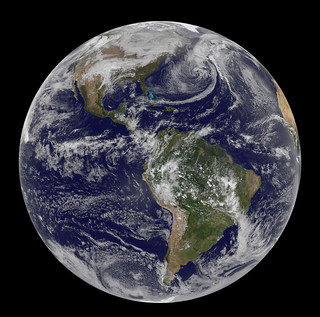
GOES Satellite Sees Strong Front Bringing Blizzard Conditions to U.S. Southwest


Geopolitical Significance of Argentina's Borders and Size
Argentina's sheer size, ranking eighth globally and second in South America, immediately confers significant geopolitical weight. Its extensive western frontier with Chile is dominated by the formidable Andes Mountains, a natural barrier that has historically influenced migration, trade, and defense strategies. To the east, the South Atlantic Ocean provides a long coastline, crucial for maritime trade, fishing, and naval presence.
Bordering Bolivia and Paraguay to the north, and Brazil and Uruguay to the northeast, Argentina is strategically positioned within Mercosur, the South American trade bloc. Its territorial claims, including a significant portion of Antarctica (Argentine Antarctica) and several South Atlantic islands, underscore its ambition and engagement in international territorial discussions, particularly concerning resource rights and scientific research in polar regions.
These claims, while subject to the Antarctic Treaty, reflect a long-standing national policy of asserting sovereignty.
Andean Majesty and the Agricultural Heart of the Pampas
The geography of Argentina is dramatically bifurcated between the towering Andes and the expansive Pampas. The Andes Mountains are not merely a physical barrier but a vital hydrological system, with glaciers and snowmelt feeding numerous rivers that sustain life and agriculture in arid regions. Peaks like Aconcagua, the highest mountain outside of Asia, are iconic natural landmarks.
Descending eastward, the landscape transforms into the Pampas, a vast, fertile plain characterized by temperate grasslands. This region is the agricultural powerhouse of Argentina, renowned for its cattle ranching (estancias) and extensive cultivation of grains such as wheat, corn, and soybeans. The ecological transition from alpine tundra in the Andes to the rich chernozem soils of the Pampas creates a remarkable diversity of ecosystems within a single nation.
Hydrography, Islands, and the Antarctic Frontier
Argentina possesses a complex hydrographic network, with major river systems like the Paraná, Uruguay, and Paraguay rivers forming crucial arteries for transportation, hydroelectric power generation, and irrigation. These rivers converge to form the Río de la Plata, one of the world's widest estuaries, which serves as a vital commercial waterway. Beyond the mainland, Argentina's territorial assertions extend to the Falkland Islands (Islas Malvinas), South Georgia, and the South Sandwich Islands, territories that have been sources of historical and ongoing geopolitical contention.
The claim to Argentine Antarctica, encompassing the Antarctic Peninsula and extending southwards, is a testament to Argentina's historical engagement with polar exploration and its strategic interest in the continent's resources and scientific potential, making it one of the original signatories of the Antarctic Treaty.
Demographic Distribution and Urbanization Patterns
Argentina's population of approximately 46.6 million is unevenly distributed, with a strong concentration in urban centers. The capital city, Buenos Aires, is a megacity and the country's primary economic, cultural, and political hub, home to a significant portion of the nation's inhabitants. Other major urban centers include Córdoba, Rosario, and Mendoza, each serving as regional economic and cultural nodes.
This high degree of urbanization reflects a broader trend in South America, influenced by historical patterns of settlement, economic opportunities in cities, and rural-to-urban migration. The Spanish language, inherited from its colonial past, serves as the unifying linguistic element across this diverse population, though regional dialects and indigenous languages persist in certain areas.
Economic Geography
Argentina's economy is deeply intertwined with its geography. The Pampas region is the foundation of its strong agricultural sector, making it a major global exporter of beef, soybeans, corn, and wheat. The country also possesses significant mineral resources, including lithium, gold, and silver, particularly in the Andean regions, which are increasingly important in the global economy.
Hydroelectric power is generated from its major river systems, and there is potential for wind and solar energy in various regions. The extensive coastline and river networks facilitate trade and transportation, supporting industries ranging from manufacturing to tourism. Understanding Argentina's economic activities requires appreciating how its diverse landscapes and natural resources are leveraged for national development and international commerce.
See also
Based on content from Wikipedia · Licensed under CC BY-SA 4.0