

The Mighty Bastille!
Images

Grenoble seen La Bastille


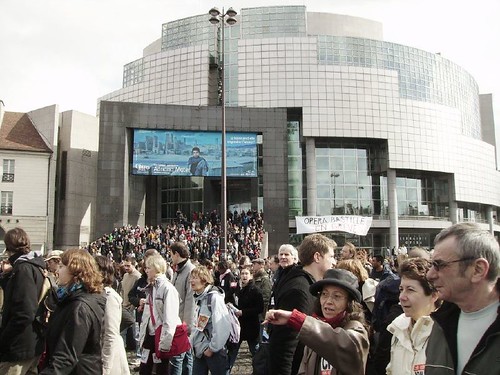




Architectural Sentinel and Early Conflicts
The Bastille, originally known as the Bastille Saint-Antoine, was conceived not as a prison but as a formidable defensive structure. Its construction began in the late 14th century, around 1370, to fortify Paris against potential English incursions during the Hundred Years' War. Featuring eight imposing towers and a strategic design, it guarded the Porte Saint-Antoine, a vital eastern gateway.
This innovative architectural approach proved influential, with similar designs appearing elsewhere. Beyond its defensive role, the Bastille became deeply enmeshed in France's internal power struggles. It witnessed conflicts between rival factions like the Burgundians and Armagnacs in the 15th century and played a part in the Wars of Religion in the 16th century.
Its strategic importance was undeniable, making it a focal point in the nation's turbulent history long before its transformation into a prison.
The Bastille's Transformation into a State Penitentiary
The Bastille's transition to a state prison began in earnest in the 15th century and solidified over time. By 1417, it was formally designated as a state prison, a role that expanded under various rulers, including the English occupiers and later Louis XI. Under Louis XIV, it became a notorious lock-up for individuals who opposed or angered the crown, including political dissidents and, following the revocation of the Edict of Nantes, French Protestants.
From 1659, its primary function was as a state penitentiary, holding a total of 5,279 prisoners by 1789. While historical accounts suggest conditions were often better than in other prisons, and reforms were implemented in the 18th century, the Bastille's reputation as a symbol of arbitrary royal power grew. Its use for enforcing censorship of printed media further fueled public resentment, making it a focal point for criticism of the Ancien Régime.
The Storming
The dramatic storming of the Bastille on July 14, 1789, marked a pivotal moment in the French Revolution. Fueled by a severe financial crisis, political instability, and burgeoning republican sentiments, the citizens of Paris, particularly those from the Faubourg Saint-Antoine, sought gunpowder stored within the fortress. The assault was not just about acquiring arms; it was a symbolic act of defiance against royal authority.
The fall of the Bastille, which resulted in the release of its seven remaining prisoners and the death of its governor, Bernard-René de Launay, resonated deeply across France. It demonstrated the power of popular uprising and became an enduring emblem of the overthrow of despotism and the pursuit of liberty, equality, and fraternity.
Demolition and Enduring Legacy
Following its capture, the Bastille was ordered to be demolished by the Committee of the Hôtel de Ville. The dismantling process began almost immediately, with souvenirs of the fortress distributed throughout France as potent symbols of the revolution's triumph. Over the subsequent century, the site and the memory of the Bastille remained central to French political discourse, featuring prominently in subsequent revolutions, protests, and popular culture.
While the physical structure is gone, replaced by the Place de la Bastille, its historical and symbolic significance endures. Historians continue to analyze its role, with some noting that in its later years, it was a relatively well-administered institution of political control, a stark contrast to its revolutionary image. The Bastille remains a powerful reminder of the dramatic shifts in power and ideology that shaped modern France.
Go deeper
Based on content from Wikipedia · Licensed under CC BY-SA 4.0