

Francisco Pizarro
Images
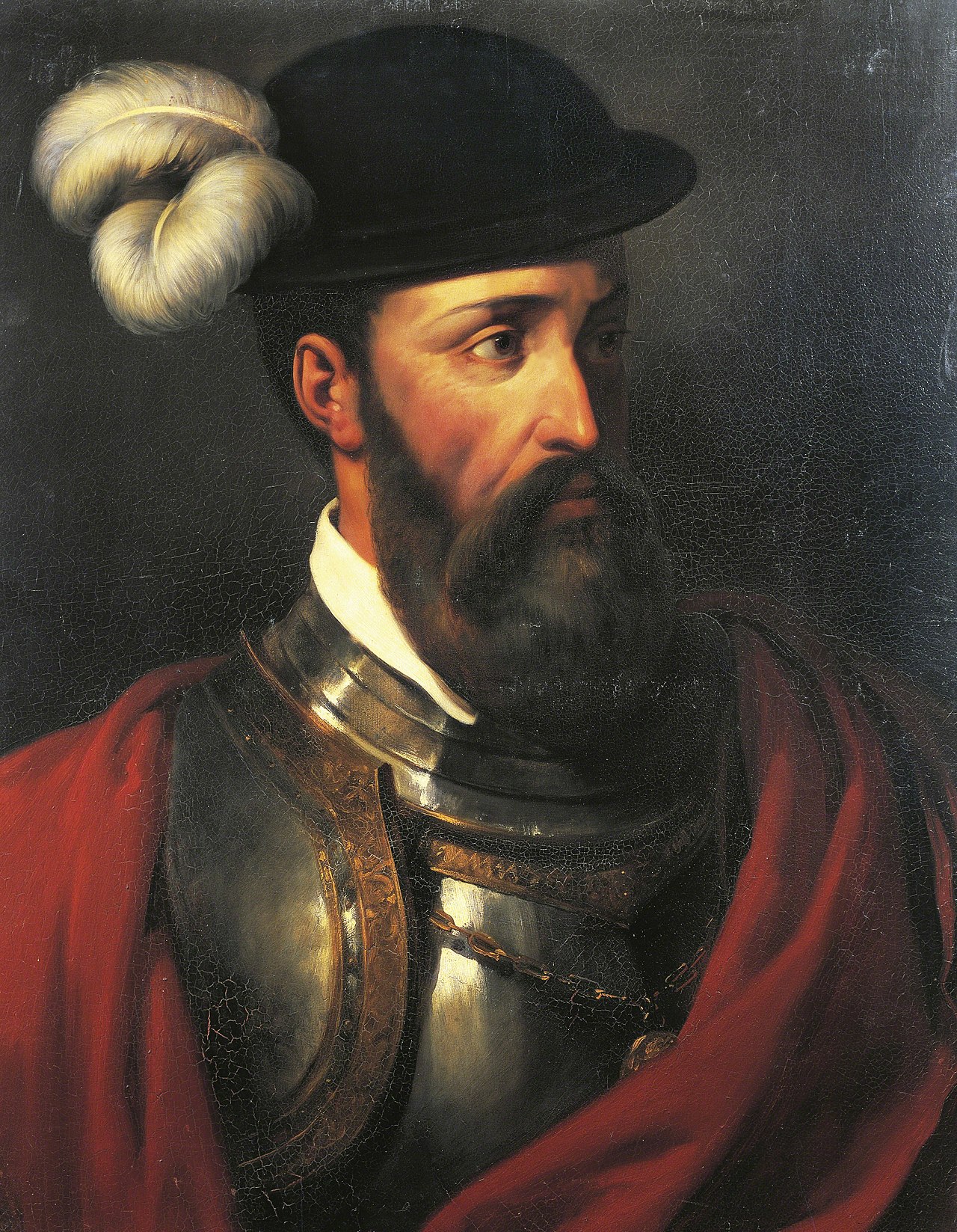
Francisco Pizarro
From Extremadura to the Edge of the Known World
Francisco Pizarro González, born in Trujillo, Spain, around March 16, 1478, emerged from humble origins to become one of history's most consequential figures in the Age of Exploration. His early life was marked by hardship, a stark contrast to the immense wealth and power he would later wield. Driven by a desire for fortune and glory, Pizarro ventured to the Americas, where he participated in early explorations and colonial endeavors.
A pivotal moment in his early career was his involvement with Vasco Núñez de Balboa's expedition across the Isthmus of Panama, culminating in the European discovery of the Pacific Ocean. This experience likely fueled his ambition for further grand discoveries and conquests. He served in administrative roles, including mayor of Panama City, but his gaze was fixed southward, captivated by persistent rumors of a wealthy, sophisticated empire in the Andes.
The Long Road to Conquest
Pizarro's conquest of the Inca Empire was not a swift victory but a protracted endeavor requiring immense perseverance and strategic maneuvering. His first two expeditions to the region, launched in 1524 and 1526, yielded limited success and significant hardship, including mutinies and near-disasters. These failures, however, provided invaluable intelligence about the Inca's territory, political structure, and wealth.
Recognizing the potential for immense riches and territorial expansion, Pizarro traveled to Spain in 1529. There, he secured the crucial backing of the Spanish crown, signing the Capitulación de Toledo, which granted him the authority to conquer Peru, naming him governor and captain-general. This royal endorsement legitimized his ambitions and provided the resources and manpower necessary for his third and final, successful expedition, which began in 1531.
The Strategic Masterstroke at Cajamarca and the Emperor's Fate
Upon landing in Peru, Pizarro strategically avoided direct confrontation with the Inca forces on the coast, instead establishing the settlement of San Miguel de Piura and moving inland. This allowed him to exploit the internal divisions within the Inca Empire, which was weakened by a recent civil war between brothers Atahualpa and Huáscar. Pizarro's most audacious move occurred in November 1532 at Cajamarca.
He lured Emperor Atahualpa, fresh from his victory in the civil war, into a trap. Despite being vastly outnumbered, Pizarro's forces, armed with superior weaponry and cavalry, overwhelmed the Inca and captured Atahualpa. The subsequent demand for a colossal ransom-a room filled with gold and two with silver-was met by the desperate Inca.
However, Pizarro reneged on his promise, orchestrating a show trial that resulted in Atahualpa's execution in July 1533, a move that effectively decapitated the Inca leadership and paved the way for Spanish dominance.
Consolidation of Power, Urban Foundations, and Violent End
Following Atahualpa's execution, Pizarro entered the Inca capital of Cuzco in November 1533, solidifying Spanish control over the empire. His reign, however, was characterized by both the establishment of new colonial structures and internal conflict. In January 1535, he founded Lima on the coast, a strategic location that would become the viceregal capital of Peru and a major center of Spanish power in South America.
Despite these achievements, Pizarro's rule was fraught with tension. He faced rebellions from the remaining Inca forces and, more critically, intense rivalries with fellow conquistadors, particularly Diego de Almagro and his supporters. These power struggles, fueled by disputes over territory and authority, escalated into open conflict.
Ultimately, Pizarro fell victim to these internal machinations and was assassinated on June 26, 1541, by Almagro's followers, a violent end that underscored the brutal and often self-destructive nature of the conquest era.
Go deeper
Frequently Asked Questions
Who was Francisco Pizarro?+
How did Pizarro find the Inca Empire?+
Why did Pizarro capture Emperor Atahualpa?+
Where did Pizarro build new cities?+
When did Pizarro become governor of Peru?+
Based on content from Wikipedia · Licensed under CC BY-SA 4.0