

Francisco de Miranda
Images
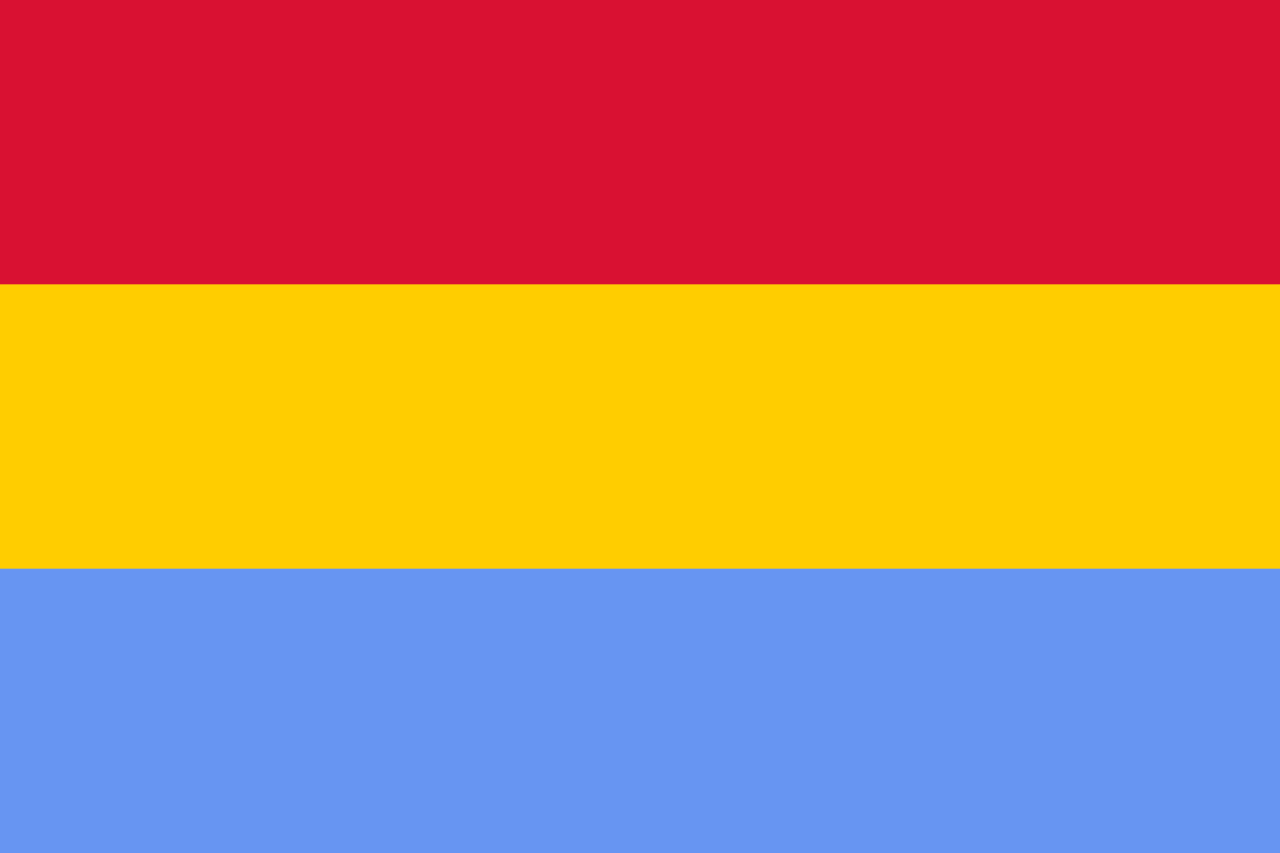
Flag of Francisco de Miranda (1801)


The Genesis of a Universal Revolutionary
Sebastián Francisco de Miranda y Rodríguez de Espinoza, born in Caracas in 1750, was far more than a soldier; he was an intellectual force and a relentless advocate for liberty. Hailing from a prosperous family, his early life was marked by a thirst for knowledge that led him to Madrid for education. His enlistment in the Spanish army provided him with invaluable military experience, but his true calling lay in challenging the very empire he served.
His participation in the American Revolutionary War, including fighting the British in Pensacola, exposed him to successful independence movements and fueled his own aspirations. Fleeing to the United States in 1783 after accusations of espionage and smuggling, he continued to develop his radical ideas, solidifying his reputation as a man driven by a grand, overarching vision for a liberated Americas.
A Continental Vision and Transatlantic Struggle
Miranda's most enduring legacy is his unwavering commitment to the emancipation of Spanish America. From 1785 onwards, his travels across Europe were not mere tourism but strategic diplomatic missions aimed at garnering support for his ambitious project. He envisioned a unified, independent South America, a concept far ahead of its time.
His 1806 expedition to Venezuela, though ultimately unsuccessful in achieving immediate liberation, was a pivotal moment. It demonstrated his willingness to lead from the front and inspired future generations of revolutionaries. His efforts to unite disparate factions and articulate a coherent vision for self-governance laid crucial intellectual groundwork for the wars of independence that would soon engulf the continent.
The French Revolution and the Price of Ideals
Miranda's revolutionary fervor extended to Europe, where he became an active participant in the French Revolution. He achieved the rank of general, fighting with distinction in significant engagements such as the Battle of Valmy and the Flanders campaign. His association with the Girondins, a moderate faction, placed him at the center of revolutionary politics.
However, the tumultuous nature of the Revolution meant that political fortunes could shift dramatically. When the Girondins were purged, Miranda found himself disillusioned and forced to seek refuge in Britain. This period highlights the complex and often dangerous political landscape of revolutionary Europe, where even successful generals could fall victim to internal power struggles.
The Venezuelan Republic and a Controversial End
Upon returning to his native Venezuela in 1810 amidst the burgeoning War of Independence, Miranda was granted dictatorial powers to lead the newly established First Republic. This was the culmination of decades of planning and struggle. However, the young republic faced immense challenges, including internal divisions and a resurgent Spanish royalist army.
In 1812, facing overwhelming odds, Miranda negotiated an armistice. This decision was viewed as treasonous by some fellow revolutionaries, most notably Simón Bolívar, leading to Miranda's arrest by Spanish authorities. He spent his final years imprisoned in Cádiz, Spain, where he died in 1816.
His controversial capitulation remains a subject of historical debate, but it does not diminish his foundational role as a precursor to South American independence.
Enduring Legacy and Global Impact
Francisco de Miranda is celebrated as the 'First Universal Venezuelan' and the 'Great Universal American' for good reason. His life was a testament to the power of ideas and the persistent pursuit of freedom. He was not only a military strategist but also a prolific writer and intellectual, deeply engaged with the Enlightenment ideals of liberty, equality, and self-governance.
His extensive travels, military service across multiple continents, and unwavering dedication to the cause of independence make him a unique figure in world history. Though his personal dream of a unified South America was not fully realized in his lifetime, his efforts and vision undeniably inspired and shaped the subsequent liberation movements that ultimately succeeded in freeing the continent from colonial rule.
See also
Frequently Asked Questions
Who was Francisco de Miranda?+
What did Francisco de Miranda do in the American Revolutionary War?+
Why did Francisco de Miranda want a free South America?+
How did Francisco de Miranda travel to Europe and why?+
What happened to Francisco de Miranda after the war in Venezuela?+
Based on content from Wikipedia · Licensed under CC BY-SA 4.0