

Federal district
Images

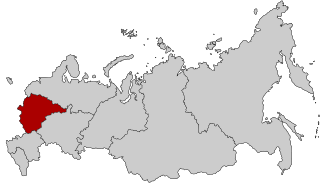
Map of Russia - Urals Federal District



Defining the Federal District
A federal district represents a specific type of administrative division found within various federal systems. Unlike standard federated units (states, provinces, or cantons), federal districts possess a unique jurisdictional status. They can be established under the direct jurisdiction of the federation's national government, functioning as federal territories, or they may operate as ordinary federated units with enhanced national significance.
This dual nature allows for flexibility in governance, catering to the specific needs of a nation's capital or other strategically important areas. The creation of such districts often stems from a desire to ensure the neutrality, security, and efficient administration of the seat of national power, preventing any single constituent state from exerting undue influence over the federal government.
Historical Evolution and Rationale for Federal Districts
The concept of federal districts has evolved as a pragmatic solution to the challenges of establishing and maintaining a stable national capital within a federal structure. Historically, many nascent federations grappled with the question of where to locate their capital. Placing it within an existing state could lead to political favoritism or conflicts of interest.
To circumvent these issues, the idea of carving out a dedicated territory, beholden only to the federal government, gained traction. This provided a neutral ground, symbolically and practically, for the exercise of national sovereignty. Early examples and the subsequent development of districts like the District of Columbia in the United States illustrate this strategic imperative, aiming to create a secure and impartial administrative hub, free from the political dynamics of individual states.
The Multifaceted Significance of Federal Districts
Federal districts hold profound significance within a nation's political and cultural landscape. Primarily, they serve as the locus of national governance, housing the executive, legislative, and judicial branches of the federal government. This concentration of power makes them critical decision-making centers that shape national policy and international relations.
Beyond their administrative function, federal districts often embody national identity and aspirations. They are frequently sites of major national monuments, museums, and cultural institutions, serving as focal points for civic engagement and national pride. Their unique administrative status also ensures dedicated resources for infrastructure, security, and development, reflecting their importance as symbols of national unity and stability on the global stage.
Mechanisms of Governance and Federal District Operations
The operational framework of federal districts exhibits considerable diversity across different federations. In some models, such as federal territories in India or Malaysia, the district is administered directly by the federal government, often through appointed officials. This centralized control ensures alignment with national objectives.
Conversely, countries like Brazil and Russia feature federal districts that possess a degree of self-governance, akin to other federated units, while still maintaining a special relationship with the central authority due to their capital status or strategic importance. This hybrid approach allows for localized administration while preserving the overarching authority and interests of the federal government. Understanding these varied models is crucial for appreciating the adaptability of the federal district concept.
Comparative Analysis of Global Federal District Models
Examining real-world examples provides critical insight into the practical application of the federal district concept. Washington D.C. (USA) exemplifies a purpose-built federal district, established by the Constitution to serve as the nation's capital, deliberately separated from any state. Brasília (Brazil) is another prime example of a planned capital city within a Federal District, showcasing a modern approach to national administrative centers.
Moscow, Russia's federal city, highlights a model where a major existing city holds federal status. Other examples include the Australian Capital Territory (Australia) and the Federal Territory of Labuan (Malaysia). Each case study reveals distinct historical contexts, constitutional frameworks, and governance structures, underscoring the adaptability and varied implementation of the federal district principle worldwide.
Go deeper
Frequently Asked Questions
What is a federal district?+
Why do countries create federal districts?+
Where is a federal district usually found?+
How are federal districts governed?+
What makes a federal district important for a country?+
Based on content from Wikipedia · Licensed under CC BY-SA 4.0