

Federation: When Countries Join Forces!
Images
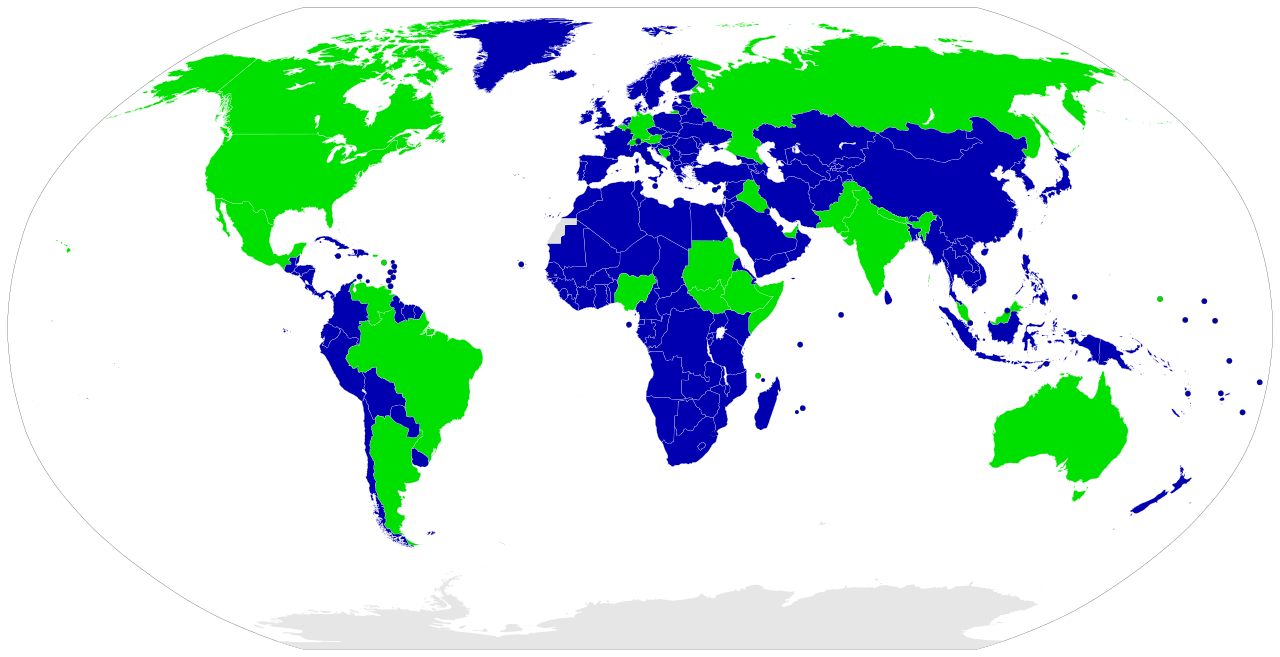
Federation
Deconstructing the Federal Compact
A federation represents a sophisticated form of political organization where sovereign powers are constitutionally divided between a central, national government and constituent political units, such as states or provinces. This division is not arbitrary; it is typically codified in a supreme law, the constitution, which delineates the exclusive and concurrent powers of each level of government. Unlike a unitary state, where sub-national units derive their authority from the center, or a confederation, where the central body is subordinate to the member states, a federation establishes a dual polity.
Both the federal government and the constituent units possess their own distinct spheres of authority, often with direct lines of authority to the citizenry. This structure aims to reconcile the need for national unity and effective governance of a large territory with the preservation of regional diversity and self-governance, fostering a balance between collective action and local autonomy. The success of a federation often hinges on the careful calibration of these powers and the mechanisms for resolving intergovernmental disputes.
The Historical Trajectory of Federalism
While ancient examples of leagues and alliances exhibit proto-federal characteristics, the modern concept of federation gained significant traction during the Enlightenment and the Age of Revolutions. Thinkers grappled with creating stable political structures that could avoid the pitfalls of absolute monarchy and the instability of weak confederations. The United States Constitution of 1787 is a seminal document, establishing a federal republic that sought to create a 'more perfect Union' while safeguarding states' rights.
This model inspired subsequent federal experiments globally. Switzerland, with its long history of cantonal autonomy, adopted federalism in the 19th century, as did Canada, seeking to accommodate linguistic and cultural differences. Later, nations like Australia, India, and Germany (in its post-WWII iteration) also embraced federal structures, adapting the core principles to their unique historical, geographical, and social contexts. The evolution of federalism reflects a continuous search for effective governance that respects both national integrity and regional particularities.
The Enduring Significance of Federal Governance
Federations play a crucial role in contemporary global governance by offering a framework for managing diversity and complexity. They provide mechanisms for accommodating regional, ethnic, linguistic, and cultural differences within a single state, thereby potentially mitigating secessionist pressures and fostering national cohesion. This is particularly relevant in large, heterogeneous countries.
Furthermore, federal systems can enhance democratic participation by bringing government closer to the people, allowing for policy innovation at the state level, and providing checks and balances against potential overreach by the central government. On the international stage, federations can project greater power and influence than their constituent units could individually, enabling more robust foreign policy and economic engagement. The ability of federal systems to balance unity with diversity, and central authority with regional autonomy, makes them a resilient and adaptable model for governance in an increasingly interconnected yet diverse world.
Mechanisms of Federal Power Distribution
The operationalization of federalism relies on specific mechanisms for dividing and coordinating power. At its heart is the constitutional allocation of legislative, executive, and judicial powers. This often involves enumerating federal powers (e.g., defense, currency, foreign affairs), reserving residual powers to the states (as in the U.S.), or establishing concurrent powers (e.g., taxation, infrastructure) shared by both levels.
Intergovernmental relations are managed through various institutions and processes, including federal-state councils, joint committees, and mechanisms for fiscal federalism, which governs the transfer of funds from the federal government to the states. A crucial element is often an independent judiciary, typically a supreme court, tasked with interpreting the constitution and adjudicating disputes between the federal and state governments. This intricate system of checks and balances is designed to ensure that neither level of government can unilaterally dominate the other, maintaining the integrity of the federal compact.
Contemporary Federal Models and Challenges
Today, federations represent a significant portion of the world's population and territory, encompassing diverse political systems. Examples range from the presidential federalism of the United States and Brazil to the parliamentary federalism of Germany and Australia, and the quasi-federal structures found in countries like India and Pakistan. Each model presents unique strengths and challenges.
Common challenges include managing fiscal imbalances between richer and poorer states, navigating complex intergovernmental negotiations, and ensuring consistent application of fundamental rights across all constituent units. Debates often arise regarding the appropriate balance of power, especially in times of national crisis or significant policy reform. The ongoing evolution of federalism demonstrates its adaptability, but also highlights the perpetual need for negotiation, compromise, and a commitment to the shared principles that underpin the federal union.
Go deeper
Frequently Asked Questions
What is a federation and how does it work?+
Why did the United States create a federal system?+
How do federations help people from different cultures live together?+
Where can we find examples of federations around the world?+
How does a federation make the country stronger on the world stage?+
Based on content from Wikipedia · Licensed under CC BY-SA 4.0