

When Justice Takes a Final Step
Images
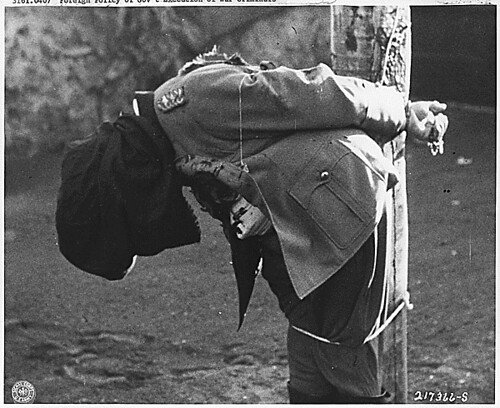
Public Domain: Nuremberg War Crimes: Execution of German General Anton Dostler (NARA)





The Ancient Roots and Evolving Practice of Execution
Capital punishment, the execution of an individual as a penalty for a crime, is one of the oldest forms of punishment known to humanity. Its origins are deeply embedded in the development of legal systems, dating back to ancient civilizations like Mesopotamia, Egypt, Greece, and Rome. The Code of Hammurabi, for instance, dating to the 18th century BC, outlines capital offenses and their penalties, often based on the principle of lex talionis ('an eye for an eye').
Throughout history, the application and methods of execution have reflected societal values, technological capabilities, and prevailing philosophies of justice. From public crucifixions and dismemberments in antiquity and the Middle Ages to the development of more 'efficient' methods like the guillotine during the Enlightenment, the practice has been in constant flux. The 20th and 21st centuries have seen a significant global trend towards abolition, driven by evolving human rights standards and concerns about fairness and irreversibility.
Methods of Execution
The methods employed for execution have varied dramatically across cultures and eras, often reflecting a society's perceived humanity or desire for spectacle. Historically common methods include hanging (intended to cause cervical fracture), beheading (requiring precision and strength), and burning at the stake (often for heresy or treason). More 'modern' approaches emerged with technological advancements: the firing squad, the electric chair (introduced in the late 19th century), the gas chamber, and, most recently, lethal injection.
Lethal injection, often presented as the most humane method, involves a sequence of drugs designed to induce unconsciousness, paralysis, and cardiac arrest. However, challenges in administering these drugs, including botched executions, have led to renewed debate about its supposed humaneness. Each method carries its own history of controversy and ethical scrutiny regarding its efficacy and potential for suffering.
The Enduring Debate
The debate over capital punishment is multifaceted, encompassing legal, ethical, moral, and practical dimensions. Proponents often argue for its retributive value, asserting that certain heinous crimes warrant the ultimate penalty as a just desert. They also frequently cite deterrence theory, suggesting that the fear of execution prevents potential offenders from committing capital crimes, though empirical evidence supporting this claim is highly contested and inconclusive.
Furthermore, incapacitation is a key argument; execution permanently removes dangerous individuals from society. Conversely, opponents highlight the irreversible nature of execution, emphasizing the catastrophic consequences of executing an innocent person – a risk inherent in any fallible justice system. Ethical objections center on the state's right to take a life, viewing it as a violation of fundamental human rights, specifically the right to life.
Concerns about systemic bias, including racial and socioeconomic disparities in its application, further fuel opposition. The debate also questions whether capital punishment truly serves as a unique deterrent compared to life imprisonment.
Global Landscape
Globally, the trend over the past century has been towards the abolition of capital punishment. As of the early 21st century, a significant majority of countries have abolished it either in law or in practice. International bodies like the United Nations have consistently called for its worldwide abolition.
However, capital punishment remains a legal and practiced penalty in a number of countries, including China, Iran, Saudi Arabia, Iraq, Egypt, and the United States (though its use varies significantly by state). These retentionist countries often justify its use based on cultural norms, religious interpretations, or perceived needs for crime control. The ongoing efforts of abolitionist movements, human rights organizations, and international diplomacy continue to challenge its legality and application, pushing for a universal end to state-sanctioned executions.
The Irreversible Consequence
One of the most compelling arguments against capital punishment is the undeniable risk of executing innocent individuals. Justice systems, being human constructs, are prone to errors, including mistaken eyewitness identification, faulty forensic science, coerced confessions, and inadequate legal representation. When an execution is carried out, it is irreversible.
The exoneration of individuals who were sentenced to death, sometimes just days before their scheduled execution, serves as a stark reminder of this fallibility. Organizations like the Death Penalty Information Center meticulously document cases of wrongful convictions and executions. These instances not only represent profound injustices to the wrongly executed but also undermine public faith in the fairness and reliability of the death penalty system.
The possibility of such a catastrophic error is a central ethical quandary that continues to drive opposition to capital punishment worldwide.
See also
Frequently Asked Questions
What is capital punishment?+
How did ancient people decide who would be executed?+
What are some ways people have executed people in history?+
Why do some people think capital punishment is unfair?+
Are there places that still use capital punishment today?+
Based on content from Wikipedia · Licensed under CC BY-SA 4.0