

The Crusades: Knights, Castles, and Big Journeys!
Images
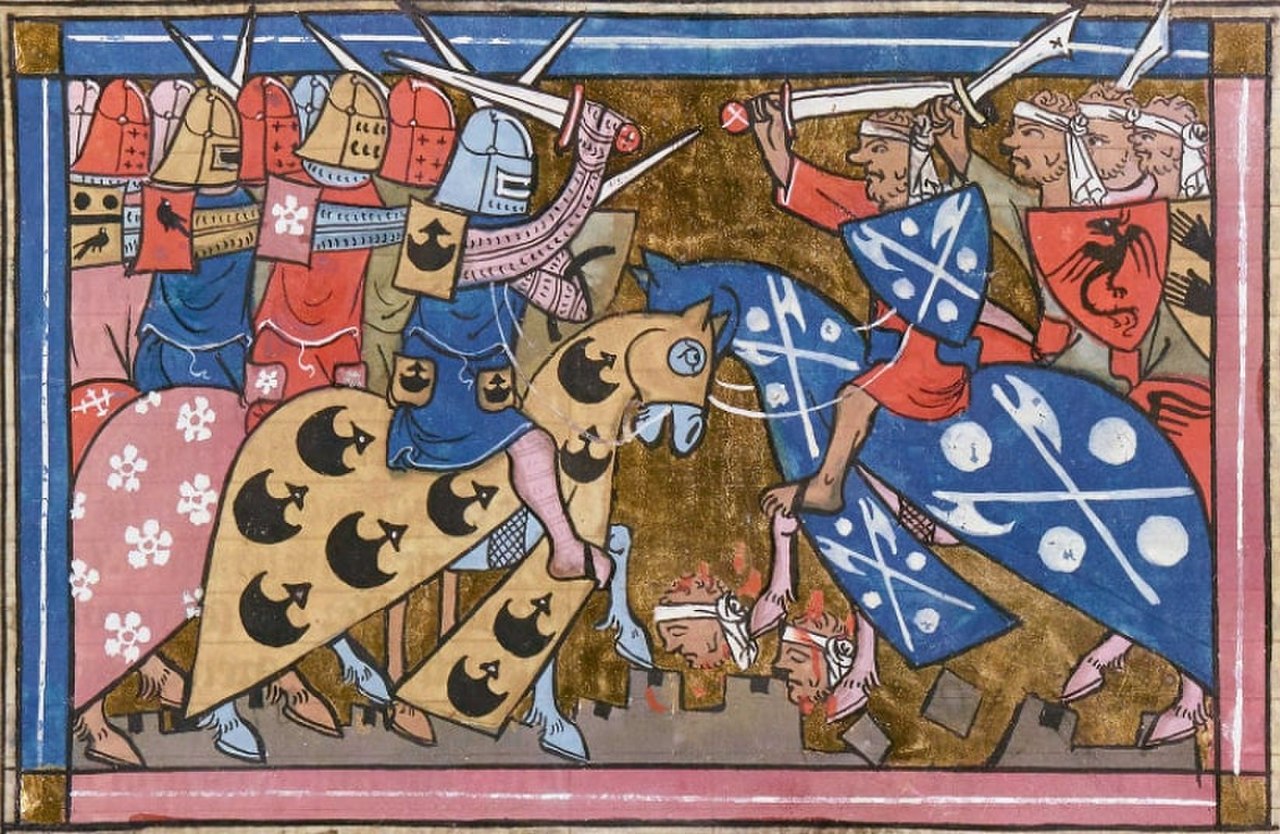
Crusades
The Genesis of the Crusading Movement
The Crusades emerged from a confluence of factors in the late 11th century. Pope Urban II's sermon at the Council of Clermont in 1095 was the pivotal catalyst, responding to a plea for aid from the Byzantine Emperor Alexios I Komnenos, who faced the expansion of the Seljuk Turks. Urban skillfully framed the expedition not merely as military assistance but as a holy war, a pilgrimage of arms, promising plenary indulgence – the remission of all temporal punishment for sins – to those who participated.
This powerful spiritual incentive, combined with the socio-political climate of Europe, characterized by a warrior aristocracy accustomed to conflict and a growing papal authority, created fertile ground for the Crusading movement. The concept of 'holy war' was relatively new, and its application to reclaiming the Holy Land resonated deeply, tapping into existing religious devotion and a desire for adventure and territorial gain among the European elite.
The Diverse Participants and Their Motivations
The Crusades drew a remarkably diverse array of participants, each driven by a complex web of motivations. The noble class, including knights and lords, were often motivated by a desire for land, wealth, and prestige, seeing the Crusades as an opportunity to expand their influence and secure feudal holdings abroad. For many, however, religious piety was the primary driver.
They believed they were fulfilling God's will, fighting for the defense of Christendom and the liberation of sacred sites. The promise of spiritual rewards, particularly the remission of sins, was a powerful draw. Beyond the warriors, merchants from Italian city-states like Venice and Genoa saw opportunities for lucrative trade routes and economic dominance in the Eastern Mediterranean.
Even commoners, driven by faith, a sense of adventure, or escaping difficult conditions at home, joined the ranks, though their journeys were often fraught with peril and less organized.
The Evolving Nature and Impact of Multiple Crusades
The Crusades were not a monolithic event but a series of distinct military campaigns spanning nearly two centuries, each with its own character and objectives. The First Crusade (1096-1099) was unique in its success, leading to the establishment of four Crusader states: the Kingdom of Jerusalem, the County of Tripoli, the Principality of Antioch, and the County of Edessa. Subsequent Crusades, however, met with mixed success and often deviated from their original goals.
The Second Crusade (1147-1149) was a response to the fall of Edessa and ended in failure. The Third Crusade (1189-1192), led by prominent monarchs like Richard I of England, Philip II of France, and Frederick I, Holy Roman Emperor, was a reaction to Saladin's recapture of Jerusalem but ultimately failed to retake the city. The Fourth Crusade (1202-1204) infamously diverted to sack Constantinople, the capital of the Byzantine Empire, highlighting the increasing political and economic motivations overshadowing purely religious ones.
Later Crusades continued, but their impact waned, and the last Crusader stronghold, Acre, fell in 1291.
Transformative Consequences
The Crusades exerted a profound and lasting influence on both Europe and the Middle East. Culturally, they facilitated significant exchange. Europeans were introduced to new technologies, architectural styles, scientific knowledge, and luxury goods such as spices, sugar, and silk, which stimulated European economies and intellectual curiosity.
This exposure contributed to the later Renaissance. Politically, the Crusades strengthened the power of monarchs and the papacy, while also leading to the development of powerful military-religious orders like the Knights Templar and Hospitaller. Economically, Italian city-states flourished due to their involvement in transporting Crusaders and goods.
However, the Crusades also left a legacy of deep-seated animosity and mistrust between Christian and Muslim communities, contributing to centuries of conflict and shaping perceptions that persist even today. The concept of 'jihad' among Muslims gained prominence partly as a response to the Crusades.
The Enduring Legacy and Historiographical Debate
The end of the Crusades in the late 13th century marked a significant shift in medieval history. While the direct military campaigns ceased, the idea of Crusading persisted, being invoked for various conflicts and expeditions throughout later centuries. Modern historiography continues to debate the true nature and impact of the Crusades.
Were they primarily religious wars, or were economic and political factors more dominant? The term 'Crusade' itself has evolved, sometimes being used metaphorically to describe any fervent campaign for a cause. Understanding the Crusades requires acknowledging their multifaceted nature, moving beyond simplistic narratives to appreciate the complex interplay of faith, power, economics, and cultural interaction that defined this pivotal era and continues to inform our understanding of interfaith relations and historical conflict.
Go deeper
Frequently Asked Questions
What were the Crusades?+
Why did Pope Urban II call for the Crusades?+
Who joined the Crusades and why?+
What happened to the Crusader states after the Crusades?+
Why did the Fourth Crusade attack Constantinople instead of the Holy Land?+
Based on content from Wikipedia · Licensed under CC BY-SA 4.0