

Boric Acid: The Amazing Bug Buster!
Images
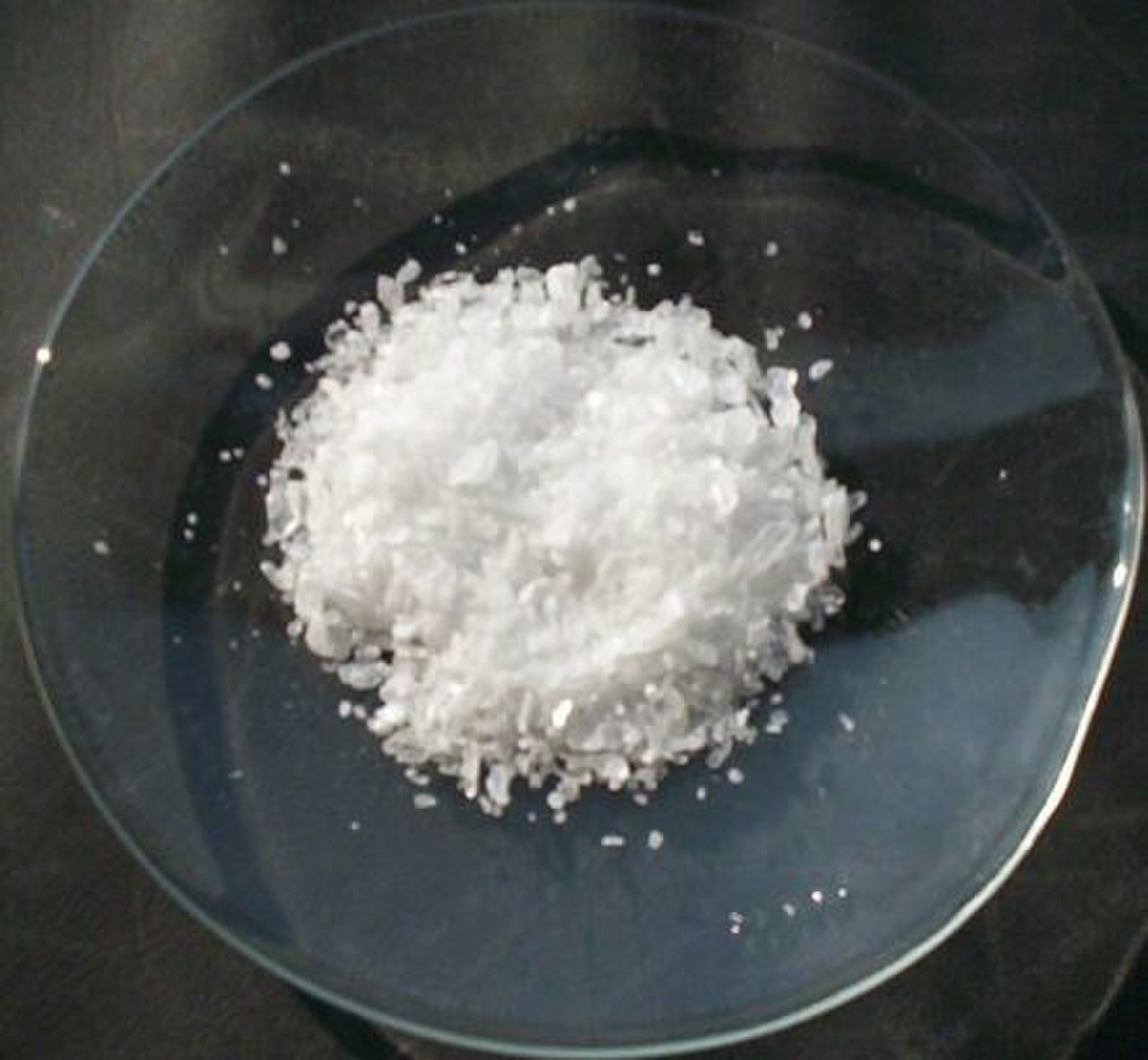
Boric acid


From Mineralogy to Chemical Synthesis
Boric acid (H₃BO₃), also known as hydrogen borate or boracic acid, is a weak monoprotic acid of boron. Its existence is intrinsically linked to boron-containing minerals, primarily borates like ulexite and colemanite, and most famously, borax (sodium tetraborate decahydrate). Historically, borax was a prized commodity, mined from arid regions and dry lake beds, notably in Tibet and later in California.
Ancient civilizations utilized borax for its fluxing properties in metallurgy and its preservative qualities, as evidenced by Egyptian mummification practices. The scientific understanding of boric acid itself began to crystallize during the European Renaissance, with early alchemists and chemists investigating its properties. Wilhelm Homberg, in 1702, is credited with first preparing boric acid by acidifying a hot aqueous solution of borax, a process that laid the groundwork for its industrial production.
This historical trajectory showcases a transition from empirical use of a raw mineral to a more systematic chemical synthesis and application, driven by evolving scientific knowledge and industrial demand.
Boric Acid's Diverse Industrial Footprint
While boric acid is widely recognized for its efficacy as an insecticide and antiseptic, its industrial significance spans a much broader spectrum. A cornerstone application is in the production of borosilicate glass, such as Pyrex and Duran. The incorporation of boric oxide (B₂O₃), derived from boric acid, into silica glass significantly enhances thermal shock resistance and chemical inertness.
This makes borosilicate glass indispensable in laboratory apparatus, cookware, and high-intensity lighting. Furthermore, boric acid is a critical component in the formulation of ceramic glazes, providing fluxing properties that lower firing temperatures and improve the durability and aesthetic qualities of ceramic ware. It also serves as a vital ingredient in flame retardants, particularly for cellulosic materials like wood and cotton, by forming a glassy layer that insulates the material from heat and oxygen.
Its role extends to metallurgy as a fluxing agent in welding and brazing, and in the manufacturing of certain types of cement and adhesives.
Mechanisms of Action
The multifaceted utility of boric acid stems from its unique chemical behavior. As an insecticide, it operates through a dual mechanism. Upon ingestion by insects, it acts as a metabolic poison, disrupting cellular respiration and energy production.
Critically, it also damages the insect's exoskeleton, leading to dehydration and eventual death. Unlike many fast-acting neurotoxins, boric acid's effects are slower, allowing insects to carry contaminated dust back to their colonies, thus acting as a form of social insecticide. In glass and ceramic applications, boric acid acts as a powerful flux.
When heated, it dissociates to form boron trioxide (B₂O₃), which readily dissolves silica and other oxides, lowering the overall melting point of the mixture. This reduced viscosity facilitates easier shaping and forming of glass and glazes. The boron atoms also integrate into the glass network, creating a more rigid structure with enhanced thermal and chemical stability.
Its acidic nature also allows it to react with bases, forming borate salts, which is relevant in its use as a pH buffer and in certain chemical reactions.
Contemporary Relevance and Emerging Applications of Boric Acid
In contemporary society, boric acid continues to be a vital industrial chemical. Its role in pest management remains significant, particularly in formulations designed to target specific pests like cockroaches and ants, often integrated into bait stations for controlled application. The demand for borosilicate glass in scientific research, medical devices, and advanced optics ensures a steady market for boric acid.
Beyond these established uses, research is exploring novel applications. For instance, boric acid is being investigated for its potential in neutron capture therapy for cancer treatment, where its ability to absorb neutrons could be harnessed to destroy cancerous cells. Its unique interactions with biological molecules are also being studied for potential therapeutic applications in areas like wound healing and antimicrobial treatments.
Furthermore, its role in advanced materials, such as in the development of new composite materials and catalysts, highlights its ongoing importance and potential for future innovation.
Boric Acid in the Scientific Landscape
Chemically, boric acid is a Lewis acid, meaning it can accept an electron pair. In aqueous solutions, it does not dissociate protons directly but rather reacts with water molecules to form the hydronium ion (H₃O⁺) and the tetrahydroxyborate anion ([B(OH)₄]⁻). This weak acidity is fundamental to many of its applications.
Its crystalline structure is characterized by layers of planar B(OH)₃ molecules held together by hydrogen bonds. This layered structure contributes to its lubricating properties and its ability to be easily ground into a fine powder. The boron atom in boric acid has an incomplete octet, making it reactive and capable of forming complex structures with other molecules, including sugars and polyols.
This interaction with diols is particularly important in analytical chemistry and in its biological effects. The compound's relatively low toxicity to mammals, compared to its toxicity to insects, makes it a preferred choice for many applications where human and animal safety is a concern, though proper handling and concentration are always crucial.
See also
Frequently Asked Questions
What is boric acid and what does it look like?+
How does boric acid keep bugs away?+
Why do scientists add boric acid to glass like Pyrex?+
Can boric acid help stop fires?+
Where did people first get boric acid from?+
Based on content from Wikipedia · Licensed under CC BY-SA 4.0