

Tigris
Images
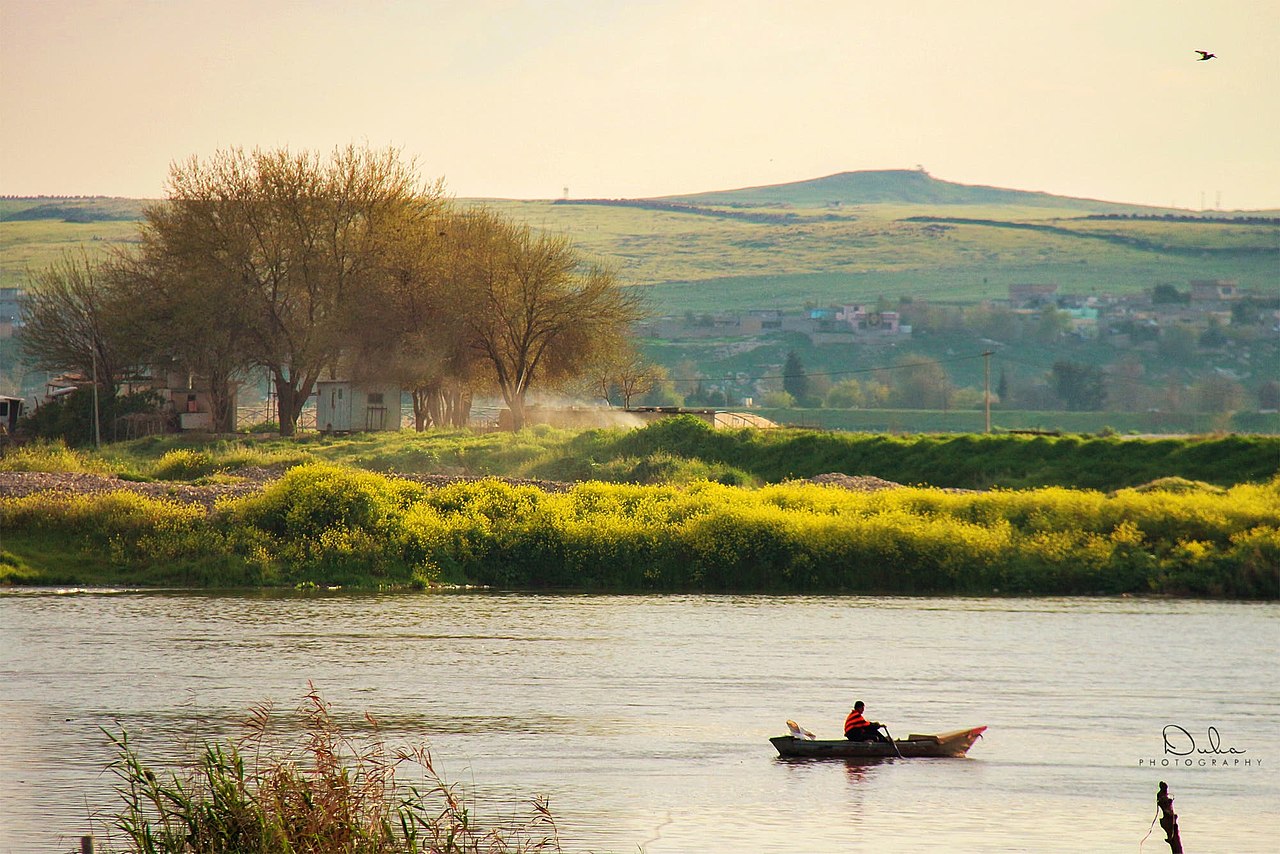
Tigris
The Tigris's Genesis and Geographic Narrative
The Tigris River, one of the two defining waterways of Mesopotamia, originates in the rugged Armenian Highlands, a region characterized by high altitudes and significant precipitation. Its initial course is marked by steep gradients and a rapid descent, carving through the mountainous terrain before entering the vast, arid expanses of the Syrian and Arabian Deserts. This transition from a high-energy mountain stream to a meandering desert river shapes its hydrological characteristics and the ecosystems it supports.
The river's path is not merely a geographical feature but a historical narrative, dictating the location of ancient settlements and trade routes. Its confluence with the Euphrates, forming the Shatt al-Arab, before reaching the Persian Gulf, represents the culmination of a journey that has sustained life and civilization for millennia. The river's total length is approximately 1,150 miles (1,850 kilometers), a significant distance that traverses diverse landscapes and climates, influencing regional development and environmental dynamics.
Foundational Force
The Tigris River served as an indispensable foundation for the development of some of the world's earliest and most influential civilizations. Its fertile floodplains, enriched by silt deposited during seasonal inundations, provided the agricultural basis for complex societies to emerge in Mesopotamia. This region, often lauded as the 'cradle of civilization,' witnessed groundbreaking advancements in writing, mathematics, astronomy, and governance, all facilitated by the river's life-sustaining waters.
The Tigris was particularly instrumental in the rise of the Assyrian Empire, a formidable power in the ancient Near East. Cities like Nineveh, Nimrud, and Ashur, strategically located along its banks, became centers of political, economic, and military might. The river facilitated transportation, trade, and communication, enabling empires to expand and administer vast territories.
Archaeological evidence, such as the bas-reliefs depicting royal hunts and military campaigns, often found near the Tigris, underscores its central role in the lives of ancient rulers and their subjects.
Sustaining Life and Culture
Beyond its historical legacy, the Tigris River continues to hold profound significance for contemporary populations and cultural practices. It remains a critical source of freshwater for millions of people across Turkey, Syria, and Iraq, underpinning agricultural productivity that is essential for regional food security. The river's waters are vital for irrigation, supporting vast tracts of farmland that are crucial to the economies of these nations.
Furthermore, the Tigris is deeply interwoven with the cultural and spiritual fabric of the region. It is revered by various communities, including the Mandaeans, an ancient Gnostic religious group whose rituals, particularly baptism, are intrinsically linked to the river's flowing waters. This spiritual connection highlights the river's role not just as an environmental resource but as a sacred entity that shapes identity, tradition, and belief systems for diverse populations inhabiting its basin.
Navigating Modern Perils
In the 21st century, the Tigris River faces an unprecedented and complex array of threats that jeopardize its long-term viability. Upstream dam construction, notably the Ilisu Dam in Turkey, has drastically altered the river's flow regime, reducing water availability downstream and impacting ecosystems and agricultural practices in Iraq. Geopolitical instability and regional conflicts further complicate water resource management, often leading to disputes and hindering cooperative solutions.
Compounding these issues are the effects of climate change, including prolonged droughts, increased evaporation rates, and rising temperatures, which exacerbate water scarcity. Poor water management practices, including inefficient irrigation and pollution, add further stress. These converging factors have led to significant environmental degradation, including reduced water quality and quantity, and raise serious concerns about the sustainability of the Tigris ecosystem and the livelihoods it supports, prompting urgent calls for international cooperation and innovative conservation strategies.
Guardians of the Flow
The precarious state of the Tigris River has galvanized efforts by various stakeholders to protect its future. Local archaeologists and environmental activists are at the forefront, working to document the river's rich heritage and advocate for its preservation. These efforts include raising public awareness about the threats facing the river, promoting sustainable water management practices, and pushing for policy changes that prioritize ecological health and equitable water distribution.
International organizations and researchers are also involved, studying the river's hydrology, biodiversity, and the socio-economic impacts of its declining health. The challenge is immense, requiring a delicate balance between development needs, historical preservation, and environmental stewardship. Safeguarding the Tigris is not just about protecting a river; it is about preserving the cultural heritage, ecological integrity, and future prosperity of an entire region that has been shaped by its waters for millennia.
Go deeper
Frequently Asked Questions
What is the Tigris River?+
Where does the Tigris River start?+
Why was the Tigris River important for ancient civilizations?+
How does the Tigris River help people today?+
What threats does the Tigris River face?+
Based on content from Wikipedia · Licensed under CC BY-SA 4.0