

Tango
Images
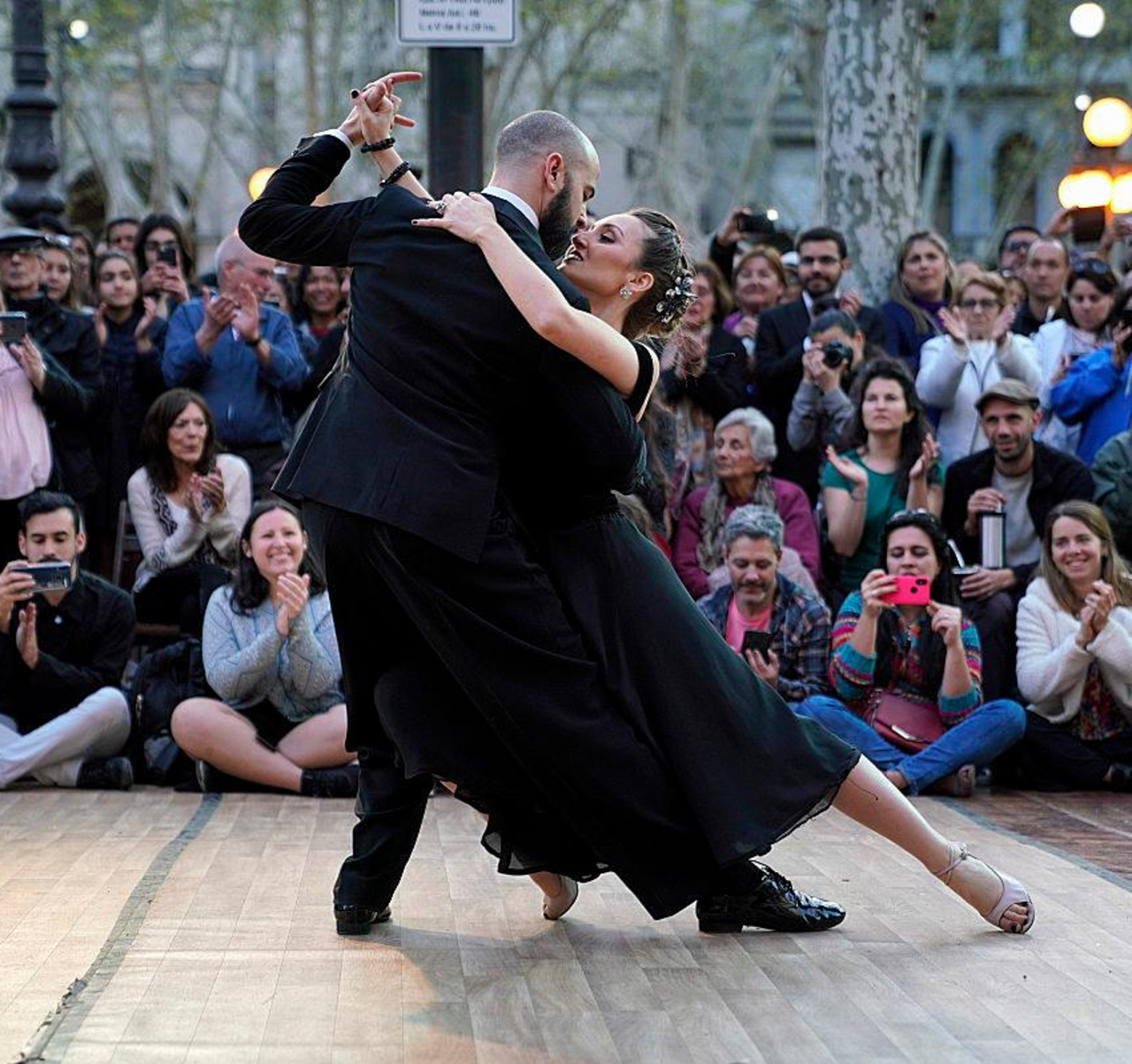
Tango
The Crucible of Creation
Tango's roots are deeply entwined with the late 19th-century social and demographic landscape of the Rio de la Plata region, specifically the port cities of Buenos Aires and Montevideo. This era was characterized by massive immigration, primarily from Europe, alongside the presence of Afro-Argentine and Afro-Uruguayan populations. The resulting cultural fusion gave birth to Tango.
Early influences included the Cuban Habanera, the Afro-Uruguayan Candombe, and various European dances like the polka and mazurka. Initially, Tango was danced in the 'conventillos' (tenement houses) and brothels, often by men practicing together due to a gender imbalance among immigrants. This context fostered a dance that was intimate, improvisational, and expressive of the era's social anxieties, longing, and desires.
The early music was often played on guitar and flute, later evolving with the introduction of the bandoneon, which became synonymous with the Tango sound.
The Art of Connection
The essence of Tango lies in its profound connection and improvisational nature. Unlike many choreographed dances, Tango is a dynamic dialogue between two partners. The leader initiates movements, not through pre-planned sequences, but by 'proposing' them through subtle shifts in weight and intention, which the follower interprets and responds to.
This requires a high degree of somatic awareness and trust. The foundational 'caminata' (walk) is characterized by a grounded, grounded step using the entire foot, with slightly bent knees, creating a fluid, almost gliding motion. Key figures include the 'ocho' (a pivot with figure-eight footwork), the 'gancho' (a leg hook), the 'sacada' (a displacement where one dancer's body part replaces another's), and the 'boleo' (a whip-like leg movement).
The 'abrazo' (embrace) is crucial, ranging from very close to more open, dictating the intimacy and style of the dance. The music, with its syncopated rhythms and melancholic melodies, is integral, guiding the dancers' interpretation and emotional expression.
Evolution and Global Dissemination
Tango's trajectory from a marginalized urban dance to a global cultural phenomenon is a testament to its compelling artistry. By the early 20th century, Tango had begun its international ascent, particularly after its introduction to Paris around 1910, where it was embraced by high society and became a worldwide craze. This period saw the development of distinct styles, including the more theatrical 'Tango Argentino' and the ballroom-adapted 'International Tango'.
While its popularity experienced fluctuations, Tango has consistently maintained a dedicated global community. Its enduring appeal lies in its emotional depth, its intellectual challenge, and its capacity for personal expression. In 2009, UNESCO's recognition of Tango as an Intangible Cultural Heritage of Humanity underscored its profound significance as a living cultural tradition integral to the identity of Argentina and Uruguay, fostering social cohesion and artistic innovation.
Stylistic Variations and Contemporary Relevance of Tango
Over its history, Tango has diversified into numerous styles, each with its own nuances in embrace, footwork, and musical interpretation. 'Tango Salon' is characterized by an open embrace and elegant, flowing movements, often danced in social settings. 'Tango Nuevo' emerged in the late 20th century, incorporating elements from contemporary dance and exploring more complex musicality and abstract forms. 'Tango Escenario' (stage Tango) is highly choreographed and acrobatic, designed for performance rather than social dancing.
These variations reflect Tango's adaptability and its continued evolution. Today, Tango remains a vibrant global practice, with 'milongas' thriving in cities worldwide. It continues to serve as a powerful medium for social connection, artistic exploration, and the preservation of a rich cultural heritage, demonstrating its lasting relevance in the 21st century.
Go deeper
Frequently Asked Questions
What is tango?+
Where did tango come from?+
Why is tango special?+
How do people dance tango?+
Who made tango famous worldwide?+
Based on content from Wikipedia · Licensed under CC BY-SA 4.0