

Alsace
Images

Colmar (32350846618)




Geopolitical Nexus
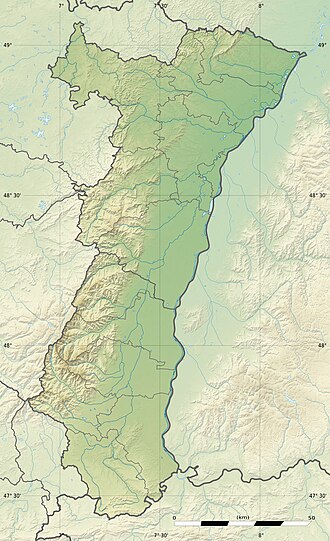
Alsace occupies a strategically vital position in northeastern France, directly bordering Germany to the east and Switzerland to the south, with the Rhine River serving as a significant natural frontier and historical conduit. This geographical placement has historically made it a coveted territory, influencing its political destiny and cultural development. The region's landscape is diverse, ranging from the Vosges Mountains in the west, offering picturesque scenery and recreational opportunities, to the fertile Rhine valley, renowned for its agriculture, particularly viticulture.
The continental climate features distinct seasons, with warm summers conducive to tourism and agriculture, and cold winters that can impact daily life and transportation. Its location at the crossroads of major European powers has fostered a unique blend of influences, making it a microcosm of broader European historical trends and a key area for cross-border cooperation and integration.
A Contested Frontier
The history of Alsace is a complex narrative of shifting allegiances and territorial disputes, primarily between France and various German states, spanning over three centuries from the Thirty Years' War to World War II. This prolonged period of contention meant Alsace's political status was frequently renegotiated through wars and diplomatic conferences, leading to its incorporation into France, then Germany, and back to France. Until 1871, it encompassed the Territoire de Belfort, and post-WWI, it was definitively integrated into France.
From 1982 to 2016, it functioned as the smallest administrative region in metropolitan France, comprising the Bas-Rhin and Haut-Rhin departments. A significant territorial reform in 2014 led to its merger with Champagne-Ardenne and Lorraine to form the larger Grand Est region. However, a recent development on January 1, 2021, saw the Bas-Rhin and Haut-Rhin departments merge into the new European Collectivity of Alsace, demonstrating a renewed focus on regional identity within the broader administrative framework of Grand Est, highlighting its enduring distinctiveness.
Cultural Synthesis
Alsatian culture is a rich tapestry woven from threads of both French and German heritage. This duality is most evident in its linguistic landscape. While French is the primary language of administration and education, the Alsatian dialect, an Alemannic dialect closely related to Swabian, was historically widely spoken and still holds cultural significance, though its use has declined since World War II due to increased French language prevalence and post-war migration.
This linguistic heritage reflects a broader cultural synthesis seen in its architecture, cuisine, and traditions. The region is known for its distinctive half-timbered houses, its hearty gastronomy featuring dishes like choucroute garnie (sauerkraut with meats) and tarte flambée, and its vibrant festivals. The ethnolinguistic composition has also been shaped by internal and international migration since 1945, adding further layers to its cultural identity.
Despite historical political divisions, a strong sense of Alsatian identity persists, celebrating its unique Franco-Germanic character.
Strasbourg
Strasbourg stands as the undisputed economic and cultural capital of Alsace, and its largest city, strategically positioned on the Franco-German border. Its significance extends far beyond regional importance; it is a major international center, hosting several key European institutions, including the European Parliament, the Council of Europe, and the European Court of Human Rights.
This concentration of international bodies underscores Strasbourg's role as a symbol of European integration and cooperation. Economically, the city benefits from its strategic location, fostering strong cross-border trade and investment. Its robust infrastructure, including a major port on the Rhine and a well-developed transportation network, facilitates commerce.
The presence of these international organizations also drives a significant service sector and attracts a diverse, multilingual workforce, further enriching the city's cosmopolitan atmosphere and contributing to Alsace's overall economic dynamism.
Education and Governance
Alsace's educational system operates within the framework of the French national education system, emphasizing French as the primary language of instruction. However, the region's unique cultural heritage has led to some specific considerations, including the historical presence and occasional support for teaching the Alsatian dialect in certain contexts, though this is less prominent now. Universities in Strasbourg, such as the University of Strasbourg, are highly regarded and contribute significantly to research and development, attracting students from across France and internationally.
Governance in Alsace has seen recent evolution. While it was previously an administrative region, it is now part of the larger Grand Est region. However, the creation of the European Collectivity of Alsace in 2021 signifies a move towards enhanced regional autonomy and tailored governance for the Bas-Rhin and Haut-Rhin departments.
This new structure allows for greater local decision-making on specific matters, reflecting a desire to preserve and promote Alsace's distinct identity and interests while remaining integrated within the French Republic and the European Union.
Go deeper
Frequently Asked Questions
What is Alsace?+
Where is Alsace located?+
Why is Alsace special?+
How does Alsace mix French and German culture?+
What are some foods from Alsace?+
Based on content from Wikipedia · Licensed under CC BY-SA 4.0