

Alfred Russel Wallace
Images
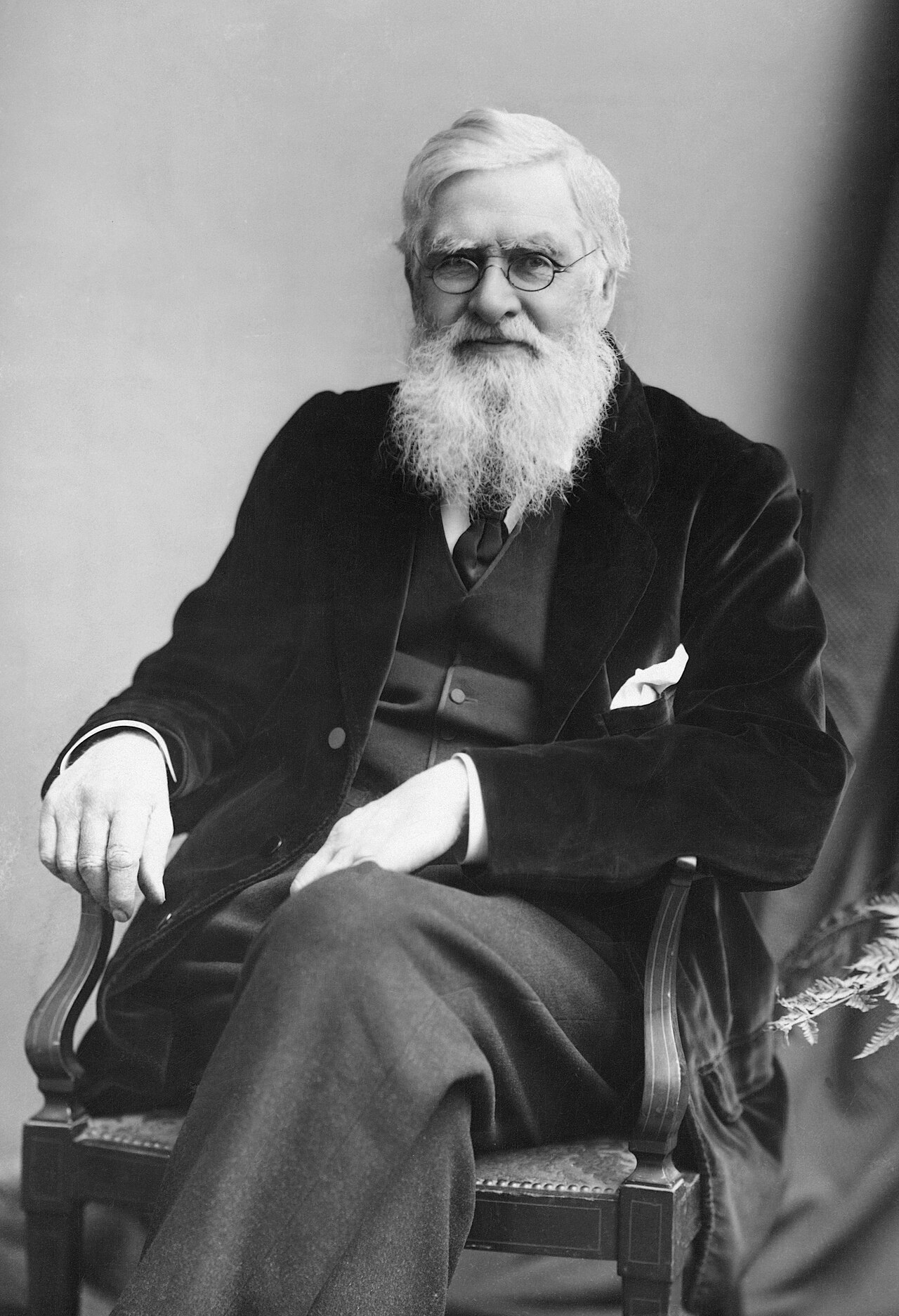
Alfred Russel Wallace
From the Amazon's Depths to the Malay Archipelago's Wonders
Alfred Russel Wallace's life was a testament to the power of empirical observation and relentless exploration. Born in 1823, his early career as a surveyor and naturalist ignited a passion for discovery that would lead him to some of the most biodiverse regions on Earth. His initial expedition to the Amazon basin (1848-1852) was fraught with peril, including the loss of most of his collected specimens in a fire.
Undeterred, he embarked on an even more ambitious journey to the Malay Archipelago (1854-1862). This extensive fieldwork, spanning over eight years and thousands of islands, provided him with an unparalleled understanding of species variation and distribution. Wallace meticulously documented flora and fauna, sketching, collecting, and noting the subtle differences between populations on adjacent islands.
This immersive experience was crucial, allowing him to gather the evidence that would underpin his revolutionary scientific ideas. His dedication to scientific rigor and his willingness to endure hardship for the sake of knowledge are hallmarks of his extraordinary career.
The Independent Genesis of Natural Selection
Wallace's most profound contribution, conceived during his time in the Malay Archipelago, was the independent formulation of the theory of evolution by natural selection. Observing the struggle for existence and the variations within species, he articulated a mechanism by which evolution could occur. His 1858 paper, 'On the Tendency of Varieties to Depart Indefinitely From the Original Type,' sent to Charles Darwin, presented a clear and concise explanation of natural selection.
This spurred Darwin, who had been developing similar ideas for decades but hesitated to publish, to finally release his findings. The joint presentation of their work at the Linnean Society in 1858, followed by Darwin's seminal 1859 book 'On the Origin of Species,' marked a paradigm shift in biology. While Darwin is often solely credited, Wallace's crucial role as an independent co-discoverer is undeniable, highlighting the power of convergent scientific thought driven by observation and deduction.
Defining Biogeographical Frontiers
Wallace's extensive travels and keen observations led him to become a foundational figure in biogeography, particularly zoogeography. His most famous contribution in this field is the 'Wallace Line,' an imaginary biogeographical boundary that separates the fauna of Asia from that of Australasia. This line, running through the Indonesian archipelago, underscores the impact of geological history and geographical barriers on species distribution.
Wallace recognized that islands separated by deep water, even if geographically close, often harbored distinct faunal assemblages. His work demonstrated that the distribution of species was not random but was governed by historical and geographical factors. This insight revolutionized the study of life's distribution, establishing biogeography as a critical discipline for understanding evolutionary processes and Earth's history.
His book, 'The Malay Archipelago,' remains a classic in the field, celebrated for its detailed accounts of species distribution and ecological relationships.
A Multifaceted Thinker
Wallace's intellectual curiosity extended far beyond evolutionary biology and biogeography. He was a pioneer in exploring the possibility of extraterrestrial life, authoring 'Man's Place in the Universe' (1904), which critically assessed the conditions necessary for life and speculated on its existence elsewhere. He was also a vocal social activist, deeply concerned with the social and economic inequalities of Victorian Britain.
He advocated for land reform, nationalization of industries, and universal suffrage, often clashing with the scientific establishment due to his progressive views. Furthermore, Wallace was one of the earliest prominent scientists to raise concerns about the environmental impact of human activities, presciently warning about deforestation and resource depletion. His advocacy for spiritualism, particularly his belief in a non-material origin for human consciousness, also set him apart from many of his contemporaries.
Wallace's legacy is that of a brilliant, independent thinker whose contributions spanned multiple scientific disciplines and extended into social and philosophical realms, leaving an indelible mark on our understanding of the natural world and humanity's place within it.
Go deeper
Frequently Asked Questions
Who was Alfred Russel Wallace?+
What big idea did he come up with?+
Where did he travel to learn about animals?+
What is the Wallace Line?+
Why is his work still important?+
Based on content from Wikipedia · Licensed under CC BY-SA 4.0