

2010 FIFA World Cup
Images

2010 FIFA World Cup Stadiums - South Africa

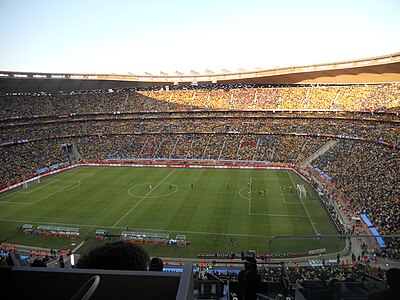


A Continent's Pinnacle
The 2010 FIFA World Cup represented a profound moment in global sports history, marking the first time the tournament was hosted by an African nation. South Africa's successful bid in 2004, triumphing over Egypt and Morocco, was a testament to the continent's growing influence and FIFA's commitment to inclusivity. The tournament, held from June 11 to July 11, 2010, was not merely a sporting event but a powerful symbol of post-apartheid South Africa's integration into the global community.
The infrastructure development, including the construction and renovation of ten stadiums across nine cities, underscored the nation's ambition. Soccer City in Johannesburg, the venue for the opening and final matches, became a focal point, buzzing with an estimated 94,736 spectators for the final, showcasing a vibrant African spirit to the world. This event aimed to foster national pride and economic growth, positioning South Africa as a capable host on the international stage.
The Global Gauntlet
The journey to the 2010 FIFA World Cup finals involved a comprehensive qualification process that commenced in August 2007, engaging 208 national teams vying for one of the 32 coveted spots. Upon arrival in South Africa, the 32 finalists were divided into eight groups of four teams each. The initial phase employed a round-robin format, where teams accumulated points based on match outcomes (three for a win, one for a draw, zero for a loss).
The top two teams from each group advanced to the knockout stage, a high-stakes, single-elimination bracket. This format intensifies the competition, as any loss results in immediate elimination. The progression through the round of 16, quarter-finals, and semi-finals culminated in the ultimate showdown for the championship title, demanding consistent performance and resilience under immense pressure.
La Furia Roja's Ascent
The final match pitted Spain, the reigning European champions, against the Netherlands, who sought their first World Cup title after two previous final defeats. The game was a tense tactical battle, ultimately decided in extra time. Spain's midfielder Andrés Iniesta scored the decisive goal in the 116th minute, securing a historic 1-0 victory.
This triumph marked Spain's maiden FIFA World Cup title, elevating them to the elite group of eight nations to have won the tournament. Crucially, Spain became the first European nation to win a World Cup hosted outside of Europe, breaking a historical trend where all previous World Cups held on non-European continents had been won by South American nations. Furthermore, Spain achieved this feat after losing their opening group match against Switzerland, a feat previously accomplished only by England in 1966 (though England's loss was in the group stage of a tournament they ultimately won, Spain's was their first match of the tournament).
A Tournament of Surprises and Shifting Paradigms
The 2010 FIFA World Cup was characterized by several unexpected outcomes and historical anomalies. For the first time in World Cup history, the host nation, South Africa, failed to advance beyond the group stage. This was compounded by the early exits of the 2006 finalists, Italy and France, with Italy, the defending champions, also being eliminated in the group stage.
This marked the beginning of a pattern where defending champions struggled significantly in subsequent tournaments. In a remarkable display of resilience, New Zealand emerged as the only undefeated team in the tournament, drawing all three of their group matches, yet they too were eliminated in the group stage. Spain's victory, coupled with their opening match loss, added another layer of historical significance to their championship run, demonstrating that even setbacks could be overcome on the path to glory.
See also
Frequently Asked Questions
Why was the 2010 FIFA World Cup special for Africa?+
How many teams played in the 2010 World Cup?+
Who won the 2010 World Cup and what was special about their win?+
Where was the final match played and how many people watched?+
Did South Africa, the host country, advance past the group stage?+
Based on content from Wikipedia · Licensed under CC BY-SA 4.0