

Zhou Dynasty
Images
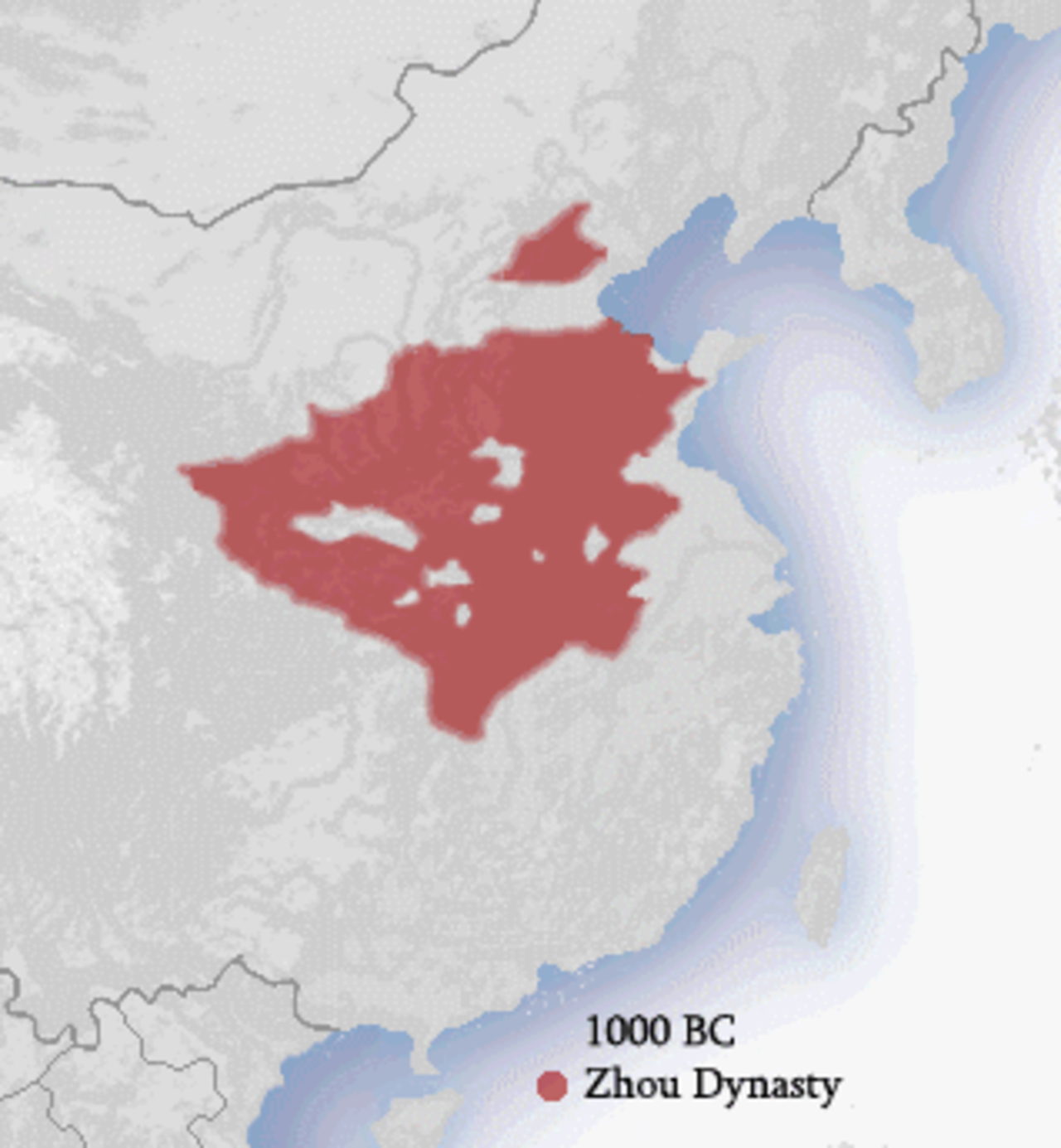
Zhou dynasty
The Western Zhou Consolidation
The Zhou Dynasty (c. 1046–256 BCE) represents the longest dynastic period in Chinese history, a testament to its enduring political and cultural influence. Emerging from the Wei River valley, the Zhou rulers, led by figures like King Wen and King Wu, successfully overthrew the Shang Dynasty. Their legitimacy was cemented by the concept of the 'Mandate of Heaven' (Tianming), a sophisticated ideology that posited divine approval for just rule and provided a framework for dynastic succession and overthrow.
This doctrine was crucial in unifying disparate tribal groups and establishing a centralized authority. The Western Zhou period (c. 1046–771 BCE) saw the implementation of a sophisticated feudal system, where land and power were granted to royal relatives and allied clans in exchange for loyalty and military service. This decentralized yet hierarchical structure allowed for effective governance over a vast territory, fostering relative stability and cultural homogeneity, including the standardization of written script and bronze casting techniques, which reached new artistic and technical heights.
The Eastern Zhou Fragmentation
The decline of the Western Zhou, marked by internal strife and external pressures, led to the relocation of the capital to Luoyang and the beginning of the Eastern Zhou period (771–256 BCE). This era is further divided into the Spring and Autumn period (771–476 BCE) and the Warring States period (475–221 BCE). Despite political fragmentation and constant warfare among numerous states, this period was an unparalleled epoch of intellectual ferment, known as the 'Hundred Schools of Thought.' This was the crucible for the development of China's most enduring philosophical traditions. Confucius (Kong Fuzi) articulated a comprehensive ethical and social philosophy emphasizing benevolence (ren), righteousness (yi), propriety (li), wisdom (zhi), and trustworthiness (xin), advocating for a hierarchical but harmonious social order based on moral cultivation and ritual.
Simultaneously, Laozi (Lao Tzu) and Zhuangzi (Chuang Tzu) developed Taoism, emphasizing living in harmony with the Tao (the Way), naturalness, and non-action (wu wei). Other significant schools, including Legalism, Mohism, and the School of Names, also contributed to the intellectual landscape, offering diverse solutions to the era's pervasive social and political chaos. This philosophical richness profoundly shaped Chinese governance, ethics, and culture for millennia.
Technological Revolutions
The Zhou Dynasty witnessed a pivotal technological transformation with the widespread adoption and mastery of iron metallurgy. While bronze had been the primary material for tools and weapons during the Shang and early Zhou, iron offered superior strength, durability, and cost-effectiveness. The development of iron smelting techniques allowed for the mass production of agricultural implements, such as the iron plowshare, which significantly enhanced farming efficiency.
This led to increased crop yields, supporting a larger population and fostering economic growth. The surplus agricultural output also facilitated greater specialization of labor and the rise of commerce. In warfare, iron weapons, including swords, spearheads, and armor, provided a decisive advantage, contributing to the shifting power dynamics among the warring states.
The construction of large-scale irrigation projects also became more feasible with iron tools, further boosting agricultural productivity and demonstrating the era's innovative spirit.
Enduring Political and Cultural Architectures
The Zhou Dynasty's legacy extends far beyond its impressive duration. The Mandate of Heaven, though a tool for legitimizing rule, also embedded the concept of a ruler's responsibility to their people, influencing the dynastic cycle theory that dominated Chinese political thought for centuries. The feudal system, while eventually collapsing under the pressures of the Warring States, established precedents for administrative organization and land tenure.
The philosophical schools that flourished during the Eastern Zhou, particularly Confucianism, became the intellectual and moral backbone of Chinese society. Confucian principles permeated education, family structures, and imperial bureaucracy, shaping social norms and governance until the modern era. The emphasis on meritocracy, albeit imperfectly realized, and the cultivation of virtue as a prerequisite for leadership, are enduring ideals.
The Zhou also contributed to the standardization of language and the development of sophisticated bronze casting, leaving a rich material cultural heritage that continues to be studied and admired.
The Zhou's Transition to Imperial Unity
The prolonged period of conflict during the Warring States era, a direct consequence of the weakening Zhou authority and the rise of powerful individual states, ultimately created the conditions for unification. States like Qin, heavily influenced by Legalist philosophy which advocated for strict laws and centralized control, developed sophisticated administrative and military systems. The intense competition and innovation driven by warfare spurred advancements in military strategy, logistics, and technology.
The eventual conquest of the other states by Qin Shi Huang in 221 BCE marked the end of the Zhou Dynasty and the dawn of China's first imperial era. However, the foundations laid by the Zhou, from their political ideologies and philosophical discourse to their technological innovations, were indispensable precursors to this imperial unification, demonstrating how a long period of fragmentation could paradoxically lead to the creation of a more unified and enduring state.
Go deeper
Based on content from Wikipedia · Licensed under CC BY-SA 4.0