

Zaha Hadid: The Queen of Curves!
Images
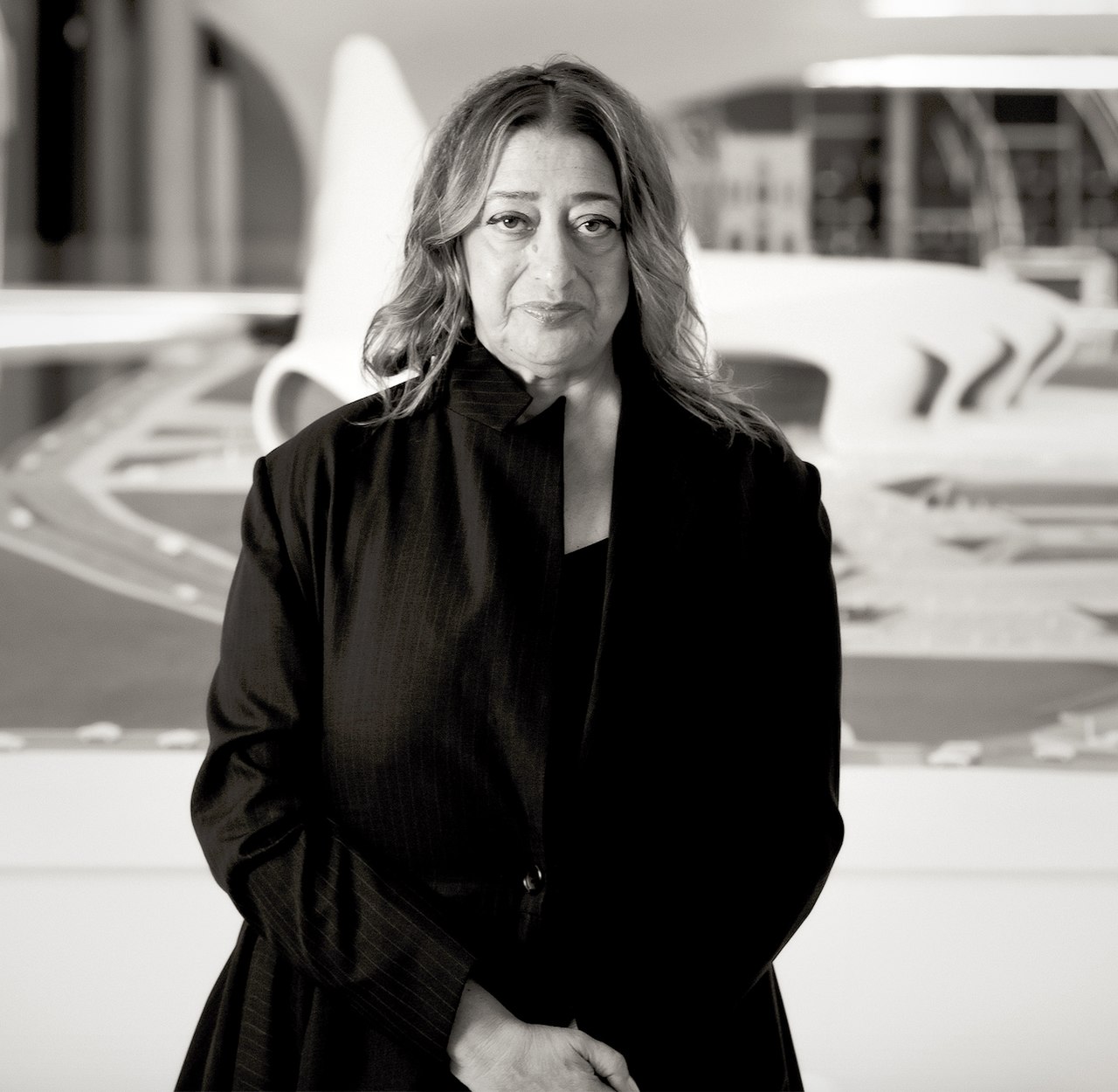
Zaha Hadid
A Vision Forged in Mathematics and Art
Dame Zaha Mohammad Hadid, born in Baghdad, Iraq, on October 31, 1950, emerged as one of the most influential architects of the late 20th and early 21st centuries. Her intellectual journey began not with blueprints, but with mathematics, a discipline that provided her with a unique framework for understanding complex forms and spatial relationships. This analytical foundation was later fused with a profound appreciation for the Russian avant-garde and Suprematism, art movements that championed abstraction and dynamic compositions.
Hadid saw these artistic principles not merely as aesthetic choices, but as tools to 'reinvestigate the aborted and untested experiments of Modernism.' She sought to break free from the rigid functionalism of earlier modern architecture, using painting as a primary design medium to explore new possibilities for building, envisioning structures that were fluid, fragmented, and imbued with a sense of movement.
Liberating Architectural Geometry
Hadid's architectural language is instantly recognizable, characterized by its daring fluidity and rejection of conventional rectilinear forms. The moniker 'Queen of Curves,' bestowed by The Guardian, aptly captures her mastery in liberating architectural geometry. Her designs eschew the predictable, instead embracing parametricism and complex curves to create spaces that are both exhilarating and deeply integrated with their surroundings.
This approach wasn't about ornamentation; it was about a fundamental rethinking of form and space. Buildings like the Guangzhou Opera House, with its smooth, eroded forms, or the London Aquatics Centre, whose roof evokes the power of water, demonstrate her ability to translate abstract concepts into tangible, awe-inspiring structures. Her work challenged the very definition of architectural space, making it dynamic, multi-layered, and responsive.
A Global Portfolio of Groundbreaking Edifices
Zaha Hadid's prolific career left an indelible mark on cityscapes across the globe. Her major works represent a spectrum of typologies, each executed with her signature innovative spirit. The MAXXI Museum in Rome is a testament to her ability to create complex, interconnected spaces that encourage exploration.
The London Aquatics Centre, designed for the 2012 Olympic Games, is celebrated for its sweeping, organic roof structure. Beyond these, her firm undertook ambitious projects worldwide, including the striking Heydar Aliyev Centre in Baku, Azerbaijan, and the Vitra Fire Station in Germany, one of her earlier built works that showcased her radical approach. Even projects initiated before her death on March 31, 2016, such as the vast Daxing International Airport in Beijing and the Al Janoub Stadium in Qatar, continue to embody her visionary design philosophy, pushing the boundaries of engineering and aesthetics.
Pioneering Achievements and Enduring Legacy
Beyond her architectural achievements, Zaha Hadid's career was marked by significant milestones that broke barriers for women in the field. In 2004, she became the first woman to be awarded the Pritzker Architecture Prize, a monumental recognition of her groundbreaking contributions. She further cemented her status by winning the prestigious Stirling Prize in consecutive years, 2010 and 2011.
Her contributions were formally acknowledged when she was made a Dame by Queen Elizabeth II in 2012. In February 2016, shortly before her passing, she received the Royal Gold Medal from the Royal Institute of British Architects, another first for an individual woman. Hadid's legacy is not confined to her built works; she fundamentally altered the discourse on architectural form, inspired generations of architects, and proved that radical vision, coupled with intellectual rigor, could reshape the built environment.
Go deeper
Frequently Asked Questions
Who was Zaha Hadid and why is she called the Queen of Curves?+
What kinds of buildings did Zaha Hadid design?+
How did Zaha Hadid use math and art in her designs?+
Which famous buildings did Zaha Hadid create for the Olympics or other events?+
Did Zaha Hadid win any awards for her work?+
Based on content from Wikipedia · Licensed under CC BY-SA 4.0