

Yellow-tailed Woolly Monkey
Images
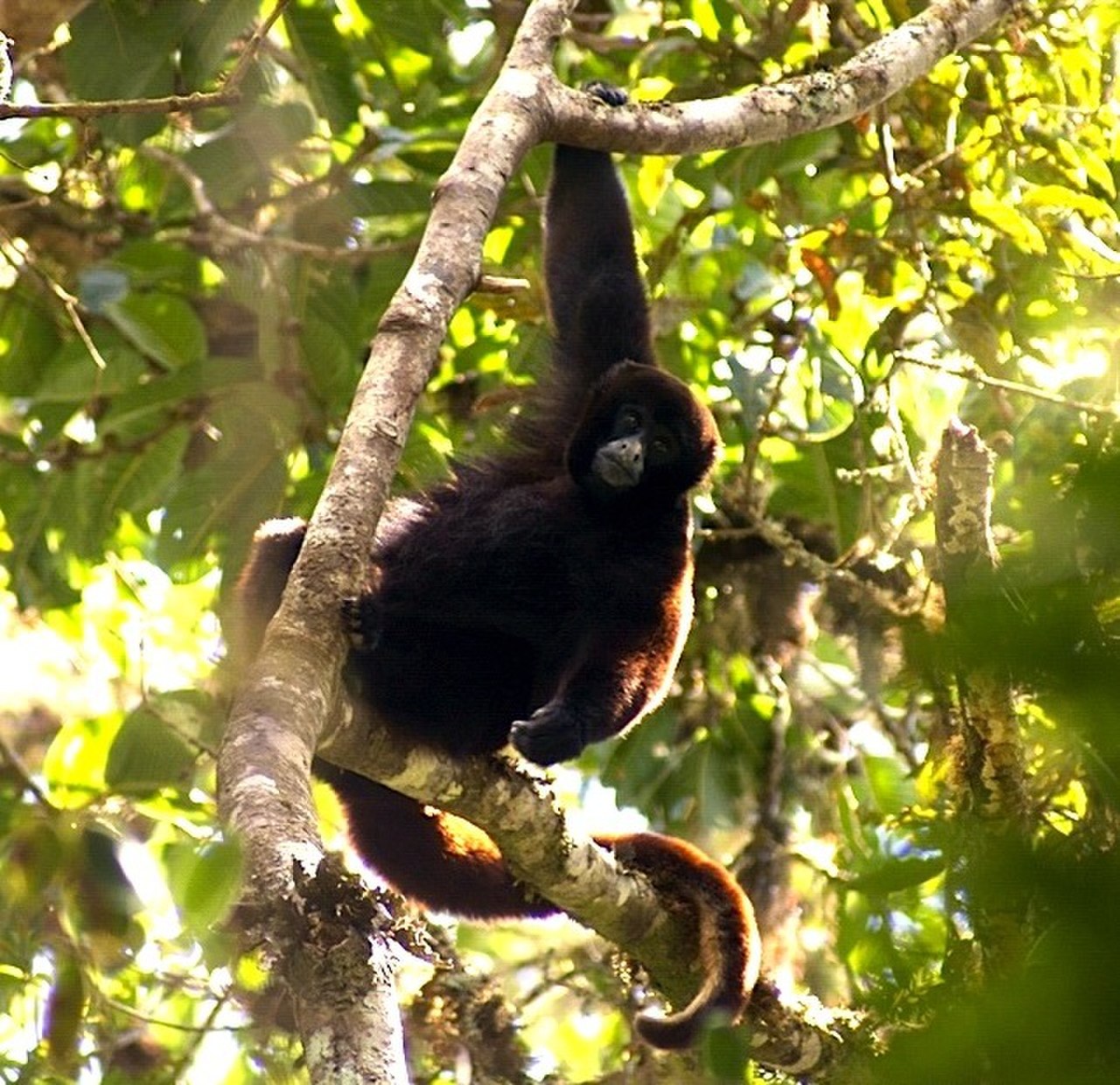
Cola amarilla
Taxonomy and Unique Morphology
The yellow-tailed woolly monkey, scientifically classified as Lagothrix flavicauda, is a distinct species of New World monkey endemic to Peru. Its common name derives from the striking bright yellow coloration of its tail, a feature that distinguishes it from other members of the Lagothrix genus. Morphologically, it is characterized by its dense, woolly pelage, which provides insulation in its cool, high-altitude environment.
The tail is prehensile, a common adaptation among arboreal primates, enabling secure locomotion through the forest canopy. This adaptation is crucial for its survival in the complex, three-dimensional environment of the cloud forest. The species is relatively large, contributing to its woolly appearance and arboreal lifestyle.
Ecological Niche and Habitat Specialization
This primate occupies a highly specialized ecological niche within the montane cloud forests of the Peruvian Andes, primarily in the Amazonas and San Martín departments, with extensions into adjacent regions. These forests are characterized by high humidity, frequent fog, and a rich diversity of plant life, including epiphytes and dense undergrowth. Lagothrix flavicauda is primarily arboreal, spending the majority of its life in the upper canopy.
Its diet is omnivorous, with a strong emphasis on fruits (frugivory) and leaves (folivory), supplemented by flowers and possibly insects. This dietary flexibility allows it to exploit available resources within its specific habitat. The monkey's reliance on these particular forest types makes it exceptionally vulnerable to habitat fragmentation and degradation, as these ecosystems are sensitive to climate change and human encroachment.
Conservation Imperatives and Threats
The yellow-tailed woolly monkey is classified as endangered, facing significant threats to its survival. The primary driver of its decline is habitat loss and fragmentation, resulting from agricultural expansion, cattle ranching, logging, and infrastructure development in its native range. As a species with a restricted geographic distribution and specialized habitat requirements, it is particularly susceptible to these pressures. Conservation efforts are crucial and involve protecting existing forest fragments, establishing wildlife corridors to connect isolated populations, and working with local communities to promote sustainable land-use practices. Research into its population dynamics, genetic diversity, and specific ecological needs is ongoing and vital for developing effective long-term conservation strategies.
The survival of Lagothrix flavicauda is intrinsically linked to the preservation of the unique Andean cloud forest ecosystem.
Discovery and Scientific Significance
The yellow-tailed woolly monkey remained largely unknown to the broader scientific community for an extended period, often relegated to local folklore and limited museum specimens. It was not until the 1970s that its distinctiveness as a species, Lagothrix flavicauda, was formally recognized and described by zoologists. This delayed formal description underscores the challenges of conducting research in remote, high-altitude tropical regions and highlights the potential for undiscovered or poorly understood biodiversity.
The scientific significance of Lagothrix flavicauda lies not only in its unique characteristics but also as a flagship species for the conservation of the Andean cloud forests. Its study provides valuable insights into primate evolution, adaptation to montane environments, and the complex ecological interactions within these fragile ecosystems. Its rarity and endangered status serve as a stark reminder of the ongoing biodiversity crisis.
Ecological Role and Broader Implications
Beyond its intrinsic value, the yellow-tailed woolly monkey plays a significant role in its ecosystem. As a seed disperser, it contributes to the regeneration and maintenance of forest structure and composition. Its feeding habits influence plant community dynamics.
The health and abundance of Lagothrix flavicauda populations can serve as an indicator of the overall health of the Andean cloud forest ecosystem. The threats it faces are emblematic of challenges confronting many species in tropical montane regions worldwide. Therefore, conservation initiatives aimed at protecting this monkey have broader implications, contributing to the preservation of a globally important biodiversity hotspot and the ecosystem services it provides, such as water regulation and carbon sequestration.
Understanding and protecting this species is a critical component of global conservation efforts.
See also
Frequently Asked Questions
What does the yellow‑tailed woolly monkey look like?+
Where does the yellow‑tailed woolly monkey live?+
Why is the yellow‑tailed woolly monkey endangered?+
How does the yellow‑tailed woolly monkey move in the trees?+
What do yellow‑tailed woolly monkeys eat?+
Based on content from Wikipedia · Licensed under CC BY-SA 4.0