

Cloud Forest
Images

Pink Banana (Musa velutina) in a butterfly sanctuary in the cloud forests of Mindo, Ecuador




Defining the Silvagenitus Ecosystem
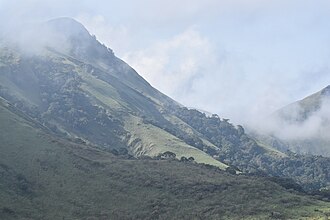
Tropical montane cloud forests, formally classified as silvagenitus, represent a distinct biome characterized by persistent, frequent, or seasonal low-level cloud cover, typically enveloping the forest canopy. These ecosystems are situated at high altitudes in tropical and subtropical mountain ranges, where orographic lift forces moist air masses to cool and condense. The resulting cloud immersion creates a perpetually humid environment with high precipitation rates, often exceeding those of lowland rainforests.
Unlike typical forests, cloud forests are defined not just by their latitude or temperature, but by their unique hydrological regime, heavily influenced by atmospheric moisture deposition. They often develop on mountain saddles and slopes where prevailing winds deposit moisture more effectively, fostering conditions for specialized flora and fauna adapted to constant dampness and reduced sunlight penetration due to cloud cover.
The Dominance of Moss and Epiphytes
The most visually striking feature of cloud forests is the pervasive presence of bryophytes, particularly mosses, which coat virtually every surface – soil, rocks, tree trunks, and branches. This characteristic has earned them the moniker 'mossy forests.' These mosses are not merely aesthetic; they are functional powerhouses of the ecosystem. They absorb and retain significant amounts of atmospheric moisture, acting as living reservoirs that buffer against dry spells and slowly release water, maintaining high humidity levels.
This damp environment is also ideal for a vast array of epiphytes, including orchids, ferns, bromeliads, and lichens, which grow on host trees without drawing nutrients from them. These epiphytes contribute significantly to the forest's structural complexity and biodiversity, creating microhabitats for numerous invertebrates and small vertebrates.
Biodiversity Sanctuaries and Endemism
Cloud forests are globally recognized as biodiversity hotspots, harboring an exceptionally high concentration of species relative to their area. This intense biodiversity is driven by geographic isolation on mountain tops, creating unique evolutionary pressures and leading to high rates of endemism – species found nowhere else on Earth. The stable, humid conditions allow for the evolution of specialized plant forms and the animals that depend on them.
For instance, many species of amphibians, birds (like hummingbirds and quetzals), and insects have evolved intricate relationships with the flora. The complex structure provided by mosses and epiphytes offers diverse niches for these organisms. The sheer number of species, many still undiscovered, underscores the immense biological value of these montane ecosystems.
Critical Hydrological Functions and Climate Regulation
The ecological services provided by cloud forests are vital on both local and global scales. Their role as 'water towers' is paramount; they intercept atmospheric moisture and release it gradually, sustaining river flows and groundwater recharge for downstream communities and ecosystems. This process is crucial for maintaining water security in many regions.
Furthermore, cloud forests, like other forests, play a role in carbon sequestration, storing significant amounts of carbon in their biomass and soils, thus contributing to climate regulation. However, these sensitive ecosystems are particularly vulnerable to climate change. Rising temperatures can cause the cloud base to lift, effectively pushing the cloud forest zone higher up mountains, potentially shrinking its habitat or forcing species to higher, uninhabitable altitudes. Deforestation and land-use change also pose significant threats, impacting both biodiversity and water regulation services.
Challenges and Conservation Imperatives
The future of cloud forests is precarious, facing multifaceted threats. Climate change is perhaps the most significant, with warming temperatures predicted to alter the delicate balance of moisture and temperature that defines these habitats. As global temperatures rise, the cloud base is expected to ascend, potentially shrinking the available habitat for cloud forest species or forcing them to migrate to higher elevations where suitable conditions may not exist.
This can lead to species extinction, especially for endemic organisms with limited ranges. Additionally, deforestation for agriculture, logging, and infrastructure development fragments these ecosystems, reducing their resilience and impacting their ability to provide essential ecosystem services like water regulation. Conservation efforts are therefore critical, focusing on establishing protected areas, promoting sustainable land-use practices in surrounding regions, and undertaking research to better understand their vulnerability and inform effective management strategies.
International cooperation is essential to safeguard these irreplaceable montane treasures.
Go deeper
Frequently Asked Questions
What is a cloud forest?+
Why do cloud forests have so many mosses?+
How do cloud forests help people with water?+
What kinds of animals live in cloud forests?+
Why are cloud forests important for the planet?+
Based on content from Wikipedia · Licensed under CC BY-SA 4.0