

Yangtze River
Images

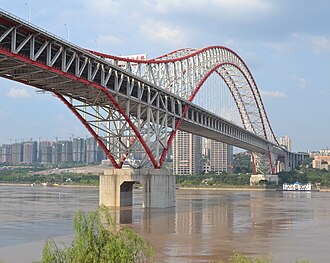
File:Wanxian Yangtze River Bridge.JPG



Geomorphological Significance and Hydrological Dynamics
The Yangtze River's course is a testament to geological forces, originating in the Tanggula Mountains of the Tibetan Plateau and traversing diverse terrains before emptying into the East China Sea. Its drainage basin, spanning approximately 1.8 million square kilometers, encompasses a significant portion of China's landmass and is characterized by varied climates, from alpine to subtropical. The river's hydrological regime is complex, influenced by monsoon patterns, glacial meltwater, and numerous tributaries, resulting in distinct flood seasons and flow variations.
Its upper reaches are marked by dramatic gorges, such as the Three Gorges, which have been shaped by tectonic activity and erosion over millennia. The middle and lower reaches are characterized by extensive floodplains and deltas, vital for agriculture and human settlement, but also prone to severe flooding. The river's gradient decreases significantly downstream, leading to slower flow and increased sediment deposition, particularly in its vast delta region.
Historical Trajectory and Cultural Resonance
The Yangtze River has been central to the development of Chinese civilization for over 7,000 years. Its fertile floodplains provided the ideal environment for the cultivation of rice, a staple crop that supported dense populations and the rise of complex societies. The river served as a primary artery for trade, communication, and military movement, facilitating the unification and administration of vast territories.
Numerous ancient settlements and archaeological sites are found along its banks, offering insights into early agricultural practices, pottery, and social structures. The river has also been a potent symbol in Chinese art, literature, and philosophy, representing power, continuity, and the flow of time. Major historical events, including the Taiping Rebellion and the establishment of key industrial centers, are inextricably linked to its geographical influence and economic potential.
Socioeconomic Engine and Urbanization Nexus
The Yangtze River basin is China's most populous and economically dynamic region, home to over 400 million people and generating a substantial portion of the nation's GDP. It serves as a critical transportation corridor, with cities like Chongqing, Wuhan, Nanjing, and Shanghai acting as major industrial and commercial hubs. The river facilitates the movement of raw materials and finished goods, connecting inland production centers with global markets through the Port of Shanghai, one of the world's busiest.
Agriculture remains vital, with the river's waters irrigating vast tracts of land. Furthermore, the Yangtze is a significant source of hydroelectric power, most notably through the Three Gorges Dam, which provides electricity but also has profound ecological and social implications. This intense economic activity, however, has led to significant environmental pressures.
Environmental Challenges and Sustainable Management
The Yangtze River faces immense environmental challenges stemming from rapid industrialization, urbanization, and agricultural intensification. Water pollution from industrial discharge, agricultural runoff containing pesticides and fertilizers, and untreated sewage has severely degraded water quality, impacting aquatic ecosystems and human health. The river's biodiversity has suffered dramatically, with species like the Yangtze River dolphin (Baiji) now functionally extinct, and others, such as the Chinese sturgeon, critically endangered.
Large-scale infrastructure projects, particularly dams, have altered natural flow regimes, disrupted fish migration, and led to significant sediment accumulation. Addressing these issues requires a comprehensive approach to environmental governance, including stricter pollution controls, sustainable agricultural practices, ecological restoration efforts, and careful consideration of the long-term impacts of water management projects.
Governance and Future Trajectories
The governance of the Yangtze River is a complex undertaking involving multiple government agencies at national, provincial, and local levels. China has increasingly recognized the need for integrated river basin management to address the interconnected environmental and economic challenges. Initiatives such as the Yangtze River Economic Belt strategy aim to balance economic development with ecological protection, promoting green industries and sustainable land use. Policy interventions focus on pollution control, water resource allocation, and biodiversity conservation.
The future trajectory of the Yangtze River will depend on the effectiveness of these governance frameworks, the commitment to sustainable development principles, and the ability to foster cooperation among diverse stakeholders to ensure the long-term health and vitality of this indispensable waterway.
Go deeper
Based on content from Wikipedia · Licensed under CC BY-SA 4.0