

The Yalta Conference: A Secret Meeting to Shape the World!
Images
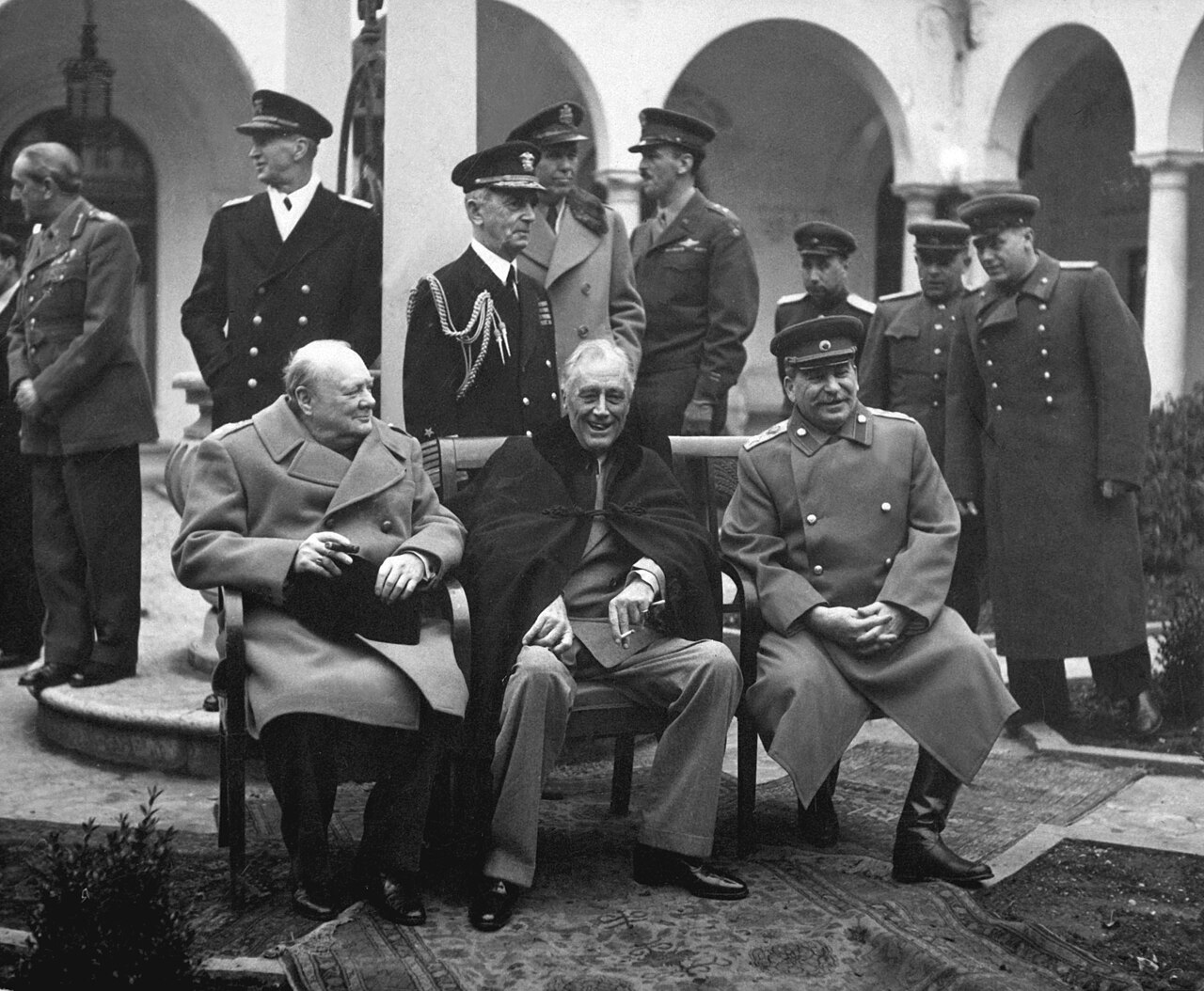
Yalta Conference
The Geopolitical Landscape of Yalta
Held from February 4-11, 1945, at the Livadia Palace in Yalta, Crimea, the Yalta Conference represented a critical juncture in global affairs. World War II was nearing its conclusion in Europe, with Allied forces advancing on Germany from both the west and the east. The 'Big Three' leaders-President Franklin D.
Roosevelt of the United States, Prime Minister Winston Churchill of Great Britain, and General Secretary Joseph Stalin of the Soviet Union-convened to discuss the immediate post-war settlement and the broader framework for global stability. Roosevelt, aware of his declining health, sought to solidify a lasting peace through international cooperation, primarily via the United Nations. Churchill, deeply concerned about the future of European power balances and the growing Soviet influence, aimed to secure British interests and prevent Soviet hegemony.
Stalin, leveraging the Red Army's dominant position on the Eastern Front, was focused on securing Soviet security through buffer states and reparations.
Key Agreements and Emerging Tensions
The conference yielded several significant agreements. The most prominent was the decision to divide Germany and its capital, Berlin, into four occupation zones, administered by the US, UK, France, and the USSR. This was intended to demilitarize and denazify Germany, preventing its resurgence as a military power.
Another crucial outcome was the formal agreement on the establishment of the United Nations, with the Security Council structure, including the veto power for permanent members, largely shaped at Yalta. Stalin also committed the Soviet Union to enter the war against Japan within three months of Germany's surrender, in exchange for territorial concessions in Asia, such as the southern half of Sakhalin and the Kuril Islands. However, the discussions surrounding Eastern Europe, particularly Poland, revealed deep ideological rifts.
While a compromise was reached to form a provisional government of national unity, the Soviet interpretation and implementation of this agreement would lead to the establishment of Soviet-aligned communist regimes, a key factor in the onset of the Cold War.
The Shadow of the Future
While Yalta was framed as a conference for post-war cooperation, the differing objectives and inherent mistrust among the Big Three created underlying tensions that would soon escalate into the Cold War. Roosevelt's optimism about Stalin's intentions proved to be a miscalculation, as Soviet actions in Eastern Europe quickly demonstrated a commitment to expanding communist influence rather than fostering genuine democratic self-determination as envisioned by the Western Allies.
The division of Germany, while intended to prevent future aggression, also created a focal point for superpower rivalry. The strategic imperative for Soviet security, coupled with Stalin's Marxist-Leninist ideology, led to the imposition of Soviet control over Eastern European nations, effectively creating an 'Iron Curtain' that would divide the continent for nearly half a century. The conference thus marked not only the end of one global conflict but also the beginning of a new era of bipolar confrontation.
Yalta's Enduring Legacy in International Relations
The Yalta Conference remains a subject of intense historical debate, often viewed as a moment where the foundations of the post-war world order were laid, for better or worse. Its legacy is complex, encompassing both the creation of institutions designed for peace, like the UN, and the geopolitical divisions that characterized the Cold War. The decisions made at Yalta directly shaped the map of post-war Europe, influencing national borders, political systems, and international alliances for decades.
Studying Yalta provides crucial insights into the dynamics of great power diplomacy, the challenges of managing ideological differences during periods of global transition, and the long-term consequences of strategic compromises. It serves as a powerful case study in how wartime alliances can fracture in peacetime, leading to new forms of global competition and cooperation.
Go deeper
Frequently Asked Questions
What was the Yalta Conference and when did it happen?+
Who were the leaders at the Yalta Conference?+
What big decisions were made at Yalta?+
Why did the Yalta Conference lead to the Cold War?+
How did the Yalta Conference affect Germany?+
Based on content from Wikipedia · Licensed under CC BY-SA 4.0