

Victoria (state)
Images

Victoria (State) Map (Wikivoyage) Proposed*




Geographic Diversity and Population Distribution
Victoria, situated in Australia's most populous southeast, is the nation's second-smallest state by area, covering 227,444 km². Despite its size, it boasts remarkable geographic diversity, ranging from the temperate coastal and central regions to the alpine environments of the Victorian Alps in the northeast and the semi-arid landscapes of the northwest. This varied terrain supports distinct ecosystems and influences human settlement patterns.
The overwhelming majority of Victoria's population, exceeding 7 million people, is concentrated in the central-south around Port Phillip Bay, particularly within Greater Melbourne. This concentration makes Victoria the most densely populated state in Australia, with 30.6 people per square kilometer. The state's boundaries are defined by New South Wales to the north, South Australia to the west, and the Bass Strait, Southern Ocean, and Tasman Sea to the south and southeast.
Historical Development and Economic Powerhouse
Victoria's history is marked by rapid growth and transformation. Following early European settlement in 1803 and its inclusion in the Port Phillip District of New South Wales, Victoria was established as a separate Crown colony in 1851, named in honor of Queen Victoria. The mid-19th century gold rushes dramatically boosted its population and economic prosperity.
By the time of Australia's Federation in 1901, Melbourne had become the largest city in Australasia and served as the federal capital until 1927. Victoria's economy is the second-largest among Australian states, characterized by a highly diversified structure where the service sector predominates. This economic strength, coupled with significant international and interstate migration throughout the 20th and 21st centuries, has fueled its continued growth and development.
Cultural Landscape and Indigenous Heritage
Victoria is a profoundly multicultural state, with over 35% of Melbourne's inhabitants being immigrants, contributing to a rich tapestry of traditions, languages, and cuisines. This diversity is a defining characteristic of its urban centers. However, the land has been home to numerous Aboriginal groups for millennia, including the Boonwurrung, Wurundjeri, and Gunditjmara peoples, among others.
Prior to European colonization, more than 30 Aboriginal languages were spoken in the region, reflecting a deep and ancient connection to the land. The preservation and recognition of this Indigenous heritage are increasingly important aspects of Victoria's cultural identity, complementing its modern multiculturalism.
Governance and Political Representation
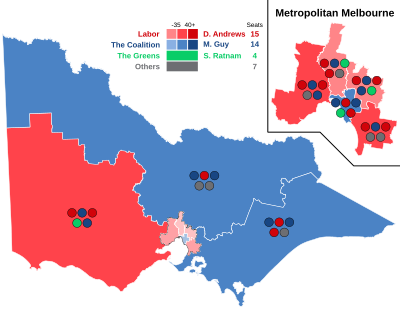
Victoria operates under a responsible government system, established in 1855. The state's political structure includes a bicameral Parliament of Victoria, comprising the Legislative Assembly and the Legislative Council. The Labor Party has governed Victoria since 2014, led by the Premier.
The Governor represents the monarch as the state's ceremonial head. Administratively, Victoria is divided into 79 local government areas, which manage local services and community affairs, while unincorporated areas are administered directly by the state. Victoria also holds significant representation at the federal level, with 38 seats in the Australian House of Representatives and 12 seats in the Australian Senate, ensuring its influence in national policy-making.
Education and Urban Development
Victoria places a strong emphasis on education, with a comprehensive system catering to all levels. Its capital, Melbourne, is a major educational hub, hosting several world-renowned universities and research institutions, attracting students from across the globe. The state's commitment to education is reflected in its high literacy rates and skilled workforce, which supports its diverse economy.
Urban development is largely centered around Melbourne, which has grown into Australia's second-largest city and a global center for arts, culture, and sports, famously recognized as the world's sporting capital in 2016. Beyond Melbourne, cities like Geelong, Ballarat, and Bendigo are also significant regional centers, contributing to Victoria's overall development and providing diverse living environments.
See also
Frequently Asked Questions
What is Victoria in Australia?+
Why is Melbourne so famous?+
Where do most people in Victoria live?+
How many people live in Victoria?+
Who are the original people of Victoria?+
Based on content from Wikipedia · Licensed under CC BY-SA 4.0