

University of Chicago
Images

University of Chicago 2


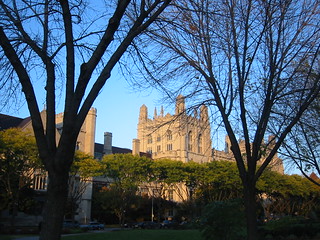


Geographic Footprint
The University of Chicago's primary campus is situated in the historic Hyde Park neighborhood of Chicago, Illinois, a vibrant urban setting that fosters intellectual exchange. However, UChicago's influence is not confined to its Midwestern roots. The university maintains a strategic network of satellite campuses and centers in key global cities, including London, Hong Kong, Paris, Beijing, Delhi, and Luxor, alongside a downtown Chicago presence.
This international network facilitates cross-cultural academic collaboration, allows for specialized research in diverse environments, and provides students with unique opportunities for global engagement. This expansive geographic reach underscores UChicago's commitment to being a truly global institution, connecting scholars and ideas across continents and fostering a diverse intellectual community.
Foundations of Thought
UChicago's academic structure is designed to cultivate deep expertise and interdisciplinary innovation. It comprises a distinguished undergraduate college and four core graduate research divisions: the Arts & Humanities, Biological Sciences, Physical Sciences, and Social Sciences. These divisions are further organized into numerous departments and institutes, each a center of specialized inquiry.
Complementing these are seven professional schools-Business, Divinity, Law, Medicine, Public Policy, Social Service Administration, and Molecular Engineering-which prepare students for impactful careers. This intricate academic architecture allows for both rigorous specialization and the cross-pollination of ideas, enabling scholars to tackle complex problems from multiple perspectives and push the boundaries of knowledge.
Pioneering Discoveries
The University of Chicago has been a fertile ground for discoveries that have fundamentally altered our understanding of the world. Most notably, beneath the stands of Stagg Field, the university's Metallurgical Laboratory achieved a world-changing milestone: the creation of Chicago Pile-1, the first human-made, self-sustaining nuclear chain reaction. This event was a pivotal moment in the development of nuclear physics and energy.
Furthermore, UChicago scholars were instrumental in the 'radiocarbon revolution,' advancing carbon-14 dating techniques. This breakthrough revolutionized archaeology, paleontology, and geology by providing a reliable method for dating ancient organic materials, unlocking invaluable insights into Earth's history and the evolution of life.
A Legacy of Intellectual Luminaries and Enduring Influence
The intellectual output of the University of Chicago is unparalleled, evidenced by its extraordinary number of affiliated Nobel laureates-101 as of 2025. This remarkable figure highlights the profound impact UChicago scholars have had on fields ranging from physics and economics to peace and literature. Beyond Nobel Prizes, the university community boasts numerous Fields Medalists, Turing Award winners, MacArthur Fellows, Rhodes Scholars, and Pulitzer Prize recipients.
This concentration of intellectual talent has led to the establishment of influential 'Chicago schools of thought' in various disciplines, shaping academic discourse and research methodologies worldwide. The university also houses the University of Chicago Press, North America's largest university press, further disseminating groundbreaking scholarship.
Beyond Academia
The University of Chicago's research endeavors extend beyond its campus borders, managing major national laboratories like Fermi National Accelerator Laboratory and Argonne National Laboratory, as well as the Marine Biological Laboratory. These collaborations place UChicago at the forefront of cutting-edge scientific exploration. The university's commitment to advancing knowledge is also reflected in its global presence, with satellite campuses facilitating international research and academic exchange.
This broad network allows UChicago to address global challenges and contribute to scientific and societal progress on an international scale, solidifying its position as a leading institution in the global academic landscape.
See also
Frequently Asked Questions
Where is the University of Chicago located?+
What are the main academic parts of the university?+
Why is the University of Chicago famous for science?+
How does the university mix different subjects?+
Are there many award winners from the University of Chicago?+
Based on content from Wikipedia · Licensed under CC BY-SA 4.0