

Triceratops
Images
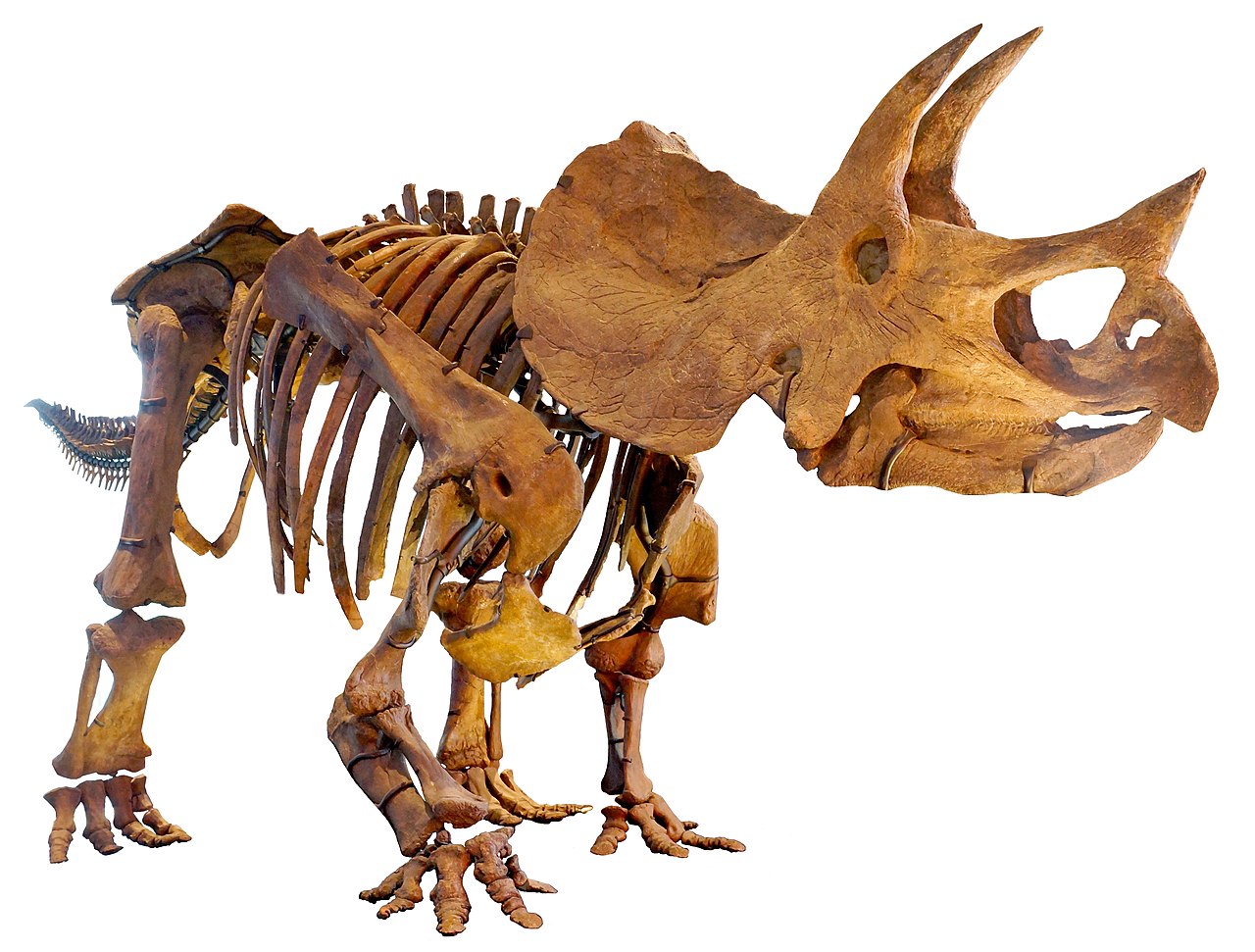
Triceratops
The Iconic Morphology of Triceratops
Triceratops, scientifically classified as Triceratops horridus, stands as one of the most recognizable and well-studied dinosaurs, primarily due to the abundance of its fossil remains. Its most striking feature is its cranial ornamentation: a large, solid bony frill and three prominent horns. The frill, which could be up to 5 feet wide, is thought to have evolved for display, species recognition, and possibly defense, though its solid structure suggests it was less for display and more for protection or combat.
The two supraorbital horns, located above the eyes, were substantial, while the nasal horn was typically smaller. The precise function of these horns is debated, with theories ranging from intraspecific combat (similar to modern bighorn sheep) to defense against predators like Tyrannosaurus rex. Its robust build, with a quadrupedal stance and powerful limbs, supported a body length of up to 30 feet and a weight that could exceed 13,000 pounds, making it one of the largest ceratopsians.
Dietary Adaptations and Ecological Niche
As a dedicated herbivore, Triceratops possessed a highly specialized feeding apparatus. Its beak-like mouth, formed by fused rostral and predentary bones, was exceptionally strong and capable of shearing through tough vegetation. This was complemented by batteries of teeth arranged in columns within its maxilla and dentary bones.
These teeth were continuously replaced throughout its life, with hundreds of teeth present at any given time, though only a fraction were functional. This dental system was adapted for grinding and processing fibrous plant material, such as ferns, cycads, and early flowering plants. Triceratops likely occupied a niche as a large grazer or browser, consuming significant quantities of low-growing vegetation.
Its presence suggests a complex ecosystem in late Cretaceous North America, capable of supporting large herbivores and the carnivores that preyed upon them, such as Tyrannosaurus rex, with whom Triceratops famously coexisted.
Fossil Evidence and Paleontological Significance
The paleontological significance of Triceratops is immense, largely owing to the discovery of numerous fossil specimens, including many nearly complete skulls and skeletons, primarily in the Hell Creek Formation of Montana and Wyoming. These discoveries have provided invaluable insights into dinosaur anatomy, growth patterns, and paleoecology. Studies of Triceratops bone histology have revealed information about its growth rate and estimated lifespan, suggesting it reached maturity relatively quickly and likely lived for 20-30 years. Evidence of healed injuries on fossilized bones provides direct proof of predator-prey interactions and the defensive capabilities of Triceratops.
The sheer volume of Triceratops fossils has also fueled debates about intraspecific variation and the potential for multiple species within the genus, with some researchers proposing that Torosaurus might represent a mature form of Triceratops.
Coexistence and the Brink of Extinction
Triceratops inhabited North America during the very final stages of the Late Cretaceous epoch, specifically the Maastrichtian age, making it one of the last non-avian dinosaurs to exist before the K-Pg extinction event approximately 66 million years ago. Its environment was characterized by diverse flora and fauna, including the apex predator Tyrannosaurus rex. The relationship between Triceratops and T. rex is a subject of intense scientific interest, with fossil evidence suggesting that T. rex may have preyed upon Triceratops, and that Triceratops possessed the defenses to resist such attacks.
The extinction of Triceratops, along with all other non-avian dinosaurs, was a cataclysmic event, likely triggered by an asteroid impact and subsequent environmental upheaval. Studying Triceratops provides a crucial window into the final chapter of the Mesozoic Era and the profound ecological shifts that followed.
Go deeper
Frequently Asked Questions
What did a Triceratops look like?+
Why did Triceratops have a big frill and horns?+
How did Triceratops eat its food?+
Where have scientists found Triceratops fossils?+
When did Triceratops live and when did it go extinct?+
Based on content from Wikipedia · Licensed under CC BY-SA 4.0