

The Great Peace Deal of Edinburgh!
Images

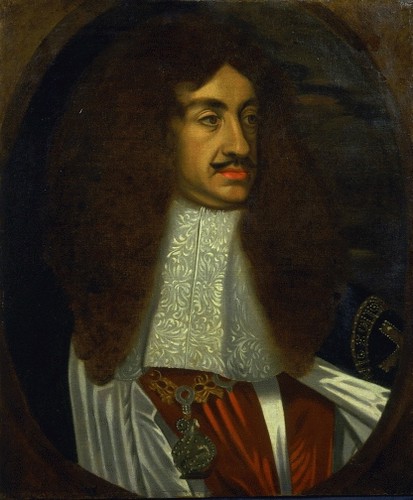
Charles II, King of England




The Treaty of Edinburgh
The Treaty of Edinburgh, signed on July 5, 1560, emerged from a complex web of religious, political, and international tensions that had gripped Scotland and its neighbors. The immediate catalyst was the ongoing Siege of Leith, a protracted military engagement where English forces, supporting the Protestant Lords of the Congregation, were attempting to expel French troops who were bolstering the Catholic regime of Mary, Queen of Scots, and her husband, Francis II of France.
The treaty was not merely a cessation of hostilities; it was a deliberate diplomatic maneuver by Queen Elizabeth I of England to assert English influence in Scotland and to neutralize French power on her northern border. The commissioners who drafted the treaty were tasked with formalizing the withdrawal of French forces and establishing a new framework for Anglo-Scottish relations, effectively dismantling the centuries-old Auld Alliance. This was a strategic masterstroke, aimed at securing England's long-term security and preventing a hostile Franco-Scottish union.
Dissolving the Auld Alliance and Forging a New Accord
For centuries, the Auld Alliance had been a cornerstone of Scottish foreign policy, providing a crucial counterweight to English dominance. The Treaty of Edinburgh represented a radical departure from this tradition. By agreeing to the terms, the Scottish Lords of the Congregation, who were increasingly disillusioned with French interference and aligned with the Protestant Reformation, effectively signaled the end of this historic partnership.
The treaty stipulated the withdrawal of all French soldiers and administrators from Scotland, a significant blow to French influence. In its place, the treaty laid the groundwork for a new Anglo-Scottish accord. While not a formal military alliance in the same vein as the Auld Alliance, it established a period of peace and mutual recognition between England and Scotland.
This shift was instrumental in paving the way for the eventual Union of the Crowns in 1603, when James VI of Scotland also became James I of England.
Geopolitical Ramifications and English Ascendancy
The significance of the Treaty of Edinburgh extends far beyond the immediate cessation of the Siege of Leith. It marked a pivotal moment in the assertion of English power and influence in the British Isles. By successfully intervening in Scottish affairs and dictating terms that diminished French presence, Elizabeth I demonstrated England's growing regional dominance.
The treaty also played a crucial role in maintaining the broader European peace established by the Treaty of Cateau-Cambrésis in April 1560, which had ended the Italian Wars between England, France, and Spain. By resolving the Scottish conflict, England avoided a potential two-front war. Furthermore, the treaty had profound implications for the religious landscape of Scotland, indirectly supporting the Protestant Reformation by weakening the Catholic French monarchy's hold.
This set Scotland on a path that would eventually lead to a distinct religious and political identity, separate from Catholic France.
The Commissioners and the Consent of the Lords
The successful negotiation and ratification of the Treaty of Edinburgh were contingent on the active participation and consent of key stakeholders. Commissioners were appointed by Queen Elizabeth I, acting on behalf of the English Crown, to represent England's interests. Similarly, French representatives were present, though their role became one of acquiescence as the tide turned against them.
Crucially, the treaty was drawn up 'with the assent of the Scottish Lords of the Congregation.' This was not a treaty imposed solely by foreign powers; it reflected the will of a powerful faction within Scotland. These Lords, driven by religious conviction and a desire for greater autonomy from foreign influence, saw the treaty as a means to secure their position and shape Scotland's future. Their endorsement lent legitimacy to the agreement within Scotland and ensured the practical implementation of its terms, particularly the withdrawal of French forces.
Legacy and Long-Term Impact on British History
The Treaty of Edinburgh stands as a testament to the intricate diplomacy and shifting allegiances of the 16th century. It effectively ended a period of intense conflict and foreign intervention in Scotland, allowing for the consolidation of Protestantism and the emergence of a more independent Scottish governance, albeit one increasingly oriented towards England. The dissolution of the Auld Alliance was a seismic shift, fundamentally altering Scotland's geopolitical orientation.
The treaty's success in securing peace between England and France, by extension of the Treaty of Cateau-Cambrésis, underscored its importance in the broader European context. Its most enduring legacy, however, lies in its role as a precursor to the Union of the Crowns. By fostering closer ties and mutual recognition, the Treaty of Edinburgh laid crucial groundwork for the eventual unification of the Scottish and English monarchies, a development that would profoundly shape the future of Great Britain and its global influence.
See also
Frequently Asked Questions
What was the Treaty of Edinburgh?+
Why did England want the treaty?+
How did the treaty change the Auld Alliance?+
What happened to the French soldiers after the treaty?+
How did the treaty help Scotland become different?+
Based on content from Wikipedia · Licensed under CC BY-SA 4.0