

Titicaca: The Lake That Touches the Sky!
Images

Lake Titicaca map


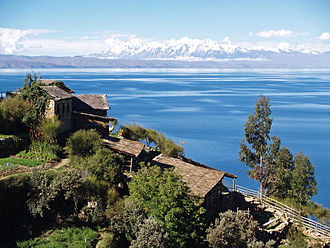


The Andean Altiplano's Azure Jewel
Lake Titicaca, situated at a breathtaking 12,507 feet (3,810 meters) above sea level, is the undisputed highest large navigable lake on the planet. This extreme altitude dictates its unique geographical and ecological characteristics. Straddling the border between Peru and Bolivia, it is the largest lake in South America by volume and is fed by numerous rivers and streams, with the Ramis River being the most significant.
Despite its immense size, covering 8,388 square kilometers (3,238 square miles), its depth varies considerably, reaching a maximum of 920 feet (281 meters). The climate is characterized by a high-altitude semi-arid environment, with intense solar radiation, significant diurnal temperature fluctuations, and a distinct wet season from December to March. The lake's ecosystem is a delicate balance, supporting a variety of endemic fish species, such as the Titicaca water frog, and numerous migratory bird populations, including Andean gulls and various duck species.
However, this ecosystem faces increasing pressures from pollution, overfishing, and climate change, posing significant challenges for its long-term sustainability and the communities that depend on it. The sheer scale of the lake and its elevated position create a visually stunning landscape, often framed by snow-capped Andean peaks.
Echoes of Empires
The Lake Titicaca region is steeped in a history that predates the Inca Empire by millennia. Archaeological evidence suggests human settlement in the area dating back to at least 1500 BCE, with cultures like the Chiripa and Pukara developing sophisticated societies. The Inca, who considered the lake sacred, established significant religious and administrative centers on its islands, most notably on Isla del Sol (Island of the Sun) and Isla de la Luna (Island of the Moon), which are believed to be the mythical birthplace of their civilization.
According to Inca mythology, the sun god Inti and his consort Mama Ocllo emerged from the waters of Lake Titicaca to found Cusco, the capital of their vast empire. The Spanish conquistadors arrived in the 16th century, leaving their own mark on the region with the construction of churches and colonial architecture, often built upon Inca foundations. The legacy of these diverse historical periods is evident in the numerous ruins, artifacts, and oral traditions that continue to be preserved by the local populations, making Titicaca a living museum of Andean history.
Masters of the Marsh
The Uru people, an indigenous group with a distinct language and culture, have developed an extraordinary symbiotic relationship with Lake Titicaca, most famously demonstrated by their construction of artificial floating islands. These islands, made from densely packed totora reeds harvested from the lake's shallows, are a testament to human ingenuity and adaptation. The Uru continuously add fresh layers of reeds to the top of their islands as the lower layers decompose, maintaining their buoyancy and structural integrity.
Their homes, boats, and even some of their tools are also crafted from totora reeds. This unique lifestyle has allowed the Uru to maintain a distinct cultural identity, largely separate from the Quechua and Aymara peoples who inhabit the mainland and larger islands. While tourism has brought economic opportunities, it also presents challenges in preserving their traditional way of life and ensuring the sustainability of the reed resources upon which their existence depends.
A Livelihood from the Lake
The economy of the Lake Titicaca region is a complex interplay of traditional practices and modern development. Subsistence agriculture, primarily focused on potatoes, quinoa, and barley, remains vital for many communities, complemented by livestock herding. Fishing, though facing ecological challenges, continues to provide a source of income and food. However, tourism has emerged as a significant economic driver, attracting visitors interested in the lake's natural beauty, cultural heritage, and unique floating islands.
This has led to the growth of related industries such as hospitality, transportation, and handicraft production. Governance of the lake is shared between Peru and Bolivia, with various local and national authorities responsible for resource management, environmental protection, and infrastructure development. Education is a critical component for the region's future.
While access to education has improved, challenges remain, particularly in remote areas and for indigenous communities, in providing quality schooling that respects and incorporates local cultures and languages. Efforts are ongoing to enhance educational opportunities and equip the younger generation with the skills needed to navigate both traditional livelihoods and the evolving global economy.
Go deeper
Frequently Asked Questions
What makes Lake Titicaca the highest lake in the world?+
Why is Lake Titicaca important for animals?+
How do the Uru people live on Lake Titicaca?+
Where are the famous islands of the Sun and Moon?+
What is the climate like at Lake Titicaca?+
Based on content from Wikipedia · Licensed under CC BY-SA 4.0