

Thomas Cranmer: The Man Who Wrote Our Prayer Book!
Images
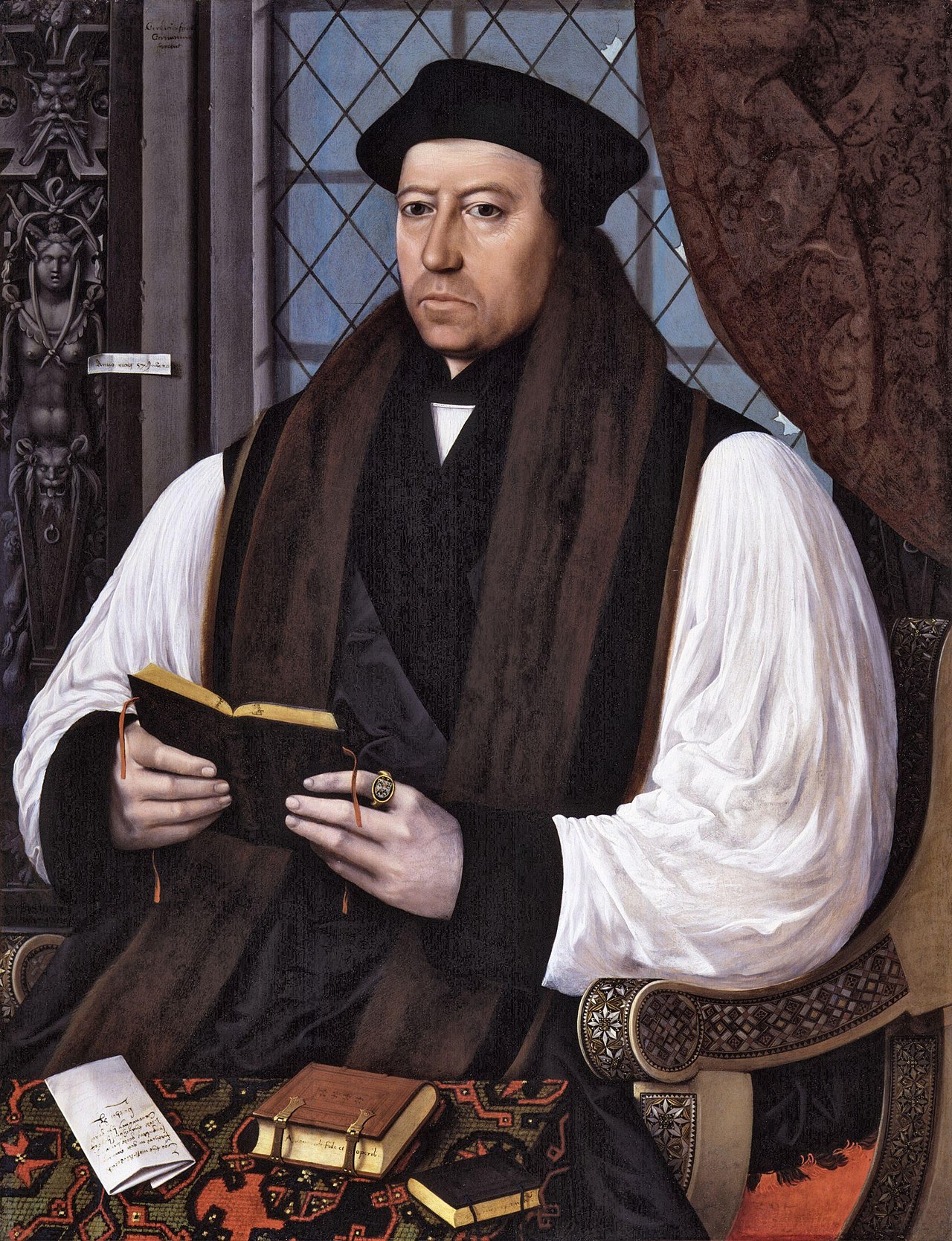
Thomas Cranmer
From Cambridge Scholar to Royal Confidant
Thomas Cranmer, born circa 1489 in Aslockton, Nottinghamshire, emerged from the intellectual milieu of Cambridge University. His early academic pursuits laid the groundwork for a theological understanding that would soon be tested by the volatile political climate of Henry VIII's reign. Cranmer’s pivotal moment arrived when he suggested to the King that consulting European universities on the validity of his marriage to Catherine of Aragon, rather than seeking papal annulment, could provide a legal basis for divorce.
This ingenious, albeit controversial, proposal caught Henry’s attention, catapulting Cranmer into royal favor. His subsequent appointment as Archbishop of Canterbury in 1533 was not merely a personal triumph but a strategic move by the Crown to dismantle papal authority and establish royal supremacy over the Church in England. This transition marked Cranmer’s ascent from a respected scholar to a central figure in one of England's most profound historical transformations.
The Book of Common Prayer
Cranmer's most significant contribution, the Book of Common Prayer, stands as a testament to his genius in liturgical reform. Published first in 1549 and revised significantly in 1552, it aimed to create a unified, vernacular standard for public worship. Prior to Cranmer, services were predominantly in Latin, creating a barrier between the clergy and the laity.
Cranmer’s work translated and adapted existing liturgical traditions into eloquent, accessible English, fostering a more participatory and understandable form of worship. The book’s carefully crafted prayers, biblical readings, and rubrics not only standardized religious practice across England but also profoundly influenced the development of the English language, imbuing it with a new level of literary sophistication and rhetorical power. Its enduring influence is evident in the continued use and adaptation of its forms within Anglican traditions worldwide.
Navigating the Shifting Sands of Tudor Religious Policy
Cranmer’s tenure as Archbishop was characterized by his navigation of extreme religious and political turbulence. He was a key architect of the English Reformation, working closely with Thomas Cromwell to implement Henry VIII's break from Rome and establish the Church of England. Under Edward VI, Cranmer was instrumental in pushing the Reformation further, developing more Protestant doctrines and the influential 1552 Book of Common Prayer.
However, the accession of Mary I in 1553 signaled a dramatic reversal. A devout Catholic, Mary sought to restore papal authority and persecute Protestants. Cranmer, as the leading figure of the Reformation, became a primary target.
His imprisonment, trial for treason and heresy, and subsequent recantation and retraction of that recantation represent a deeply human and tragic aspect of his story, highlighting the immense pressures and personal costs associated with his convictions.
Martyrdom and Enduring Legacy
Thomas Cranmer met his end at the stake on March 21, 1556, a victim of Queen Mary I’s efforts to re-establish Catholicism. His final moments, where he defiantly thrust his right hand-the one that had signed his recantation-into the flames, became a powerful symbol of martyrdom for the Protestant cause. Despite his personal failings and the complexities of his theological evolution, Cranmer’s legacy is undeniable.
He fundamentally reshaped religious life and practice in England, creating a distinct national church and a liturgical tradition that has endured for centuries. The Book of Common Prayer remains his most tangible contribution, a work of profound theological depth and literary artistry that continues to resonate. Cranmer’s life story serves as a compelling case study in the intersection of religion, politics, and personal conviction during a pivotal era in English history.
Go deeper
Frequently Asked Questions
Who was Thomas Cranmer?+
What is the Book of Common Prayer?+
Why did Thomas Cranmer help King Henry VIII?+
What happened to Thomas Cranmer when Queen Mary I became king?+
Why is Thomas Cranmer remembered today?+
Based on content from Wikipedia · Licensed under CC BY-SA 4.0