

Sulaymaniyah Governorate
Images

Excavations, Qalat-i Dinka, Peshder Plane Project, Sulaymaniyah Governorate, Iraqi Kurdistan


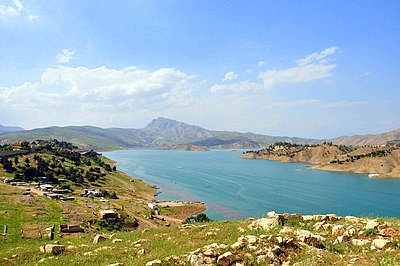


Geopolitical and Environmental Significance of Sulaymaniyah's Terrain
Sulaymaniyah Governorate occupies a strategically important position in northeastern Iraq, bordering Iran. Its geography is characterized by the Zagros Mountains, a formidable range that dictates much of the region's climate and accessibility. The mountainous terrain, while offering stunning natural beauty and significant biodiversity, also presents considerable challenges for infrastructure development and transportation.
This rugged landscape has historically served as both a refuge and a barrier, influencing patterns of settlement, migration, and defense. The climate is largely Mediterranean, with hot, dry summers and cool, wet winters, though altitude plays a crucial role, leading to significant variations across the governorate. The presence of rivers like the Sirwan (Diyala) is vital for agriculture and water resources, making water management a critical aspect of regional planning.
The governorate's unique environmental conditions have shaped its history and continue to influence its future development, requiring adaptive strategies for both human and ecological systems.
Historical Trajectories and Political Evolution
The history of Sulaymaniyah Governorate is marked by its role as a center for Kurdish national aspirations and cultural preservation. Founded in 1784 by Ibrahim Pasha Baban, the city of Sulaymaniyah quickly became a focal point for Kurdish intellectual and political life, often under the administration of various empires, most notably the Ottoman Empire. The 20th century saw significant political upheaval, including periods of autonomy and conflict, as Kurdish groups sought greater self-determination.
The establishment of the Kurdistan Region in 1991, following the Gulf War, fundamentally altered the political landscape, granting significant autonomy. The recent administrative reorganization, with the creation of Halabja Governorate from the former Halabja District of Sulaymaniyah in 2014, underscores the ongoing process of defining and refining regional governance structures within the Kurdistan Region. This evolution reflects a continuous effort to balance administrative efficiency with regional identity and political aspirations.
Cultural Dynamics and Societal Fabric
Sulaymaniyah Governorate is a vibrant mosaic of Kurdish culture, with Sorani Kurdish being the predominant dialect, though Kurmanji is also spoken, alongside Arabic due to historical and contemporary interactions. The region is renowned for its rich literary and artistic heritage, with Sulaymaniyah city often referred to as the 'cultural capital' of Iraqi Kurdistan. This reputation is built on a long tradition of poetry, music, theater, and intellectual discourse.
Social life is characterized by strong family ties, community solidarity, and a deep-seated tradition of hospitality. The governorate has a diverse population, and inter-communal relations are generally harmonious, though like any region, it faces the complexities of modern societal change, including urbanization and evolving social norms. The preservation and promotion of its unique cultural identity remain central to the region's self-perception.
Economic Landscape and Development Challenges
The economy of Sulaymaniyah Governorate is a dynamic mix of traditional and modern sectors. Agriculture remains important, benefiting from the fertile river valleys, with crops like wheat, barley, and fruits being cultivated. However, the governorate's economic strength increasingly lies in its role as a commercial and service hub.
Sulaymaniyah city is a major center for trade, retail, and finance within the Kurdistan Region. The region also possesses natural resources, though their exploitation is subject to broader regional and national policies. Key challenges include diversifying the economy beyond oil and gas (where applicable regionally), creating sustainable employment opportunities, and attracting foreign investment.
The development of infrastructure, particularly transportation networks, is crucial for enhancing trade and economic integration. The governorate's economic future is closely tied to the broader economic stability and policies of the Kurdistan Region and Iraq.
Governance and Educational Frameworks
Sulaymaniyah Governorate operates within the federal framework of Iraq and the autonomous governance of the Kurdistan Region. It is administered by a governorate council and a governor, responsible for implementing regional policies and managing local affairs. The political landscape is characterized by a multi-party system, reflecting the diverse political currents within the Kurdistan Region. Education is a high priority, with a comprehensive system encompassing primary, secondary, and tertiary levels.
Sulaymaniyah city hosts several prominent universities, including Salahaddin University-Erbil's Sulaymaniyah branch and the University of Sulaymaniyah, which are vital for producing skilled graduates and contributing to research and development. These institutions play a critical role in fostering human capital and supporting the region's socio-economic progress, equipping its population with the knowledge and skills necessary for navigating contemporary challenges.
See also
Frequently Asked Questions
What is Sulaymaniyah Governorate?+
Why are the Zagros Mountains important in Sulaymaniyah?+
How does the climate change in Sulaymaniyah?+
What languages do people speak in Sulaymaniyah?+
Why is Sulaymaniyah called the cultural capital?+
Based on content from Wikipedia · Licensed under CC BY-SA 4.0