

Social Security: Your Grown-Up Safety Net!
Images

Will the Lame Duck Congress Poop on Social Security?
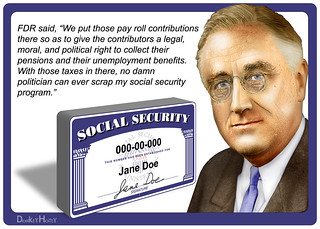





Defining Social Security
Social Security, in its broadest sense, refers to the general concept of a society's commitment to ensuring that its members have access to basic needs and a minimum standard of living, particularly during periods of vulnerability. This encompasses a range of provisions, including income support, healthcare, and social services, designed to protect individuals from risks such as unemployment, old age, sickness, and disability. While the term is often synonymous with specific national programs, like the U.S.
Social Security system, it represents a fundamental societal value: collective responsibility for the well-being of all citizens. This commitment aims to foster social cohesion and prevent widespread destitution, acting as a crucial buffer against economic shocks and personal misfortune.
The Genesis of Social Security
The historical roots of social security can be traced to mutual aid societies and poor laws in pre-industrial Europe. However, the modern, state-sponsored social security system began to emerge in the late 19th century, with Germany under Bismarck pioneering compulsory insurance for sickness, accidents, and old age in the 1880s. These early systems were often driven by a desire to quell social unrest and integrate the working class into the nation-state.
The United States' Social Security Act of 1935 was a monumental piece of legislation, enacted during the Great Depression. It established a federal system of old-age benefits, unemployment insurance, and aid to dependent children and the disabled, fundamentally altering the relationship between the government and its citizens by creating a national safety net. Subsequent decades saw expansions and refinements to these programs worldwide.
The Indispensable Role of Social Security in Modern Society
The significance of Social Security in contemporary society cannot be overstated. It serves as a primary mechanism for poverty reduction, particularly among the elderly, who often rely on its benefits as their sole source of income. Studies consistently show that Social Security lifts millions out of poverty each year.
Beyond retirement income, it provides essential support for individuals with disabilities, enabling them to maintain a degree of independence and financial security. The program also offers crucial survivor benefits, providing a financial lifeline to families who have lost a primary earner, thereby preventing a cascade of negative consequences. Furthermore, Social Security acts as a vital economic stabilizer, injecting consistent purchasing power into the economy, especially during economic downturns, thereby mitigating the severity of recessions.
Mechanisms of Social Security
The operational framework of Social Security programs varies globally, but common mechanisms involve dedicated funding streams and structured benefit distribution. In the U.S., the Social Security system is predominantly financed through dedicated payroll taxes, known as FICA (Federal Insurance Contributions Act) taxes, levied on both employees and employers. These contributions are pooled into trust funds that pay current beneficiaries.
The benefit amount is typically calculated based on an individual's lifetime earnings history, reflecting a social insurance principle where benefits are related to contributions. This pay-as-you-go system means that current workers' taxes fund current retirees' benefits, with the expectation that future generations will fund today's contributors. Other countries may utilize general tax revenues, employer contributions, or a combination of funding sources.
Global Variations and the Future of Social Security
The concept of social security is implemented differently across the globe, reflecting diverse political ideologies, economic capacities, and cultural values. Examples include the Philippines' Social Security System (SSS), which covers private sector employees and self-employed individuals, and the South African Social Security Agency (SASSA), which administers a range of social grants for vulnerable populations, including old-age pensions and child support grants. Iran's Social Security Organization provides comprehensive insurance coverage.
These diverse models highlight the adaptability of the social security principle. Looking ahead, many social security systems face challenges such as aging populations, declining birth rates, and evolving labor markets, prompting ongoing debates about reforms, sustainability, and the potential for expanding coverage to include new forms of work and economic arrangements.
Go deeper
Frequently Asked Questions
What is Social Security?+
Why did Germany start Social Security first?+
How does the U.S. Social Security give money to people?+
What happens if someone loses a parent or a main earner?+
Why is Social Security important for the economy?+
Based on content from Wikipedia · Licensed under CC BY-SA 4.0