

Scythians
Images
Scythians
Origins and Expansion of the Scythian World
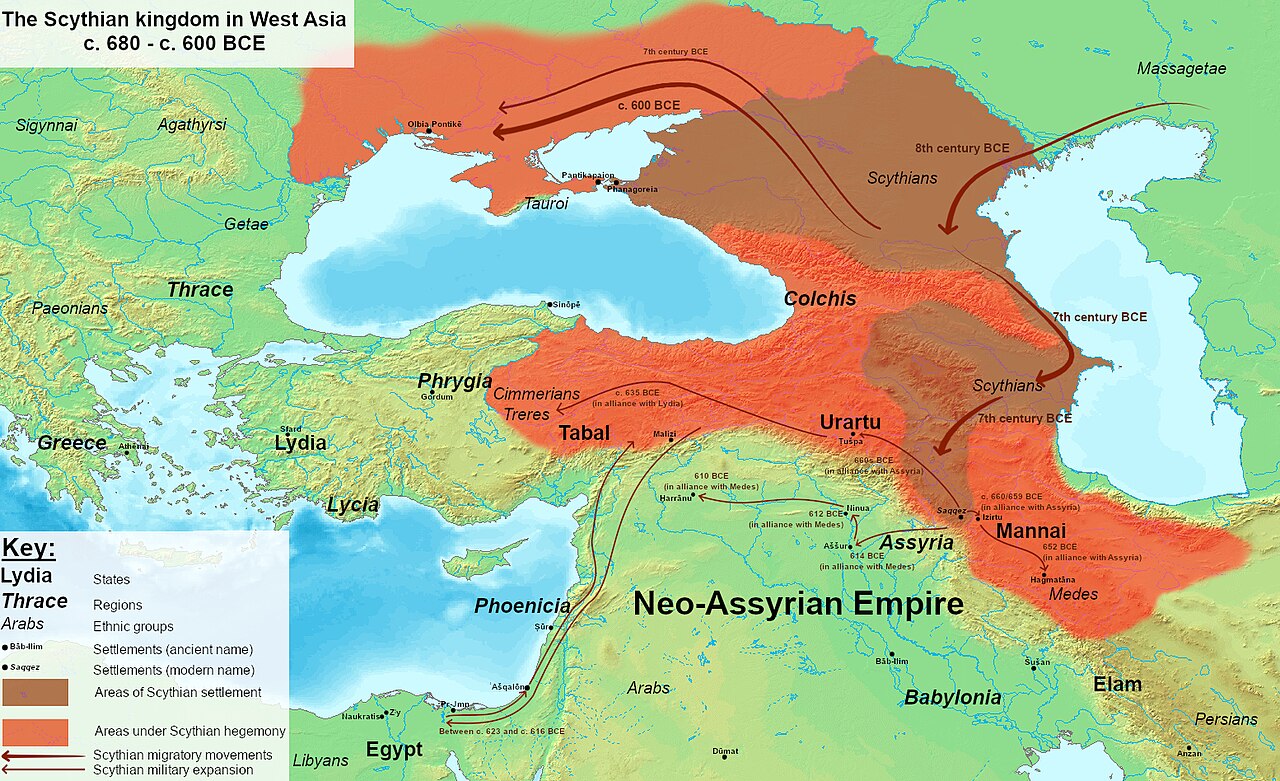
The Scythians were not a single, unified empire in the traditional sense, but rather a confederation of nomadic Iranian-speaking peoples who rose to prominence in the Eurasian Steppe from roughly the 9th to the 2nd centuries BCE. Their origins are complex and debated, but they are generally understood to have emerged from earlier Bronze Age steppe cultures. They rapidly expanded and dominated a vast territory, stretching from the Danube River in the west to the Altai Mountains in the east.
This immense geographical reach allowed them to control crucial trade routes and interact with a multitude of diverse cultures, including the Greeks, Persians, and Chinese. Their military success was built upon their unparalleled equestrian skills, mastery of mounted archery, and a highly effective tribal organization that allowed for rapid mobilization and tactical flexibility. They were a formidable force, capable of challenging and even defeating established empires, as famously demonstrated by their campaigns against the Scythian king Ateas and their incursions into the Near East.
The Nomadic Lifestyle
The Scythian way of life was intrinsically tied to the vast grasslands of the Eurasian Steppe. Their nomadic existence was dictated by the needs of their livestock-primarily horses, cattle, and sheep-which formed the backbone of their economy and culture. They lived in portable dwellings, often elaborate felt tents known as paltos, which could be easily transported by wagons or pack animals.
This mobility was not merely a matter of survival but a strategic advantage, enabling them to evade enemies, exploit grazing lands, and maintain control over their extensive territory. Scythian society was hierarchical, with a warrior aristocracy at the top. Their social structure emphasized martial prowess, honor, and loyalty.
The importance of the horse permeated every aspect of their lives, from warfare and transportation to diet and religious beliefs. Their interactions with settled agricultural societies often involved raiding, tribute, or trade, demonstrating a complex relationship between nomadic and sedentary peoples.
The 'Animal Style'
Scythian art is renowned for its distinctive 'animal style,' a sophisticated visual language that celebrated the natural world and imbued it with symbolic meaning. Masterfully crafted from gold, bronze, and other precious materials, their artworks-found adorning weapons, armor, horse trappings, jewelry, and even clothing-feature dynamic and often highly stylized depictions of animals. Common motifs include stags, panthers, lions, eagles, and mythical creatures like griffins and winged horses.
These animals were not merely decorative; they represented power, ferocity, speed, and the untamed spirit of the steppe. The Scythians often depicted animals in combat or in contorted poses, emphasizing their vitality and raw energy. This artistic tradition had a profound influence on neighboring cultures, including the Greeks, and its legacy can be traced through subsequent artistic developments in Central Asia and beyond.
The sheer volume and exquisite craftsmanship of Scythian gold artifacts underscore their wealth and the advanced metallurgical skills of their artisans.
Royal Tombs and Historical Archives
The most significant archaeological evidence of Scythian culture comes from their elaborate burial mounds, known as kurgans. These monumental structures, often reaching impressive heights, served as the final resting places for Scythian royalty and elite warriors. The contents of these kurgans are extraordinary, offering unparalleled insights into Scythian life, beliefs, and societal structure.
Elite burials frequently include vast quantities of gold artifacts, intricate weaponry, chariots, and, most strikingly, the remains of sacrificed horses-sometimes numbering in the hundreds. These horse sacrifices highlight the paramount importance of these animals in Scythian culture and their perceived role in the afterlife. The preservation of organic materials within the permafrost of some Siberian kurgans, such as the Pazyryk burials, has provided exceptionally detailed information about Scythian textiles, tattoos, and even the physical appearance of the people themselves, offering a vivid glimpse into this ancient civilization.
Scythian Legacy
The Scythians left an indelible mark on the history of Eurasia. Their military innovations and nomadic lifestyle influenced the development of warfare and state formation across the steppes for centuries. Their interactions with the classical world, particularly through Greek colonies on the Black Sea, led to a significant cultural exchange, with Scythian motifs appearing in Greek art and Greek influences visible in Scythian craftsmanship.
While the Scythian confederation eventually fragmented and was largely assimilated or displaced by later migrating groups like the Sarmatians and Huns, their cultural legacy persisted. The 'animal style' continued to inspire art in subsequent nomadic cultures, and their historical impact on the geopolitical landscape of ancient Eurasia is undeniable. Despite extensive archaeological research, many aspects of Scythian society, language, and the precise nature of their political organization remain subjects of ongoing scholarly debate, ensuring their continued fascination.
Go deeper
Frequently Asked Questions
Who were the Scythians?+
Why were the Scythians called super-riders?+
How did the Scythians travel across such a big area?+
What is special about Scythian art?+
Where did the Scythians trade and meet other cultures?+
Based on content from Wikipedia · Licensed under CC BY-SA 4.0