

Schlieffen Plan
Images
Schlieffen Plan NO


The Genesis and Evolution of a Strategic Doctrine
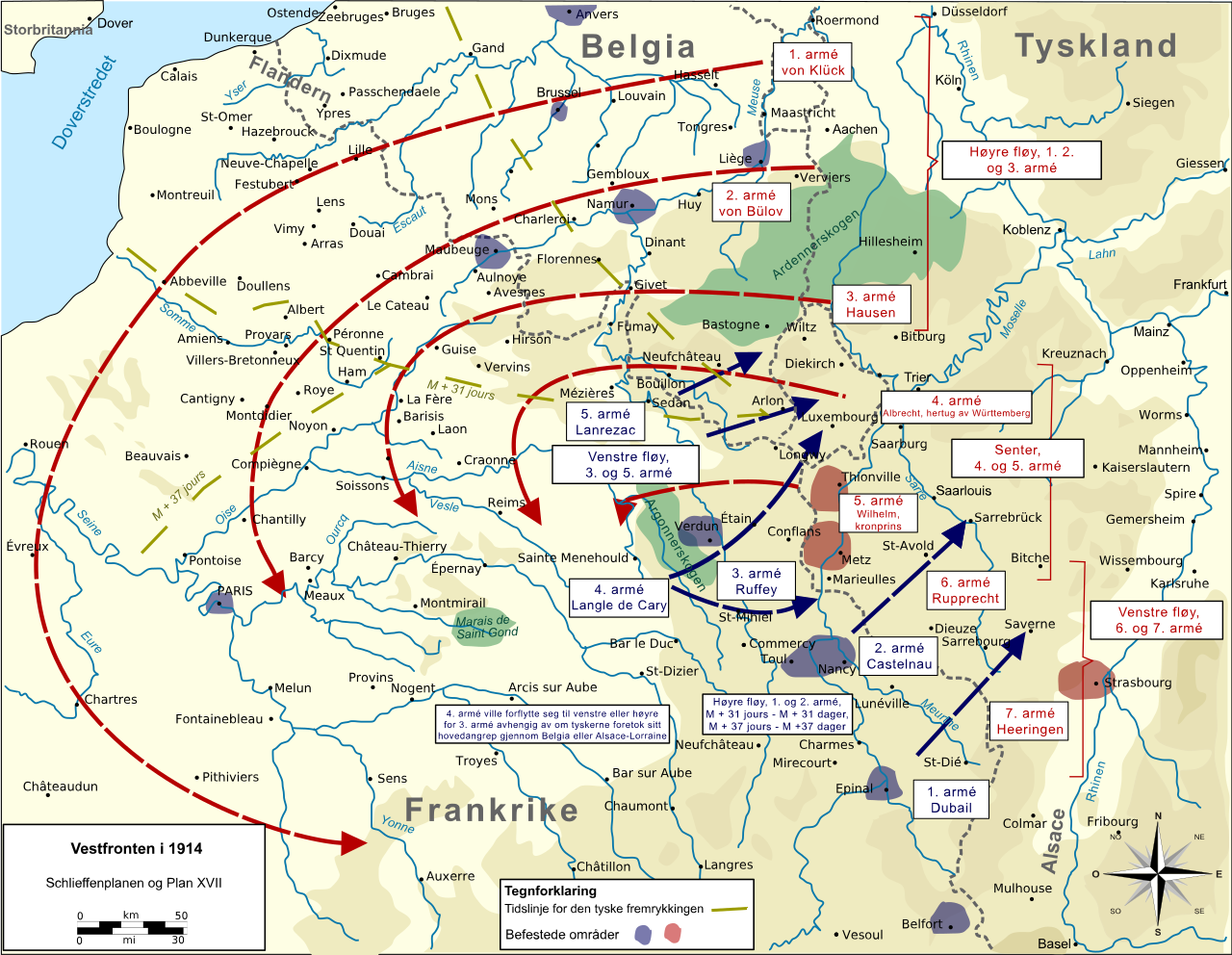
The Schlieffen Plan, as it is commonly understood, refers to a series of German war plans developed primarily by Field Marshal Alfred von Schlieffen during his tenure as Chief of the General Staff from 1891 to 1906. The core strategic problem Schlieffen sought to address was the perceived inevitability of a two-front war against France and Russia. His solution, articulated in various memoranda, was a decisive offensive against France, aiming for a rapid victory before Russia could fully mobilize its vast but slower-moving army.
The plan emphasized a massive right-flanking maneuver through neutral Belgium and Luxembourg, encircling Paris and forcing a French capitulation. This was not a static blueprint but an evolving concept, reflecting Schlieffen's strategic thinking on deployment and operational art. The emphasis was on speed, mass, and envelopment, a departure from earlier, more defensive doctrines.
Operational Constraints and the Belgian Gambit
The strategic decision to invade through Belgium was central to the Schlieffen Plan's design, intended to bypass France's formidable eastern defenses. However, historical analysis, particularly from the 1970s onwards, has critically examined the operational feasibility of this maneuver. Scholars like Martin van Creveld and John Keegan highlighted the immense logistical challenges.
The Belgian and northern French railway networks, along with road infrastructure, were simply not equipped to support the rapid movement of hundreds of thousands of troops, their artillery, and vast supplies required for such an ambitious offensive. The plan's reliance on speed meant that any significant delays, such as unexpected resistance from Belgian forces or the need to adapt to French counter-maneuvers, could unravel the entire strategy. It was a race against time and geography, where the physical limitations of the terrain and infrastructure posed formidable obstacles to the theoretical operational goals.
The Post-War Narrative
Following Germany's defeat in World War I, the Schlieffen Plan became a focal point for historical interpretation and, arguably, myth-making. German official historians and writers, particularly those associated with the Reichsarchiv, promoted the idea that the plan was a near-perfect blueprint for victory that was tragically undermined by Helmuth von Moltke the Younger's modifications and perceived timidity. This narrative served to exculpate German leadership and military planning from sole responsibility for the war's outbreak and its devastating length.
However, this interpretation was challenged by scholars like Gerhard Ritter in the 1950s and later by Terence Zuber, who argued that the 'Schlieffen Plan' as a singular, definitive blueprint was largely a post-war construct. Zuber's thesis, while controversial, spurred deeper research into the actual, more fluid nature of German war planning and the destruction of many pre-war documents, complicating the established historical narrative.
Strategic Significance and Enduring Legacy
The Schlieffen Plan's significance extends beyond its operational execution or its role in the outbreak of World War I. It represents a critical moment in military thought, embodying a belief in the possibility of achieving decisive victory through rapid, large-scale offensive operations. Its failure, and the subsequent descent into four years of attritional warfare, profoundly shaped military strategy and doctrine for decades.
The plan's legacy is complex: it is seen by some as a testament to German strategic ambition, by others as a cautionary tale of overconfidence and logistical underestimation, and by still others as a historical construct that has obscured the more nuanced realities of pre-war German military planning. The ongoing scholarly debate underscores its enduring importance in understanding the military and political dynamics that led to and characterized the First World War.
See also
Frequently Asked Questions
What was the Schlieffen Plan?+
Why did the plan want to go through Belgium?+
How did the plan try to win quickly?+
Why was the plan hard to carry out?+
What happened to the idea of the Schlieffen Plan after the war?+
Based on content from Wikipedia · Licensed under CC BY-SA 4.0