

Saxony-Anhalt
Images

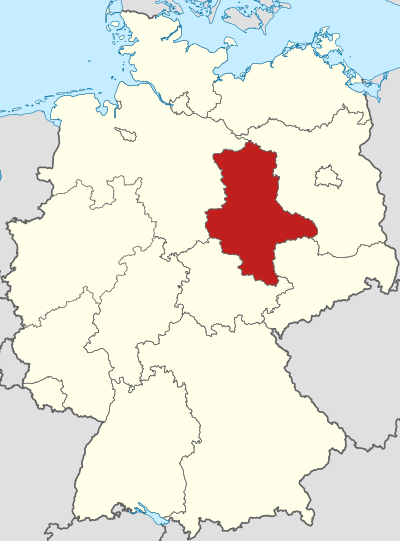
Germany Saxony-Anhalt adm location map




Geographical Foundation and Strategic Position
Saxony-Anhalt occupies a significant position in central Germany, acting as a geographical and historical bridge between eastern and western parts of the country. Its area of 20,000 square kilometers places it as the eighth-largest German state by landmass. It shares borders with Brandenburg to the east, Saxony to the southeast, Thuringia to the south, and Lower Saxony to the west.
This central location has historically made it a crossroads for trade and cultural exchange. The landscape is characterized by the fertile North German Plain in the north, transitioning to the Harz Mountains in the northwest, and the rolling hills of the Thuringian Basin in the south. The Elbe River is a major waterway, influencing settlement patterns and economic activity.
The climate is temperate continental, with distinct seasons that support its agricultural output and natural beauty.
A Tapestry of Historical Formations and Reconfigurations
The modern state of Saxony-Anhalt is a product of post-World War II administrative decisions and subsequent historical shifts. Formed in July 1945 by the Soviet military administration, it consolidated territories from the former Prussian Province of Saxony and the Free State of Anhalt. This consolidation aimed to create administrative units within the Soviet occupation zone.
In 1949, Saxony-Anhalt became a constituent state of the German Democratic Republic (GDR). However, the GDR's administrative reforms in 1952 led to its dissolution, with its territory being divided into the districts (Bezirke) of Halle and Magdeburg. The state's current form was re-established on October 3, 1990, following German reunification, integrating it as a federal state within the Federal Republic of Germany.
This complex history has imbued the region with a unique identity, shaped by Prussian administration, socialist governance, and the challenges and opportunities of reunification.
Cultural Heritage
Saxony-Anhalt stands out nationally for its extraordinary density of UNESCO World Heritage sites, more than any other German state. This distinction underscores its profound historical and cultural importance. Key sites include the Bauhaus architecture in Dessau, Weimar, and Bernau, which represent a pivotal movement in modern design and architecture.
The Luther sites in Eisleben and Wittenberg are globally significant, marking the birthplace and key locations of Martin Luther and the Protestant Reformation. Medieval cities like Quedlinburg, with its well-preserved Romanesque architecture and over 1,300 half-timbered houses, and the Hanseatic city of Tangermünde, offer glimpses into centuries past. The cultural landscape also includes numerous castles, palaces, and industrial heritage sites, reflecting a diverse historical narrative from the Holy Roman Empire to the industrial age.
Socio-Economic Dynamics and Educational Landscape
With a population of 2.17 million, Saxony-Anhalt is the eleventh-most populous German state. Its capital and largest city, Magdeburg, is a significant economic and administrative center. The state's economy is diversified, with strengths in chemical industries, automotive manufacturing, mechanical engineering, and renewable energy.
Agriculture remains important due to the fertile plains. However, like many eastern German states, it has faced economic challenges post-reunification, including demographic shifts and the need for structural adaptation. Education is a key focus, with the state hosting several universities, including the University of Magdeburg and the Martin Luther University of Halle-Wittenberg, which are vital for research, innovation, and developing a skilled workforce.
These institutions play a crucial role in the state's ongoing development and its integration into the broader European knowledge economy.
Governance and Political Structure
As a federal state (Bundesland) of Germany, Saxony-Anhalt possesses its own constitution and government. The state parliament, the Landtag, is the legislative body, and it elects the Minister-President, who heads the state government. The capital, Magdeburg, serves as the seat of government and parliament.
The state's political system operates within the framework of the German Basic Law (Grundgesetz), ensuring democratic principles and the division of powers. Saxony-Anhalt plays a role in the Bundesrat, the representation of the states at the federal level, contributing to national policy-making. The governance structure aims to balance regional autonomy with national cohesion, addressing the specific needs and opportunities of the state within the federal republic.
See also
Frequently Asked Questions
What is Saxony-Anhalt?+
Where is Saxony-Anhalt located?+
Why does Saxony-Anhalt have so many castles and historic sites?+
How did Saxony-Anhalt become a state again after reunification?+
What are some famous places to visit in Saxony-Anhalt?+
Based on content from Wikipedia · Licensed under CC BY-SA 4.0