

Lower Saxony
Images

Alfeld, Lower Saxony, Germany


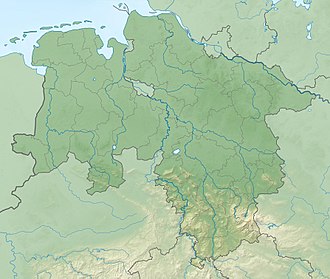


Geomorphological Diversity
Lower Saxony presents a remarkable geographical mosaic within northwestern Germany, ranking as the nation's second-largest state by area. Its territory spans from the expansive coastal lowlands bordering the North Sea to the northern reaches of Germany's Central Uplands. The northwestern coastal region, including East Frisia and its associated islands, is a significant tourist destination and a hub for maritime activities.
Inland, the North German Plain dominates the northern half, characterized by its flatness, save for the geestland hills around Bremen. This plain transitions southward into a more varied topography. The Weser Uplands and the Harz Mountains form the southern and southwestern boundaries, respectively, with the Lower Saxon Hills acting as a transitional zone of lower ridges.
Notably, Lower Saxony is the sole German federal state (Bundesland) that encompasses both significant coastal areas and mountainous terrain, offering a unique spectrum of landscapes and climatic influences. The state's border is extensive, touching eight other German states and the Netherlands, more than any other Bundesland, underscoring its strategic geographical position.
Historical Roots and Linguistic Heritage
The modern state of Lower Saxony was established in 1946 through the amalgamation of the former State of Hanover with three smaller entities. Its historical lineage is deeply intertwined with the Kingdom of Hanover, whose symbols, including the coat of arms, have been adopted by the current state. This historical continuity is palpable, influencing regional identity and governance.
Linguistically, while standard German is prevalent, Lower Saxony is a repository of older Germanic dialects. Northern Low Saxon remains spoken in rural areas, though its usage is declining. The Saterland Frisian, a distinct West Germanic language, is also spoken by a small community, representing a unique linguistic island within Germany.
The preservation of these languages is a key aspect of the region's cultural heritage, reflecting centuries of distinct local development and interaction.
Economic Engine
Lower Saxony boasts a robust and diversified economy, contributing significantly to Germany's national output. Its industrial base is substantial, with Wolfsburg serving as a global center for automotive manufacturing, most famously the headquarters of Volkswagen. Beyond automotive, the state is a leader in renewable energy technologies, particularly wind power generation, leveraging its extensive coastline and open plains.
Agriculture remains a vital sector; the Altes Land region, situated along the Elbe River, is Germany's largest area dedicated to fruit farming, with apples being the primary produce, benefiting from a favorable microclimate and fertile soils. The Lüneburg Heath, a vast heathland, also supports unique agricultural practices and tourism. Furthermore, the state's strategic location and infrastructure support significant trade and logistics operations, particularly through its proximity to major ports.
Governance and Administrative Structure
As one of Germany's 16 federal states (Länder), Lower Saxony possesses its own constitution and government. The state capital is Hanover, which functions as the administrative and political center. The state parliament, the Landtag, is responsible for legislation within the state's jurisdiction.
Lower Saxony's governmental structure reflects the federal system of Germany, balancing state autonomy with national laws. The state's extensive borders and its unique geographical composition, including enclaves like the city and port of Bremen (which form enclaves within Lower Saxony), present specific administrative challenges and require coordinated inter-state cooperation. The state's administrative divisions are organized to manage its diverse regions effectively, from the coastal areas to the mountainous south.
Education and Research Landscape
Lower Saxony places a strong emphasis on education and research, hosting a network of universities, technical colleges, and research institutions. The state capital, Hanover, is home to several prominent universities, including Leibniz University Hannover, known for its engineering and natural sciences programs. Göttingen, a historic university city, is renowned for its academic legacy, particularly in physics and chemistry, and was once associated with numerous Nobel laureates.
The state's educational system aims to foster innovation across various fields, from automotive engineering and renewable energy to agricultural science and cultural studies. Research initiatives often focus on leveraging the state's unique geographical features, such as coastal engineering, environmental studies in the Harz Mountains, and agricultural advancements in its fertile plains.
Go deeper
Frequently Asked Questions
What kinds of places can you find in Lower Saxony?+
Why is Lower Saxony special for wind power?+
Where does the state capital Hanover sit?+
What languages are spoken in Lower Saxony besides German?+
How did Lower Saxony become a state after World War II?+
Based on content from Wikipedia · Licensed under CC BY-SA 4.0